Reading passage · Science
How a vaccine teaches the body to remember · Grades 10–12
An original passage about immunity and vaccines with 7 questions that check details, inference and vocabulary.
- Grades 10–12 · ages 15 to 18
- Medium
- 45 to 55 minutes
- 3 pages
- Free
The answer key is a separate page for grown-ups. Sign in to download it.
The passage and its 7 questions
Directions: Read the passage carefully. Then answer the questions in full sentences.
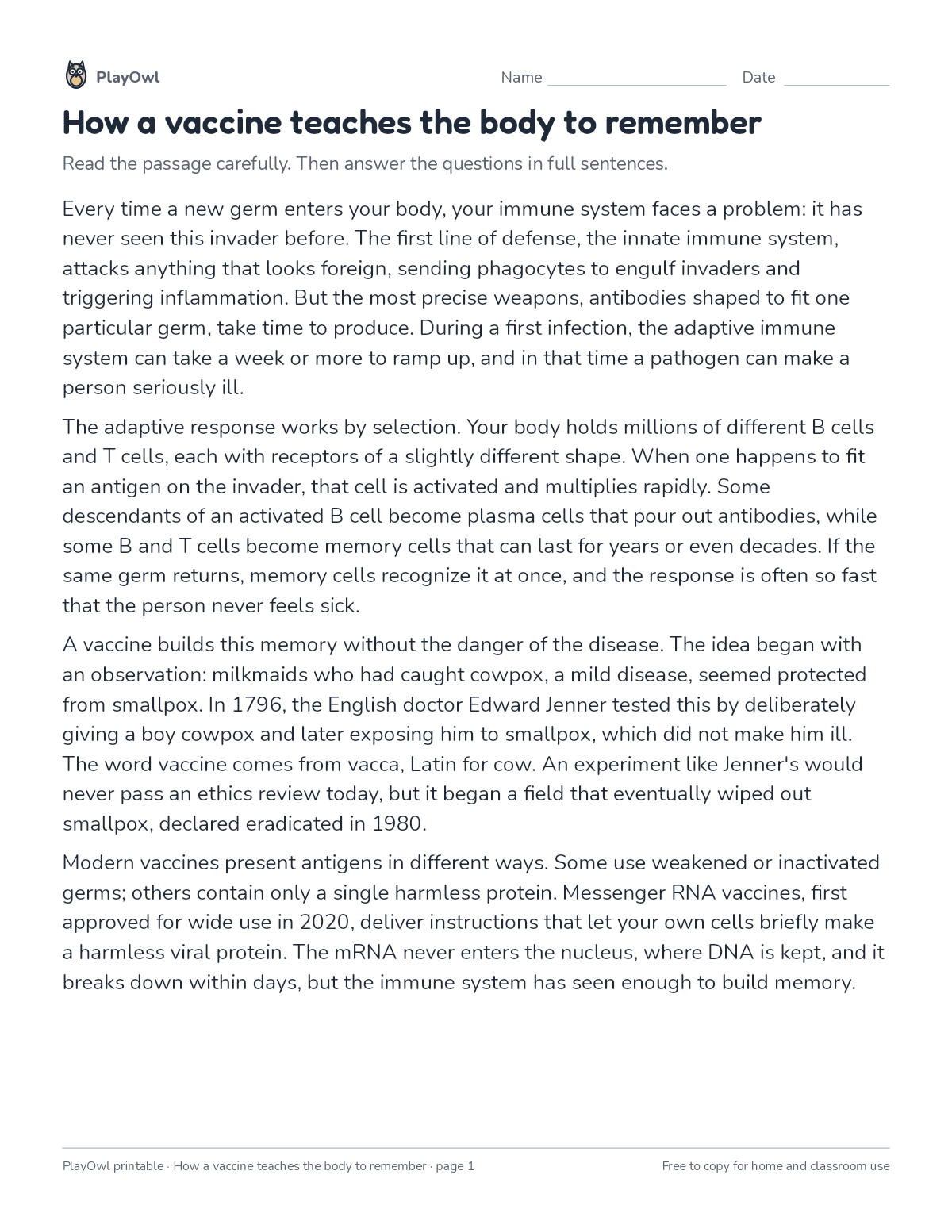
- Every time a new germ enters your body, your immune system faces a problem: it has never seen this invader before. The first line of defense, the innate immune system, attacks anything that looks foreign, sending phagocytes to engulf invaders and triggering inflammation. But the most precise weapons, antibodies shaped to fit one particular germ, take time to produce. During a first infection, the adaptive immune system can take a week or more to ramp up, and in that time a pathogen can make a person seriously ill.
- The adaptive response works by selection. Your body holds millions of different B cells and T cells, each with receptors of a slightly different shape. When one happens to fit an antigen on the invader, that cell is activated and multiplies rapidly. Some descendants of an activated B cell become plasma cells that pour out antibodies, while some B and T cells become memory cells that can last for years or even decades. If the same germ returns, memory cells recognize it at once, and the response is often so fast that the person never feels sick.
- A vaccine builds this memory without the danger of the disease. The idea began with an observation: milkmaids who had caught cowpox, a mild disease, seemed protected from smallpox. In 1796, the English doctor Edward Jenner tested this by deliberately giving a boy cowpox and later exposing him to smallpox, which did not make him ill.
- The word vaccine comes from vacca, Latin for cow. An experiment like Jenner's would never pass an ethics review today, but it began a field that eventually wiped out smallpox, declared eradicated in 1980.
- Modern vaccines present antigens in different ways. Some use weakened or inactivated germs; others contain only a single harmless protein. Messenger RNA vaccines, first approved for wide use in 2020, deliver instructions that let your own cells briefly make a harmless viral protein. The mRNA never enters the nucleus, where DNA is kept, and it breaks down within days, but the immune system has seen enough to build memory.
- Vaccines also protect people who are not vaccinated. When most of a community is immune, a pathogen struggles to find new hosts, and chains of infection break. This herd immunity shields newborns and people with weakened immune systems who cannot safely receive certain vaccines. A single injection is both personal protection and a quiet act of public health.
- 1. Why can a first infection make someone seriously ill before the adaptive immune system responds?
- 2. Explain the role of memory cells.
- 3. What does "eradicated" mean in paragraph 3?
- 4. Copy the sentence that addresses the worry that mRNA vaccines change a person's
- DNA.
- 5. Why does the author say Jenner's experiment would never pass an ethics review today?
- 6. How can vaccinating most people protect someone who cannot be vaccinated?
- 7. Write a counterargument or alternative view and respond to it.
What your child practices
Your child practices science for Grades 10–12 with this reading passage.
- Grades and ages
- Grades 10–12, ages 15 to 18
- Time
- About 45 to 55 minutes
- Subject
- Science
- Level
- Medium for Grades 10–12
- Answer key
- Yes, for grown-ups who sign in
- Printing
- 3 pages, US Letter or A4, low-ink option
- Updated
How to use it
Read the passage once just for the story or the facts, then again with the questions in mind. Encourage underlining the words in the text that back up each answer. It is pitched at the expected level for Grades 10–12, for practice after the topic has been taught. Its 3 pages split well across two sittings.
An answer key comes with it as a separate page that grown-ups download after signing in.
Tip for grown-ups: Ask your child to point to the sentence that answers each question before writing it.
Done on paper? A grown-up can record it on the child's page in PlayOwl; downloading alone doesn't count as finished.
Science · Grades 10–12
More like this
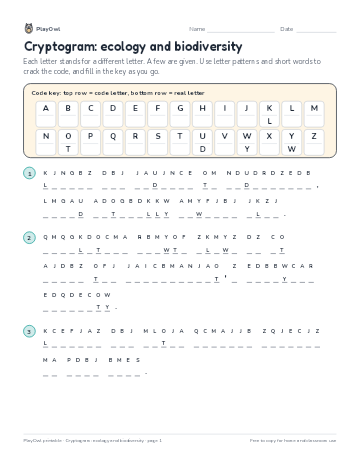 Cryptogram: ecology and biodiversity
Science · Grade 10 · Puzzle · 1 page
Cryptogram: ecology and biodiversity
Science · Grade 10 · Puzzle · 1 page
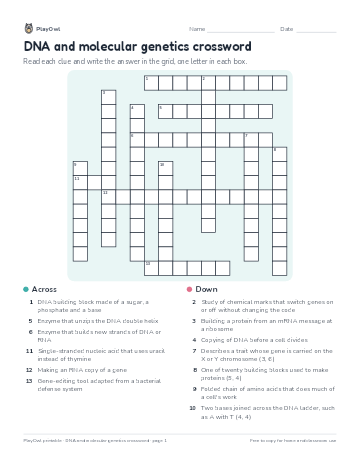 DNA and molecular genetics crossword
Science · Grade 10 · Puzzle · 1 page
DNA and molecular genetics crossword
Science · Grade 10 · Puzzle · 1 page
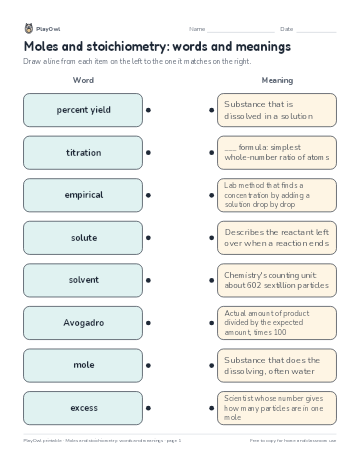 Moles and stoichiometry: words and meanings
Science · 11–12 · Worksheet · 1 page
Moles and stoichiometry: words and meanings
Science · 11–12 · Worksheet · 1 page
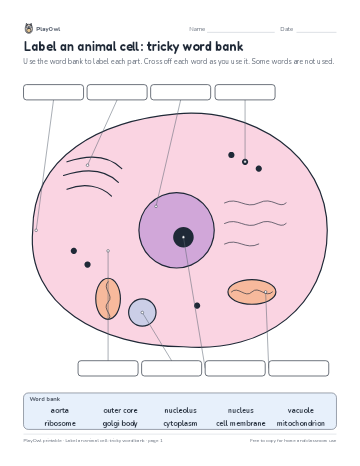 Label an animal cell: tricky word bank
Science · Grade 10 · Worksheet · 1 page
Label an animal cell: tricky word bank
Science · Grade 10 · Worksheet · 1 page
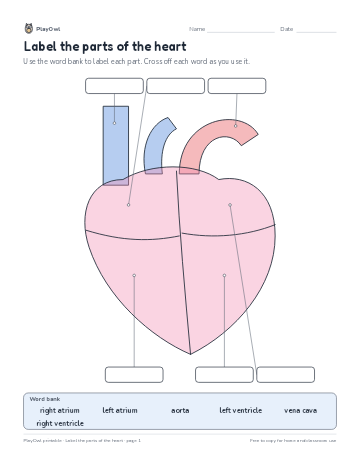 Label the parts of the heart
Science · Grade 10 · Worksheet · 1 page
Label the parts of the heart
Science · Grade 10 · Worksheet · 1 page
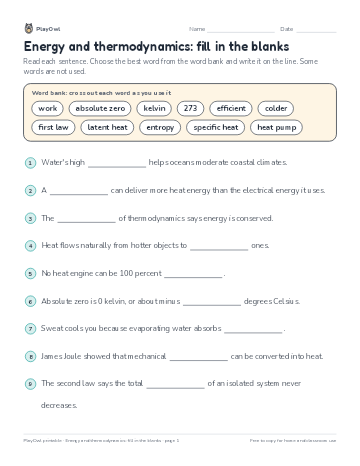 Energy and thermodynamics: fill in the blanks
Science · Grade 11 · Reading · 1 page
Energy and thermodynamics: fill in the blanks
Science · Grade 11 · Reading · 1 page
Printable generator
Make your own printables
Make brand-new sheets like this one, with answer keys, using the printable generator that comes with a PlayOwl plan. This sheet stays free.