Timeline worksheet · Computers & Digital Literacy
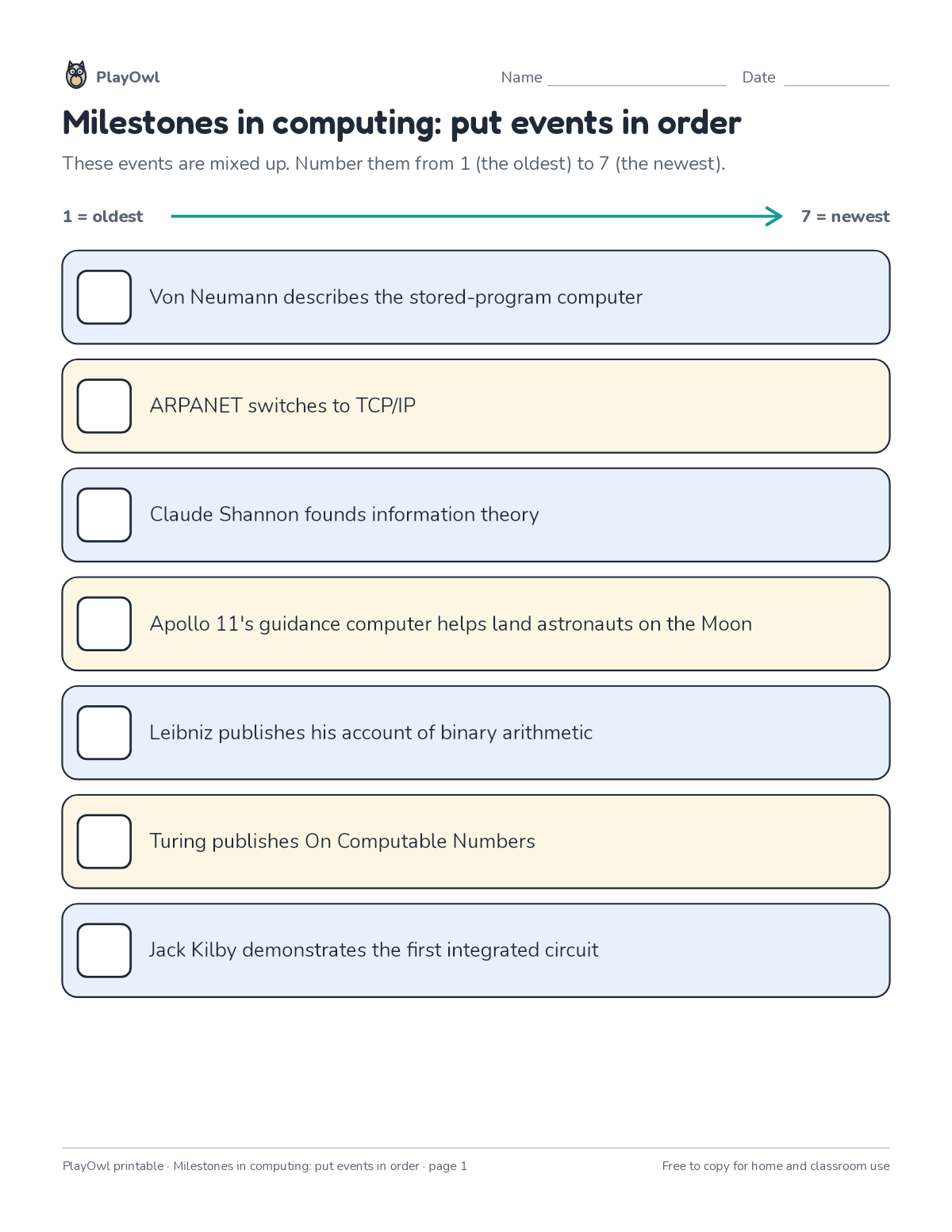
Milestones in computing: put events in order · Grade 10
Number 7 mixed-up events about milestones in computing from oldest to newest. Practices chronological thinking and reading for detail.
- Grade 10 · ages 15 to 16
- Medium
- 10 to 15 minutes
- 1 page
- Free
The answer key is a separate page for grown-ups. Sign in to download it.
The events
Directions: These events are mixed up. Number them from 1 (the oldest) to 7 (the newest).
- Von Neumann describes the stored-program computer
- ARPANET switches to TCP/IP
- Claude Shannon founds information theory
- Apollo 11's guidance computer helps land astronauts on the Moon
- Leibniz publishes his account of binary arithmetic
- Turing publishes On Computable Numbers
- Jack Kilby demonstrates the first integrated circuit
What your child practices
Your child practices chronological thinking and reading for detail. The skill is “Computing systems”: describe hardware, software, files and networks and troubleshoot simple problems.
- Grades and ages
- Grade 10, ages 15 to 16
- Time
- About 10 to 15 minutes
- Subject
- Computers & Digital Literacy
- Level
- Medium for Grade 10
- Answer key
- Yes, for grown-ups who sign in
- Printing
- 1 page, US Letter or A4, low-ink option
- Updated
How to use it
Try the first question together so the format is clear. Then let your child work through the rest, showing their thinking on the page. It is pitched at the expected level for Grade 10, for practice after the skill has been taught.
An answer key comes with it as a separate page that grown-ups download after signing in.
Tip for grown-ups: Find the oldest and newest events first, then fill in the middle.
Done on paper? A grown-up can record it on the child's page in PlayOwl; downloading alone doesn't count as finished.
Computers & Digital Literacy · Grade 10
More like this
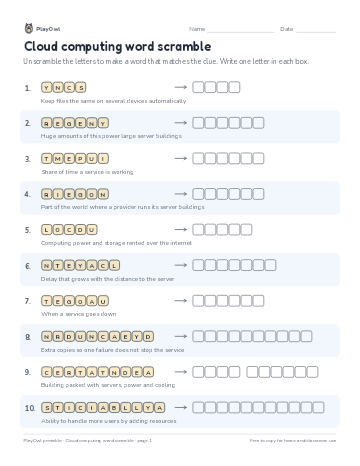 Cloud computing word scramble
Computers & Digital Literacy · Grade 10 · Puzzle · 1 page
Cloud computing word scramble
Computers & Digital Literacy · Grade 10 · Puzzle · 1 page
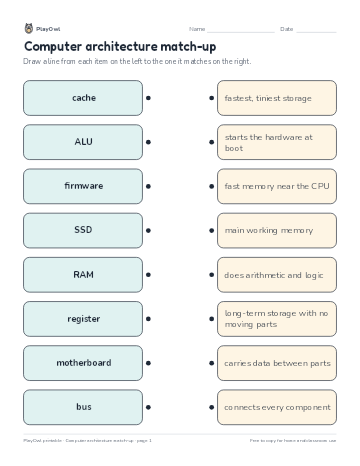 Computer architecture match-up
Computers & Digital Literacy · Grade 9 · Worksheet · 1 page
Computer architecture match-up
Computers & Digital Literacy · Grade 9 · Worksheet · 1 page
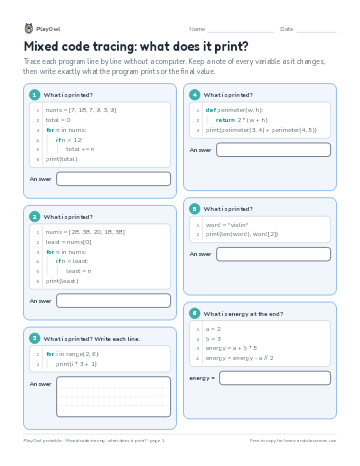 Mixed code tracing: what does it print?
Computers & Digital Literacy · 9–12 · Worksheet · 1 page
Mixed code tracing: what does it print?
Computers & Digital Literacy · 9–12 · Worksheet · 1 page
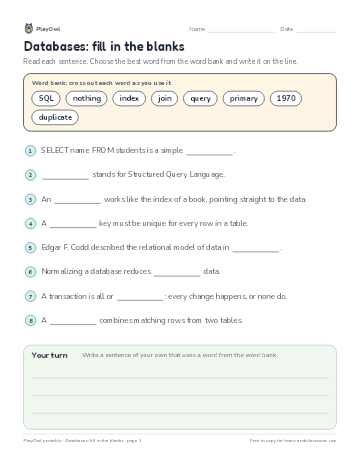 Databases: fill in the blanks
Computers & Digital Literacy · Grade 10 · Reading · 1 page
Databases: fill in the blanks
Computers & Digital Literacy · Grade 10 · Reading · 1 page
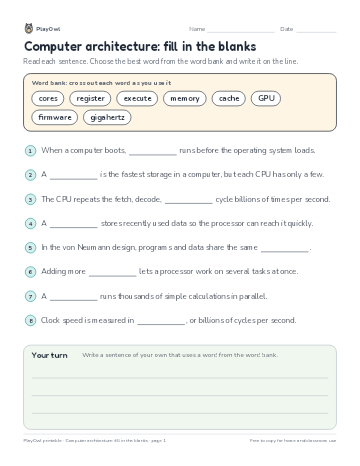 Computer architecture: fill in the blanks
Computers & Digital Literacy · Grade 9 · Reading · 1 page
Computer architecture: fill in the blanks
Computers & Digital Literacy · Grade 9 · Reading · 1 page
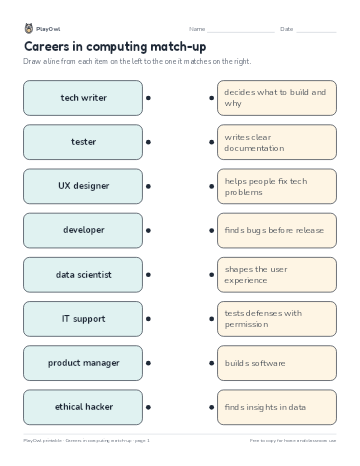 Careers in computing match-up
Computers & Digital Literacy · Grade 10 · Worksheet · 1 page
Careers in computing match-up
Computers & Digital Literacy · Grade 10 · Worksheet · 1 page
Printable generator
Make your own printables
Make brand-new sheets like this one, with answer keys, using the printable generator that comes with a PlayOwl plan. This sheet stays free.