Reading passage · English
When the Sahara was green: stretch · Grades 4–5
An original passage about text structures with 8 questions that check details, inference and vocabulary.
- Grades 4–5 · ages 9 to 11
- Hard
- 30 to 40 minutes
- 2 pages
- Free
Goes with the game Reading Detective.
The answer key is a separate page for grown-ups. Sign in to download it.
The passage and its 8 questions
Directions: Read the passage carefully. Then answer the questions in full sentences.
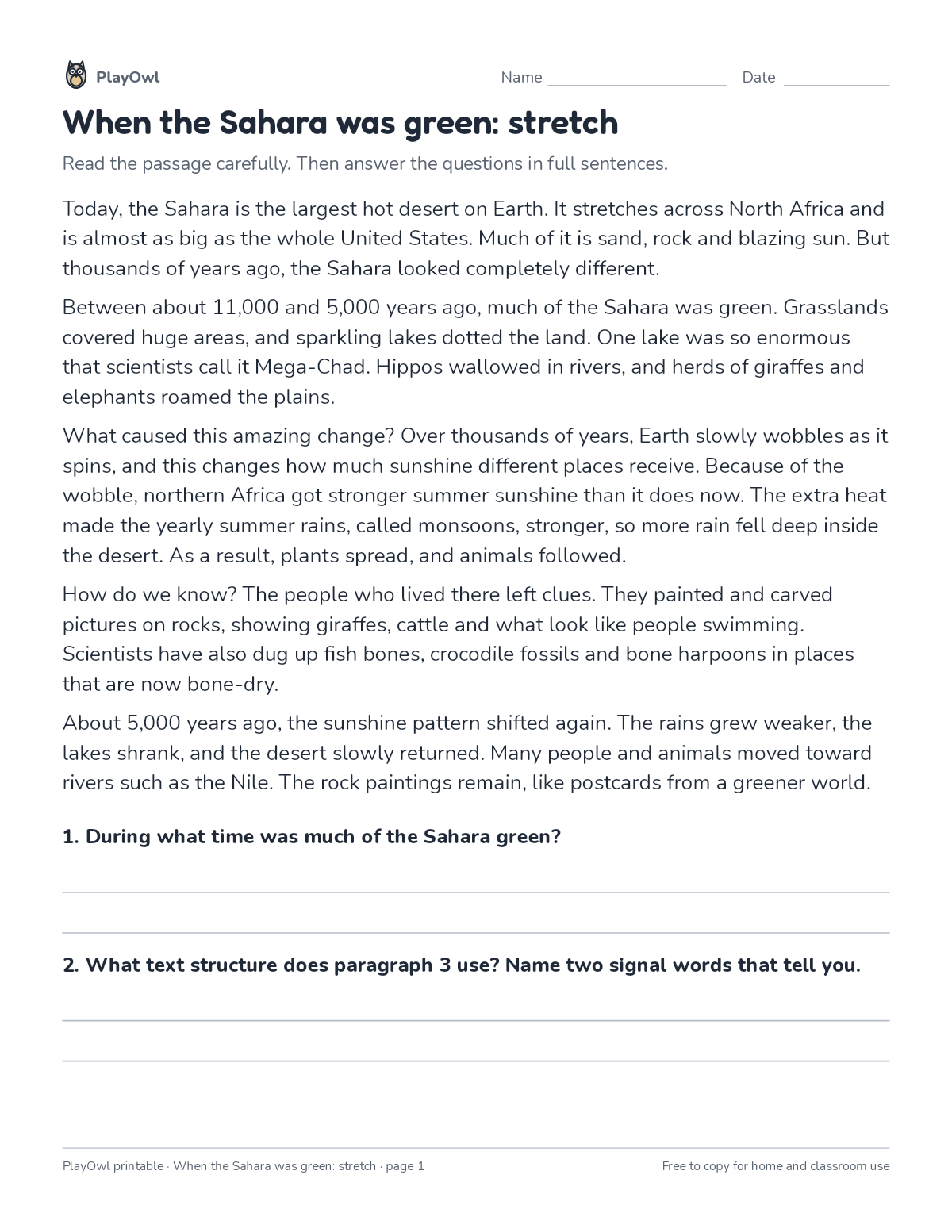
- Today, the Sahara is the largest hot desert on Earth. It stretches across North Africa and is almost as big as the whole United States. Much of it is sand, rock and blazing sun. But thousands of years ago, the Sahara looked completely different.
- Between about 11,000 and 5,000 years ago, much of the Sahara was green. Grasslands covered huge areas, and sparkling lakes dotted the land. One lake was so enormous that scientists call it Mega-Chad. Hippos wallowed in rivers, and herds of giraffes and elephants roamed the plains.
- What caused this amazing change? Over thousands of years, Earth slowly wobbles as it spins, and this changes how much sunshine different places receive. Because of the wobble, northern Africa got stronger summer sunshine than it does now. The extra heat made the yearly summer rains, called monsoons, stronger, so more rain fell deep inside the desert. As a result, plants spread, and animals followed.
- How do we know? The people who lived there left clues. They painted and carved pictures on rocks, showing giraffes, cattle and what look like people swimming.
- Scientists have also dug up fish bones, crocodile fossils and bone harpoons in places that are now bone-dry.
- About 5,000 years ago, the sunshine pattern shifted again. The rains grew weaker, the lakes shrank, and the desert slowly returned. Many people and animals moved toward rivers such as the Nile. The rock paintings remain, like postcards from a greener world.
- 1. During what time was much of the Sahara green?
- 2. What text structure does paragraph 3 use? Name two signal words that tell you.
- 3. What effect did stronger monsoons have on the Sahara?
- 4. What does 'bone-dry' mean in paragraph 4?
- 5. Why do you think many people moved toward rivers such as the Nile?
- 6. Copy the sentence that gives evidence that water animals once lived in the Sahara.
- 7. Find a word in the passage that was new or tricky for you. What do you think it means? Which words around it helped you?
- 8. What is the author's purpose: to inform, to entertain or to persuade? Explain.
What your child practices
Your child practices the reading and English skill “Cite text evidence”: choose the sentence that supports an answer.
- Grades and ages
- Grades 4–5, ages 9 to 11
- Time
- About 30 to 40 minutes
- Subject
- English
- Level
- Hard for Grades 4–5
- Answer key
- Yes, for grown-ups who sign in
- Printing
- 2 pages, US Letter or A4, low-ink option
- Updated
How to use it
Read the passage once just for the story or the facts, then again with the questions in mind. Encourage underlining the words in the text that back up each answer. It is one of the harder sheets for Grades 4–5, best once the basics of the skill are secure. Its 2 pages split well across two sittings.
An answer key comes with it as a separate page that grown-ups download after signing in.
Tip for grown-ups: Ask your child to point to the sentence that answers each question before writing it.
Done on paper? A grown-up can record it on the child's page in PlayOwl; downloading alone doesn't count as finished.
English · Grades 4–5
More like this
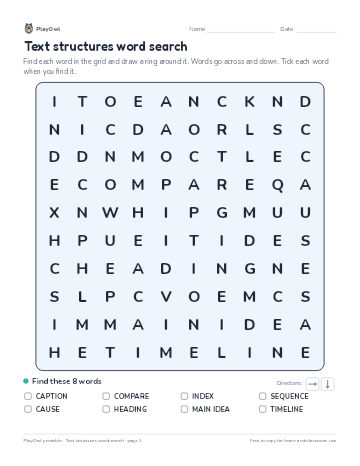 Text structures word search
English · Grade 5 · Puzzle · 1 page
Text structures word search
English · Grade 5 · Puzzle · 1 page
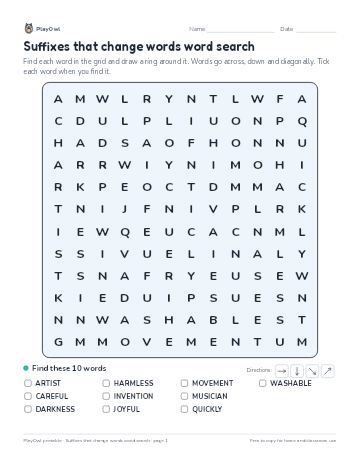 Suffixes that change words word search
English · Grade 4 · Puzzle · 1 page
Suffixes that change words word search
English · Grade 4 · Puzzle · 1 page
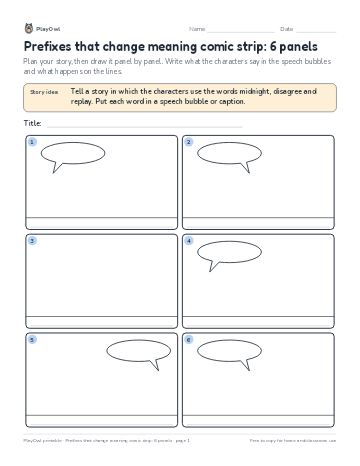 Prefixes that change meaning comic strip: 6 panels
English · Grade 4 · Worksheet · 1 page
Prefixes that change meaning comic strip: 6 panels
English · Grade 4 · Worksheet · 1 page
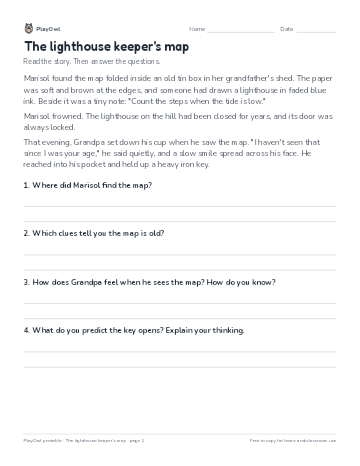 The lighthouse keeper's map
English · 3–5 · Reading · 1 page
The lighthouse keeper's map
English · 3–5 · Reading · 1 page
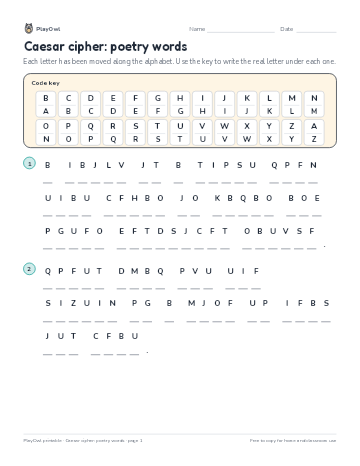 Caesar cipher: poetry words
English · Grade 4 · Puzzle · 1 page
Caesar cipher: poetry words
English · Grade 4 · Puzzle · 1 page
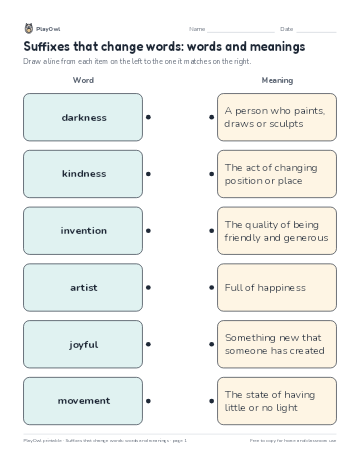 Suffixes that change words: words and meanings
English · Grade 5 · Worksheet · 1 page
Suffixes that change words: words and meanings
English · Grade 5 · Worksheet · 1 page
Printable generator
Make your own printables
Make brand-new sheets like this one, with answer keys, using the printable generator that comes with a PlayOwl plan. This sheet stays free.