How do microphones and speakers work?
Microphones turn sound vibrations into an electrical signal, and speakers turn the signal back into vibrations you can hear.
The big idea: Sound is the air vibrating. A microphone has a thin sheet that wiggles with the air, and it turns the wiggles into a matching electrical signal. A speaker uses that signal to push the air in the same pattern, so you hear the sound again.
It's like
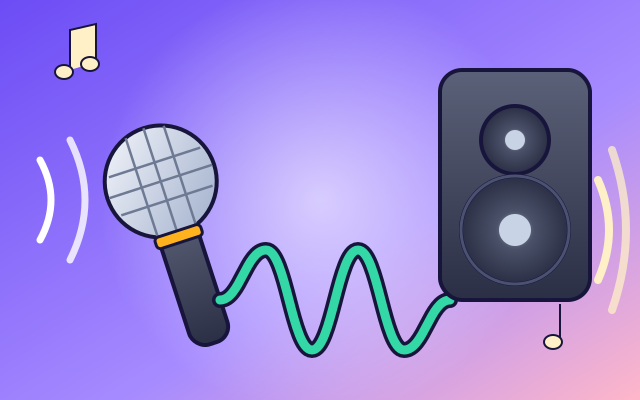
The interactive parts didn't load. The explanations below still work; try reloading the page.
Sound into electricity and back again
- When Ava sings, her vocal cords vibrate and push the air. The air bunches up and spreads out in waves that travel to the microphone.
- Inside the microphone is a very thin sheet called a diaphragm. The air waves push and pull it, so it wiggles in the same pattern as the sound.
- The diaphragm is joined to a coil of wire next to a magnet. When the coil moves, electricity flows in the wire, in the same pattern as the sound.
- The signal from a microphone is very weak. An amplifier makes a bigger copy of it, strong enough to drive a speaker.
- A speaker works like a microphone in reverse. The signal flows through a coil near a magnet, which pushes the cone in and out. The cone pushes the air, making sound again.
- Bigger waves sound louder and smaller waves sound quieter. Waves that are close together sound high, like a bird. Waves far apart sound low, like a drum.
Inside a microphone and a speaker
Tap each part. The microphone and the speaker have the same kinds of parts, used in opposite ways!
- Diaphragm. The diaphragm is a very thin, light sheet. Sound waves push and pull it, so it vibrates just like the air does.
- Microphone coil. A tiny coil of wire is glued to the diaphragm. When the diaphragm moves, the coil moves too.
- Microphone magnet. When a wire moves near a magnet, electricity starts to flow in it. The magnet is what turns movement into electricity.
- Cable. The cable carries the electrical signal from the microphone. The signal goes up and down in the same pattern as the sound.
- Amplifier. The amplifier makes a much bigger copy of the signal, with enough power to move the speaker cone.
- Voice coil. The signal flows through the speaker's coil. That makes the coil into an electromagnet that the big magnet pushes and pulls.
- Speaker magnet. The big magnet at the back of the speaker pushes and pulls on the coil whenever electricity flows through it.
- Speaker cone. The cone is joined to the coil. It moves in and out and pushes the air, making sound waves that travel to your ears.
The sound lab
Change the loudness and the pitch. Watch the air, the microphone and the signal. Press Play to hear it (gently).
Experiment: What changes in the wave when you make the sound higher?
- Set the pitch low and look at the signal on the screen.
- Slide the pitch up. Count the waves on the screen.
- Now change only the loudness. What changes this time?
What we found: A higher sound vibrates faster, so its waves are closer together: more waves fit on the screen. A louder sound has taller waves: it pushes the air harder, but the waves stay the same distance apart.
Turn on JavaScript to try it yourself.
Match the mystery sound
Change the loudness and pitch until your wave matches the dashed mystery wave. Then press Check.
Wiggles, waves and wires
Sound is made by things that vibrate, like a guitar string, a drum or your vocal cords. Each vibration pushes the air next to it, and that air pushes the air next to it. A wave of squashed and stretched air travels outward until it reaches your ear.
A microphone turns these air waves into electricity. Sound pushes on its thin diaphragm, which moves a tiny coil of wire near a magnet. Moving a wire near a magnet makes electricity flow, so the microphone makes an electrical signal that goes up and down just like the sound.
A speaker does the opposite. The signal flows through a coil near a magnet, and the magnet pushes the coil back and forth. The coil moves a cone, the cone pushes the air, and the sound wave is made again.
Loud sounds have big waves: the air is pushed hard. High sounds have waves close together: the air vibrates very fast. A mouse squeak is high, and a big drum is low. You can hear sounds that vibrate from about 20 to 20,000 times every second.
Key words
- Vibration
- A quick back-and-forth movement. All sounds start as vibrations.
- Amplitude
- How big a wave is. Bigger waves sound louder.
- Frequency
- How many vibrations happen each second. More vibrations sound higher.
- Diaphragm
- The thin sheet in a microphone that vibrates when sound hits it.
- Transducer
- A device that changes one kind of energy into another, like sound into electricity.
Check your thinking
-
What does a louder sound look like on the screen?
Show the answer
Taller waves. A louder sound pushes the air harder, so the wave is taller.
-
Which sound has waves closest together?
Show the answer
A whistle. A whistle vibrates very fast, so its waves are close together.
-
What does a microphone turn sound into?
Show the answer
An electrical signal. The diaphragm and coil turn air vibrations into electricity that goes up and down like the sound.
-
How is a speaker like a microphone?
Show the answer
It has the same parts, but works the other way around. Both have a coil, a magnet and something that moves. The microphone turns sound into a signal; the speaker turns a signal into sound.
-
A sound has a frequency of 686 Hz. What is its wavelength in air (speed 343 m/s)?
Show the answer
0.5 m. Wavelength = speed ÷ frequency = 343 ÷ 686 = 0.5 m.
-
What does a speaker cone push to make sound?
Show the answer
The air. The cone pushes and pulls the air, making pressure waves that travel to your ears.
You're a Computers & communication expert!
You watched, looked inside, tried it, solved the challenge and went deeper. Pick another question below, or switch the age at the top to see this topic another way.
More about computers & communication
 #326
Computers & communication
How do QR codes store information?
Encode a short message into a square pattern and decode it onscreen.
#326
Computers & communication
How do QR codes store information?
Encode a short message into a square pattern and decode it onscreen.
 #327
Computers & communication
How does a search engine find websites?
Build a miniature index and compare which pages match different searches.
#327
Computers & communication
How does a search engine find websites?
Build a miniature index and compare which pages match different searches.
 #328
Computers & communication
How do passwords protect accounts?
Explore how a system checks fictional passwords without displaying stored secrets.
#328
Computers & communication
How do passwords protect accounts?
Explore how a system checks fictional passwords without displaying stored secrets.
 #329
Computers & communication
How does two-step verification protect accounts?
Unlock a pretend account using two proofs and explore their separate roles.
#329
Computers & communication
How does two-step verification protect accounts?
Unlock a pretend account using two proofs and explore their separate roles.
Keep exploring
Games to play next
- Robot RoutesSnap together arrow, repeat and dance blocks to guide Bolt the robot home.
- Bug DetectiveA robot program almost works. Run it, spot the buggy block, and fix it.
- Safe Message DetectiveRead made-up messages, pop-ups and posts, spot the clues, and choose the safe, kind thing to do.
Guide for grown-ups
- How to start homeschooling: a step-by-step guide for familiesA guide for parents · 7 min read
Coding games by grade
Computer skills worksheets by grade
- Preschool Computer Skills Worksheets
- Pre-K Computer Skills Worksheets
- Kindergarten Computer Skills Worksheets
- 1st Grade Computer Skills Worksheets
- 2nd Grade Computer Skills Worksheets
- 3rd Grade Computer Skills Worksheets
- 4th Grade Computer Skills Worksheets
- 5th Grade Computer Skills Worksheets
- 6th Grade Computer Skills Worksheets
- 7th Grade Computer Skills Worksheets
- 8th Grade Computer Skills Worksheets