Why do cut apples turn brown?
Cutting an apple breaks its cells, and tiny helpers called enzymes use oxygen from the air to make a brown color.
The big idea: A cut breaks open the apple's cells. Enzymes, natural plant chemicals and oxygen from the air meet, and together they make a brown color.
It's like a glow stick: two liquids are kept apart inside until you crack it. Then they mix, react and change color. Cutting an apple cracks its cells the same way.
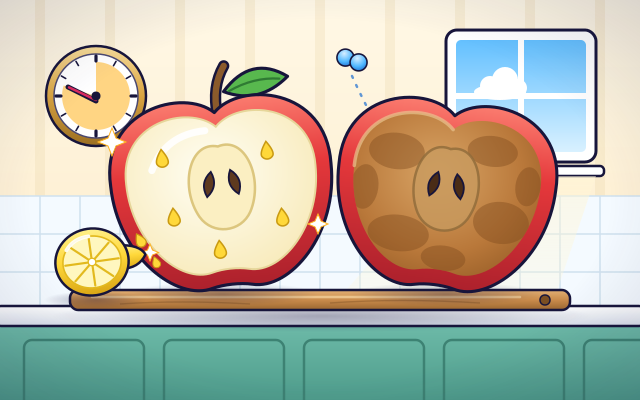
The interactive parts didn't load. The explanations below still work; try reloading the page.
The mystery of the brown apple
- A grown-up slices a fresh apple. Inside, it is pale and juicy. Until now, the red skin kept the inside safe from the air.
- Leave the halves on the counter for an hour and the cut faces turn brown. Nothing touched them but air. So what changed?
- Zoom in on the apple. It is built from tiny juicy rooms called cells. Each cell keeps two things in separate bags: natural plant chemicals, and tiny helpers called enzymes.
- The knife breaks open the cells along the cut. The bags burst, so the enzymes and the plant chemicals spill out and mix. Now oxygen from the air can reach them too.
- Each enzyme grabs oxygen and a plant chemical and joins them. The new pieces link up into a brown color, called a pigment. The enzyme is not used up, so it does this again and again.
- Take away one ingredient and browning slows. Lemon juice stops the enzymes from working well. A tight lid keeps oxygen out. A cold fridge slows everything down.
Look inside a cut apple
Tap the parts of the apple, then the tiny things in the magnifying glass. Each one shows what it does.
- Skin. The waxy skin wraps the whole apple. It keeps air and germs out, so the inside stays pale for weeks until the skin is cut or bruised.
- Flesh. The flesh is the pale, juicy part. Only its surface turns brown, because that is where cut cells meet the air. Bite into a brown slice and it is still white underneath.
- Core and seeds. The core holds the seeds in little papery pockets. The apple's sweet flesh is there to tempt animals to carry the seeds away.
- Apple cell. A whole cell, with its wall still closed. Inside, the enzymes and the plant chemicals stay in separate bags, so nothing turns brown.
- Enzyme. Enzymes are tiny helpers made by living things. This one joins oxygen to the plant chemicals. It is not used up, so one enzyme can do the job thousands of times.
- Plant chemicals. Natural chemicals that the apple makes. They have no color until the enzyme joins them with oxygen.
- Oxygen. Oxygen is a gas in the air all around us. It can only reach the apple's insides where the skin has been cut.
- Brown pigment. A pigment is a material with color. The joined-up pieces link into brown pigment, and as more builds up the apple looks browner.
The one-hour apple test
Two cut apples sit side by side. Protect yours with lemon juice, a lid or the cold, then start the clock and compare it with the plain one.
Experiment: You squeeze lemon juice on one cut apple and leave the other plain. After an hour, what will they look like?
- Start the clock with no protection and watch both apples.
- Start over with fresh slices. Tap the lemon to squeeze juice on your apple.
- Start the clock again. Compare your apple with the plain one.
What we found: The plain apple went brown, and the protected one stayed pale. Lemon juice is sour, and the enzymes work badly in sour juice. A lid keeps oxygen away, and cold slows the enzymes down. Each trick removes or slows one thing that browning needs.
Turn on JavaScript to try it yourself.
Pack a fresh apple snack
Lunch is three hours away. Protect the apple so it is still pale when the lunchbox opens.
What makes the brown?
An apple is built from millions of tiny cells, like juicy rooms with thin walls. Inside each cell, two things are stored apart from each other. One is a group of natural plant chemicals with no color. The other is an enzyme, a tiny helper that makes chemical changes happen quickly.
When you cut or bite the apple, you break open the cells along the cut. Now the enzyme and the plant chemicals spill out and mix. Oxygen, a gas in the air, lands on the wet surface. The enzyme joins the oxygen to the plant chemicals, and the new pieces link together into a brown pigment. A pigment is simply a material that has a color.
Browning needs all three things: the enzyme, the plant chemicals and oxygen. That gives you three ways to slow it. Lemon juice is sour, and the enzyme works badly in sour juice. A tight lid or a bowl of water keeps most of the oxygen away. A cold fridge makes the enzyme work slowly.
The glow stick idea only goes so far: a glow stick has everything it needs inside, but an apple also needs oxygen from outside. And a brown apple is not bad. It is still safe to eat. It just looks and tastes a little different.
Key words
- Cell
- One of the tiny rooms that living things are built from.
- Enzyme
- A tiny helper made by living things that makes a chemical change happen quickly.
- Oxygen
- A gas that makes up about one fifth of the air. Many chemical changes, such as browning and rusting, use it.
- Pigment
- A material that gives something its color.
- Catalyst
- Something that speeds up a chemical change without being used up.
- Oxidation
- A chemical change in which something joins with oxygen.
Check your thinking
-
Which three things must meet for a cut apple to turn brown?
Show the answer
Enzymes, plant chemicals and oxygen. The enzyme joins oxygen from the air to the plant chemicals from the broken cells.
-
Why does lemon juice keep a cut apple pale?
Show the answer
The enzymes work badly in sour juice. Lemon juice is an acid. In acid, the enzyme changes shape and cannot do its job well.
-
A whole apple sits in the fruit bowl for a week and stays white inside. Why?
Show the answer
Its cells are not broken, and the skin keeps air out. The enzymes are already there, but they stay in their own bags until a cut or a bruise breaks the cells.
-
You put apple slices in a bowl of water. What happens?
Show the answer
They brown more slowly, because less oxygen reaches them. Water holds much less oxygen than air does, so the enzymes have little to work with.
-
An enzyme is a catalyst. What does that tell you about one enzyme molecule in a browning apple?
Show the answer
It can act again and again, because it is not used up. A catalyst speeds up a reaction and comes out unchanged, so a little enzyme can make a lot of pigment.
-
Cooling a slice from 24 to 4 degrees Celsius is two steps of 10 degrees. Using the rule of thumb, about how fast does it brown now?
Show the answer
About one quarter as fast. Each drop of 10 degrees roughly halves the speed. Half of a half is one quarter.
-
Is a brown apple slice safe to eat?
Show the answer
Yes, the brown is only a pigment. Browning changes the look and the taste a little, but a freshly browned slice is safe.
You're a Everyday chemistry & materials expert!
You watched, looked inside, tried it, solved the challenge and went deeper. Pick another question below, or switch the age at the top to see this topic another way.
More about everyday chemistry & materials
 #422
Everyday chemistry & materials
How do acids and bases behave?
Test fictional household samples with virtual indicators and explore neutralization.
#422
Everyday chemistry & materials
How do acids and bases behave?
Test fictional household samples with virtual indicators and explore neutralization.
 #423
Everyday chemistry & materials
Why does salt change how ice melts?
Compare pure water and saltwater as temperature changes in a virtual freezing experiment.
#423
Everyday chemistry & materials
Why does salt change how ice melts?
Compare pure water and saltwater as temperature changes in a virtual freezing experiment.
 #424
Everyday chemistry & materials
How does sugar dissolve in water?
Follow particles spreading through water and compare stirring and temperature.
#424
Everyday chemistry & materials
How does sugar dissolve in water?
Follow particles spreading through water and compare stirring and temperature.
 #425
Everyday chemistry & materials
How do wet clothes dry?
Change airflow, temperature, and humidity and follow water leaving fabric.
#425
Everyday chemistry & materials
How do wet clothes dry?
Change airflow, temperature, and humidity and follow water leaving fabric.
Keep exploring
Games to play next
- Weather LabPredict the weather in a box, then run a fair test to find out why.
- Science QuizzesOlly's Science Quiz Show: plants, animals, the body, weather, space and more, for every grade.
- Ratio KitchenScale recipes, fill ratio tables and find the better buy.
Guide for grown-ups
- How to start homeschooling: a step-by-step guide for familiesA guide for parents · 7 min read
Science games by grade
Science worksheets by grade
- Preschool Science Worksheets
- Pre-K Science Worksheets
- Kindergarten Science Worksheets
- 1st Grade Science Worksheets
- 2nd Grade Science Worksheets
- 3rd Grade Science Worksheets
- 4th Grade Science Worksheets
- 5th Grade Science Worksheets
- 6th Grade Science Worksheets
- 7th Grade Science Worksheets
- 8th Grade Science Worksheets