How do bicycles work?
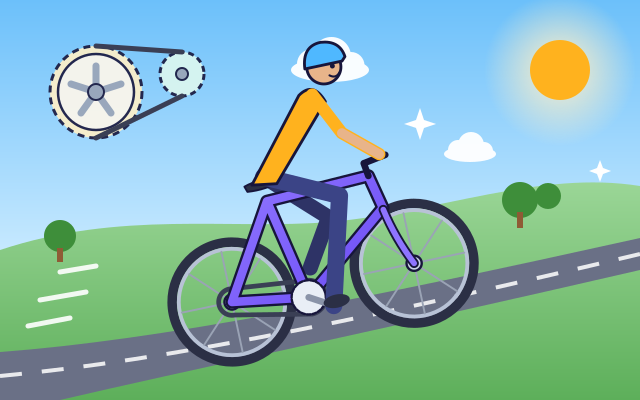
Pedals, a chain and gears carry your push to the back wheel, and the right gear makes hills easier.
The big idea: The pedals turn a big gear, a chain carries the turning to a small gear on the back wheel, and the wheel rolls. Easy gears make hills easier, and hard gears make you faster on flat roads.
It's like
The interactive parts didn't load. The explanations below still work; try reloading the page.
From your feet to the wheel
- Your feet push the pedals down, one after the other. The pedals are on arms called cranks, so pushing down makes them go round in a circle.
- The cranks turn a toothed gear called the chainring. The chain wraps around it and around a smaller gear on the back wheel, so the back wheel turns too.
- A big front gear and a small back gear make the wheel turn several times for every pedal turn. That's a hard gear: you go far with each push.
- On a hill, the rider shifts to a bigger back gear. Now the legs go round more times, but each push is much easier. Slow and steady climbs the hill!
- How does a bike stay up? When it starts to lean, the rider steers a little toward the lean. The wheels roll back under the rider, and the bike straightens up.
- Squeezing the brake lever pulls a cable. Rubber pads press on the wheel, and rubbing slows the wheel down. That rubbing is called friction.
Parts of a bicycle
Tap each part of the bike. Watch it move when you find it!
- Pedals and cranks. The pedals sit on the ends of two arms called cranks. They are opposite each other, so one foot pushes while the other foot comes back up.
- Chainring. The chainring is the big toothed gear at the front. Many bikes have two or three of different sizes.
- Chain. The chain is a loop of small metal links. Its links fit between the gear teeth, so it can't slip as it pulls the back gear around.
- Rear gears. The back wheel has a stack of gears called a cassette. A springy arm, the derailleur, pushes the chain from one gear to another when you shift.
- Wheels and tires. Thin spokes hold the rim in place. The tires are filled with air, which cushions bumps and helps the tires grip the road.
- Brakes. Squeezing a brake lever pulls a cable that presses rubber pads against the wheel rim. Friction slows the wheel down.
- Handlebars and fork. The handlebars turn the front fork and front wheel. Small steering moves also keep the bike balanced.
- Frame. The frame is made of tubes joined into two triangles. Triangles are strong shapes, so the frame is strong but light.
- Saddle. The saddle is the seat. Its height matters: your leg should be almost straight when a pedal is at the bottom.
Gears on a hill
Pick a back gear and a road. Watch how hard the rider pushes and how far the bike goes with each pedal turn.
Experiment: On a steep hill, which back gear makes pedaling easier?
- Choose the steep hill.
- Try the small back gear, then the big back gear.
- Watch the effort meter and the dots on the road.
What we found: The big back gear makes each push much easier, so you can climb. The bike goes a shorter way with each pedal turn, so your legs spin more. On flat roads, the small back gear takes you farther with each turn.
Turn on JavaScript to try it yourself.
Ride the course
Ride the flat road, climb the hill, then roll down and stop in the green box by the stop sign.
How bike gears work
When you pedal, your feet push the pedals around in a circle. The pedals turn the chainring, the big gear at the front. The chain carries that turning to a smaller gear on the back wheel, so the back wheel spins and pushes the bike forward.
Gears change how far the bike goes for each turn of the pedals. With a big front gear and a small back gear, the back wheel turns several times for every pedal turn. You go far with each push, but each push is hard. That's great on a flat road.
On a hill, you need more force. Shifting to a bigger back gear makes each pedal turn move the bike a shorter distance, so each push is easier. Your legs spin more, but you can keep climbing.
Balance comes from steering. When a bike starts to tip, the rider steers a little in the same direction, and the wheels roll back under the rider. That's why riding slowly is wobblier than riding a bit faster.
Key words
- Chainring
- The toothed gear turned by the pedals.
- Cog
- One of the toothed gears on the back wheel.
- Gear ratio
- How many times the back wheel turns for one turn of the pedals.
- Derailleur
- The springy arm that moves the chain from one gear to another.
- Friction
- A rubbing force that slows things down, like brake pads on a wheel.
- Torque
- A turning push, like pushing a pedal around.
Check your thinking
-
What carries the turning from the pedals to the back wheel?
Show the answer
The chain. The chain wraps around both gears, so when the front gear turns, the back gear turns too.
-
Which back gear makes climbing a hill easier?
Show the answer
A big back gear. A big back gear means each push moves you a shorter way, so it needs less force.
-
How does a rider keep a bike from tipping over?
Show the answer
By steering a little toward the side it leans. Steering into the lean brings the wheels back under the rider, so the bike straightens up.
-
A bike has a 48-tooth chainring and a 16-tooth cog. How many times does the wheel turn per pedal turn?
Show the answer
3. Wheel turns per pedal turn = front teeth ÷ rear teeth = 48 ÷ 16 = 3.
-
How do brakes slow a bike down?
Show the answer
Pads rub on the wheel, and friction slows it. Friction between the pads and the wheel turns the wheel's motion into heat.
-
On a flat road, why do riders use a hard gear?
Show the answer
Each pedal turn takes the bike farther, so it goes faster. A hard gear turns the back wheel more times per pedal turn, so you go farther with each push.
You're a Flight & transportation expert!
You watched, looked inside, tried it, solved the challenge and went deeper. Pick another question below, or switch the age at the top to see this topic another way.
More about flight & transportation
 #9
Flight & transportation
How does a car engine work?
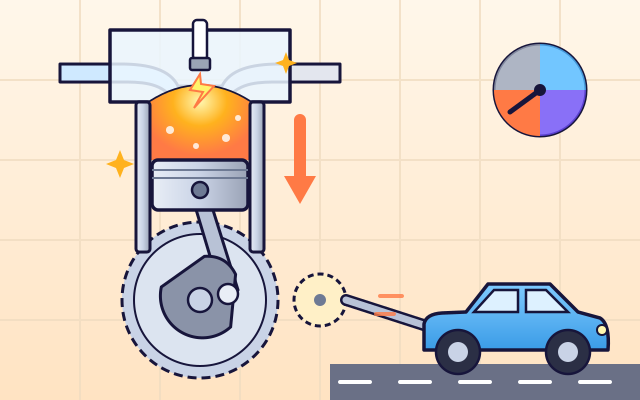
Watch a transparent engine in slow motion. Follow air and fuel entering, compression, combustion, and exhaust, then trace the motion toward the wheels.
#9
Flight & transportation
How does a car engine work?
Watch a transparent engine in slow motion. Follow air and fuel entering, compression, combustion, and exhaust, then trace the motion toward the wheels.
 #10
Flight & transportation
How do electric cars work?
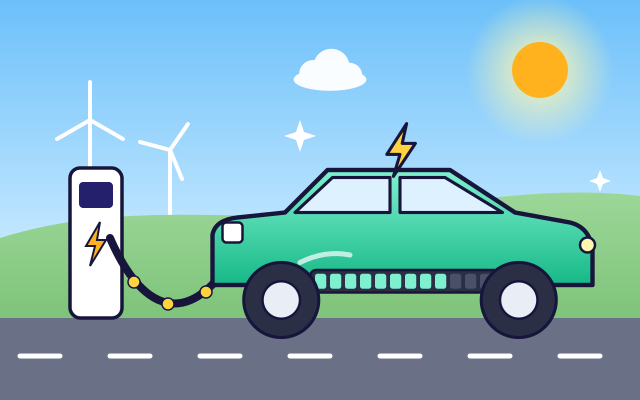
Follow energy from the battery to the motor and wheels. Drive a short course, recharge the battery, and explore how regenerative braking recovers energy.
#10
Flight & transportation
How do electric cars work?
Follow energy from the battery to the motor and wheels. Drive a short course, recharge the battery, and explore how regenerative braking recovers energy.
 #123
Flight & transportation
How do parachutes slow a fall?
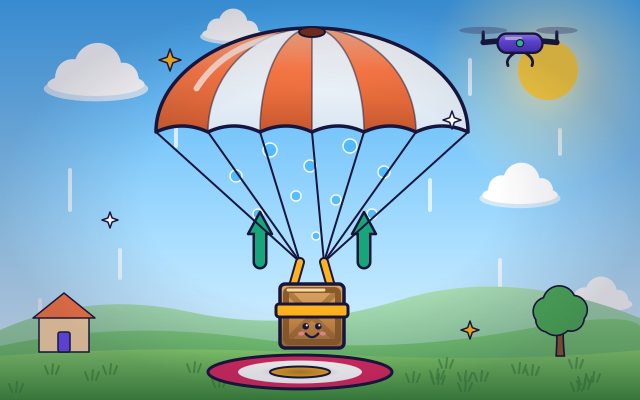
Change canopy size and cargo mass, then compare descent and landing in a simulation.
#123
Flight & transportation
How do parachutes slow a fall?
Change canopy size and cargo mass, then compare descent and landing in a simulation.
 #124
Flight & transportation
How do hot-air balloons rise and descend?
Heat or cool the balloon's air and observe changes in lift and height.
#124
Flight & transportation
How do hot-air balloons rise and descend?
Heat or cool the balloon's air and observe changes in lift and height.
Keep exploring
Games to play next
- Urban Bicycle Delivery RushA basket of deliveries and a city full of clever routes.
- Machine RepairFix levers, pulleys, gears and ramps so every contraption works.
- Plane Flight SimulatorTake off from the runway and thread numbered sky hoops in order. Every clean flight is a new personal best.
Draw it or make it
- How to draw a bicycleDrawing lesson
Guide for grown-ups
- How to start homeschooling: a step-by-step guide for familiesA guide for parents · 7 min read
Science games by grade
Science worksheets by grade
- Preschool Science Worksheets
- Pre-K Science Worksheets
- Kindergarten Science Worksheets
- 1st Grade Science Worksheets
- 2nd Grade Science Worksheets
- 3rd Grade Science Worksheets
- 4th Grade Science Worksheets
- 5th Grade Science Worksheets
- 6th Grade Science Worksheets
- 7th Grade Science Worksheets
- 8th Grade Science Worksheets