How do hot-air balloons rise and descend?
A burner heats the air inside a huge fabric bag. Hot air is lighter than cool air, so the balloon floats up.
The big idea: Heating air makes it spread out, so some of it spills out of the balloon. The air left inside weighs less than the cooler air outside, and the heavier outside air pushes the balloon up.
It's like a beach ball pushed under water. The ball is lighter than the water, so the water pushes it up. Cool air does the same to a balloon of hot air.
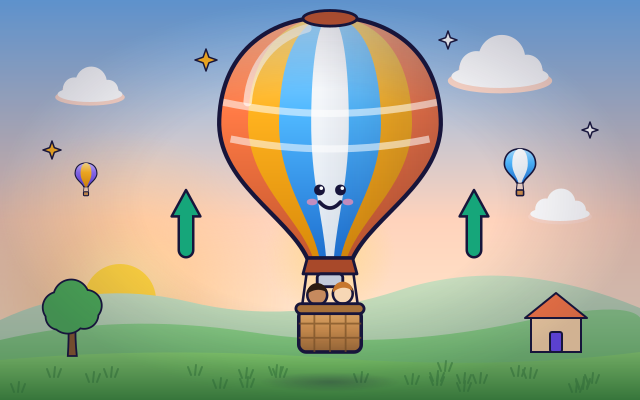
The interactive parts didn't load. The explanations below still work; try reloading the page.
How a hot-air balloon flies
- At sunrise the crew spreads the balloon on the grass. A fan fills it with air, and then the burner roars. How can a bag of air lift a basket full of people?
- The burner heats the air inside the balloon. Air is made of tiny bits called molecules. When they get hot, they zoom around faster and push each other farther apart.
- The balloon is open at the bottom, so as the air spreads out, some of it spills out. Fewer bits of air are left inside. A balloon full of hot air weighs less than the same balloon full of cool air.
- The cooler, heavier air outside pushes up on the balloon, just as water pushes up on a beach ball. When that push is bigger than the weight of the balloon, the basket lifts off the ground.
- To come down, the pilot lets the air cool, or pulls a cord that opens a flap in the top. Hot air escapes, cooler air comes in at the bottom, the balloon gets heavier and it sinks gently.
- A balloon cannot steer left or right. It drifts with the wind. But the wind often blows in different directions at different heights, so the pilot goes up or down to find a wind going the right way.
The parts of a hot-air balloon
Tap each part of the balloon to find out what it does.
- Envelope. The envelope is the huge fabric bag. It is made of light, strong nylon and holds the hot air that lifts the balloon.
- Hot air. The air inside is heated to about 100 degrees Celsius. Its molecules are spread farther apart than those in the cool air outside, so it is lighter.
- Burner. The burner shoots a tall flame up into the balloon. The pilot fires it in short bursts to keep the air hot.
- Fuel tanks. Tanks of propane gas sit in the corners of the basket. Hoses carry the fuel up to the burner.
- Basket. The basket carries the pilot, the passengers and the fuel. It is woven from wicker, which is light and strong and bends a little when it lands.
- Mouth and skirt. The bottom of the balloon is open. The burner fires up through this hole, and expanding air can spill out of it.
- Vent. A round flap in the very top holds the hot air in. When it opens, hot air escapes and the balloon sinks.
- Vent cord. This cord runs from the flap at the top all the way down to the basket. The pilot pulls it to open the vent.
Heat it up, cool it down
Slide to heat or cool the air inside. Watch the two arrows, lift and weight, and see how high the balloon floats.
Experiment: What happens to the balloon as you make the air inside hotter and hotter?
- Start with cool air inside. Is the lift arrow bigger than the weight arrow?
- Heat the air until the balloon lifts off. Then make it hotter still.
- Now cool the air again and watch the arrows.
What we found: Hotter air inside is lighter, so the lift arrow grows. When lift is bigger than weight the balloon rises, and the hotter the air, the higher it floats. Let the air cool and it becomes heavier, lift shrinks and the balloon sinks.
Turn on JavaScript to try it yourself.
Over the hill
The wind carries you to the right. Use the burner and the vent to fly over the hill, then land gently on the target field.
Lighter than air
Air is made of tiny bits called molecules, far too small to see. They are always moving. When air is heated, its molecules move faster and bump each other farther apart, so the air spreads out and takes up more room.
A hot-air balloon is open at the bottom. When the burner heats the air inside, the air spreads out and some of it spills out through the opening. The balloon stays the same size, but now there is less air in it. So a balloon full of hot air weighs less than the same balloon full of cool air.
The cooler air outside is heavier, and it pushes up on the balloon. It is the same push that sends a beach ball shooting up when you let go of it under water. If the push is bigger than the weight of the balloon, basket and passengers, the balloon rises. To come down, the pilot lets the air cool or opens a flap in the top to let hot air out.
The beach ball is not a perfect match. A ball pops up fast, but a balloon is only a little lighter than the air around it, so it rises slowly and gently. And a balloon cannot be steered. It drifts with the wind, and the pilot changes height to find a wind that is going the right way.
Key words
- Density
- How much stuff is packed into a space. Hot air has less stuff in the same space than cool air.
- Buoyancy
- The upward push on something that is lighter than the air or water around it.
- Envelope
- The fabric bag of a balloon that holds the hot air.
- Burner
- The device that burns propane gas to heat the air in the envelope.
- Parachute valve
- The round flap in the top of the envelope that opens to let hot air out.
Check your thinking
-
Why does a balloon full of hot air float upward?
Show the answer
The hot air inside is lighter than the cool air outside. Some air spills out when it is heated, so the balloon weighs less than the cool air around it, and that air pushes it up.
-
How does a pilot bring a balloon down gently?
Show the answer
Lets the air cool, or opens the vent in the top. Cooler air inside is heavier, so the upward push no longer beats the weight, and the balloon sinks.
-
How does a balloon pilot steer toward a landing field?
Show the answer
By going up or down to find wind blowing the right way. A balloon goes where the wind goes, and the wind often blows a different way at a different height.
-
Why is it easier to fly a hot-air balloon on a cold morning than on a hot afternoon?
Show the answer
Cold outside air is denser, so the same hot air inside gives more lift. Lift depends on the difference between the outside density and the inside density. Colder outside air is denser, so the difference is larger.
-
Why is the balloon open at the bottom?
Show the answer
So the burner can heat the air, and extra air can spill out. The flame shoots up through the opening, and as the air spreads out, some of it leaves the same way. That is how the balloon gets lighter.
You're a Flight & transportation expert!
You watched, looked inside, tried it, solved the challenge and went deeper. Pick another question below, or switch the age at the top to see this topic another way.
More about flight & transportation
 #125
Flight & transportation
How do hovercraft travel over land and water?
Follow air into the cushion beneath a hovercraft and steer across different surfaces.
#125
Flight & transportation
How do hovercraft travel over land and water?
Follow air into the cushion beneath a hovercraft and steer across different surfaces.
 #126
Flight & transportation
How do sailboats use the wind?
Adjust sail angle and rudder position to navigate with winds from different directions.
#126
Flight & transportation
How do sailboats use the wind?
Adjust sail angle and rudder position to navigate with winds from different directions.
 #127
Flight & transportation
How do jet engines produce thrust?
Follow air through compression, heating, and expansion inside a transparent engine.
#127
Flight & transportation
How do jet engines produce thrust?
Follow air through compression, heating, and expansion inside a transparent engine.
 #128
Flight & transportation
How do propellers push vehicles forward?
Rotate blades through air or water and inspect the direction of the resulting flow.
#128
Flight & transportation
How do propellers push vehicles forward?
Rotate blades through air or water and inspect the direction of the resulting flow.
Keep exploring
Games to play next
- Plane Flight SimulatorTake off from the runway and thread numbered sky hoops in order. Every clean flight is a new personal best.
- Machine RepairFix levers, pulleys, gears and ramps so every contraption works.
- Timetable TerminalRead the departure board, count the minutes and catch your connection on time.
Draw it or make it
- How to draw a party balloonDrawing lesson
Guide for grown-ups
- How to start homeschooling: a step-by-step guide for familiesA guide for parents · 7 min read
Science games by grade
Science worksheets by grade
- Preschool Science Worksheets
- Pre-K Science Worksheets
- Kindergarten Science Worksheets
- 1st Grade Science Worksheets
- 2nd Grade Science Worksheets
- 3rd Grade Science Worksheets
- 4th Grade Science Worksheets
- 5th Grade Science Worksheets
- 6th Grade Science Worksheets
- 7th Grade Science Worksheets
- 8th Grade Science Worksheets