How does a car engine work?
Inside the engine, air and fuel are sucked in, squeezed, burned and blown out, over and over, to turn the wheels.
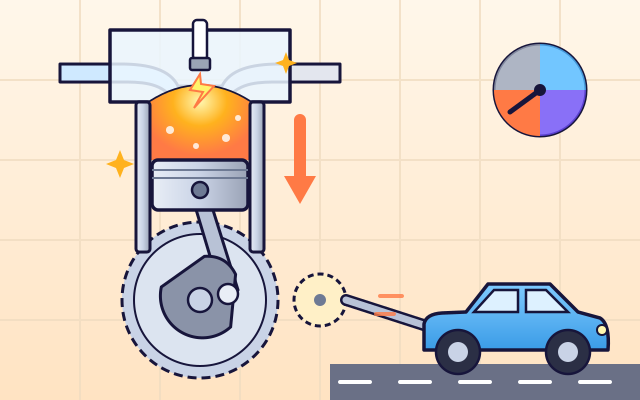
The big idea: A car engine burns a tiny bit of fuel inside a cylinder. The hot gas pushes a piston down, and the piston turns the crankshaft round and round. Gears carry that turning to the wheels.
It's like
The interactive parts didn't load. The explanations below still work; try reloading the page.
The four strokes, in slow motion
- Most cars have an engine under the hood. It burns a tiny bit of fuel again and again, many times every second, to push the car along.
- Stroke 1, intake: the piston moves down, the intake valve opens, and air rushes in. A fine spray of fuel mixes with the air.
- Stroke 2, compression: both valves close, and the piston moves up, squeezing the mixture into a tiny space. Squeezed gas gets hot.
- Stroke 3, power: the spark plug makes a spark, and the mixture burns very fast. The hot gas expands and shoves the piston down. This is the only stroke that pushes.
- Stroke 4, exhaust: the exhaust valve opens, and the piston pushes the used gases out to the tailpipe. Then the cycle starts over: suck, squeeze, bang, blow!
- A rod turns the piston's up-and-down motion into spinning at the crankshaft. Gears in the gearbox send that spin along shafts to the wheels.
Inside one cylinder
Tap each part of this see-through engine. Each one moves when you find it!
- Cylinder. The cylinder is a smooth metal tube. The piston slides up and down inside it, and the fuel burns at the top.
- Piston. The piston is a metal plug that slides up and down. Rings around it seal the gap, so the hot gas pushes the piston instead of leaking past.
- Connecting rod. The connecting rod links the piston to the crankshaft. As the piston goes up and down, the rod's bottom end goes round in a circle.
- Crankshaft. The crankshaft has offset parts, like the pedals on a bike. The rods push on them and make the whole shaft spin.
- Flywheel. The flywheel is a heavy wheel on the end of the crankshaft. Once spinning, it keeps going, which carries the engine through the strokes that don't push.
- Intake valve. The intake valve opens to let air and fuel in, then closes tight so nothing escapes while the mixture is squeezed and burned.
- Exhaust valve. The exhaust valve opens during the last stroke to let the burned gases out to the exhaust pipe.
- Spark plug. The spark plug makes a tiny spark that lights the squeezed mixture at just the right moment.
- Camshaft. The camshaft has egg-shaped bumps called cams. As it turns, each bump pushes a valve open at the right time.
- Fuel injector. The fuel injector sprays a fine mist of fuel into the air, so it mixes well and burns cleanly.
Slow-motion engine
Slide the crankshaft slowly, or press Run, to watch all four strokes. Which stroke pushes the piston down?
Experiment: Which stroke pushes the piston down and makes the car go?
- Slide the crankshaft slowly from the start to the end.
- Watch the valves, the spark and the piston.
- Find the stroke where the hot gas pushes the piston down.
What we found: Only the power stroke pushes. The burning gas shoves the piston down, and that push keeps the crankshaft turning through the other three strokes. A heavy flywheel helps carry it round.
Turn on JavaScript to try it yourself.
Be the spark plug
Make the spark at the end of the squeeze stroke. Every good bang pushes the car along. Reach the flag with as few misfires as you can.
How a car engine works
A car engine is a heat engine: it turns the energy stored in fuel into motion. Inside each cylinder, a piston slides up and down. Valves at the top open and close like little doors to let air and fuel in and used gas out.
Every cylinder repeats four steps, called strokes: intake (suck), compression (squeeze), power (bang) and exhaust (blow). Only the power stroke pushes. The spark plug lights the squeezed mixture, and the hot gas expands and shoves the piston down.
A connecting rod joins each piston to the crankshaft, which works a lot like the pedals on a bike: pushing down on an offset arm makes the shaft spin. Most cars have several cylinders that take turns, so there is always one pushing.
The spinning crankshaft turns a heavy flywheel, then gears in the gearbox, then shafts that turn the wheels. Low gears give strong pushes for starting and climbing hills; high gears let the engine turn slowly while the car goes fast.
Key words
- Piston
- A metal plug that slides up and down inside a cylinder.
- Stroke
- One trip of the piston, up or down.
- Compression ratio
- How many times smaller the gas volume gets when the piston moves from the bottom to the top.
- Crankshaft
- The shaft that turns the pistons' up-and-down motion into spinning.
- Top dead center
- The moment the piston is at the very top of its travel.
- Combustion
- Burning: fuel combining with oxygen and giving off heat.
Check your thinking
-
What lights the fuel in a gasoline engine?
Show the answer
The spark plug. The spark plug makes a spark that lights the squeezed air and fuel.
-
What is the right order of the four strokes?
Show the answer
Intake, compression, power, exhaust. Air comes in, gets squeezed, burns and pushes, and then the used gas goes out.
-
Which stroke pushes the piston and turns the crankshaft?
Show the answer
The power stroke. Only the power stroke pushes. The other three strokes are carried along by the turning crankshaft.
-
A cylinder holds 500 cm³ with the piston at the bottom and 50 cm³ with it at the top. What is the compression ratio?
Show the answer
10 to 1. Compression ratio = largest volume ÷ smallest volume = 500 ÷ 50 = 10.
-
What carries the engine's spin to the wheels?
Show the answer
Gears and shafts. The crankshaft turns gears in the gearbox, and shafts carry the spin to the wheels.
You're a Flight & transportation expert!
You watched, looked inside, tried it, solved the challenge and went deeper. Pick another question below, or switch the age at the top to see this topic another way.
More about flight & transportation
 #10
Flight & transportation
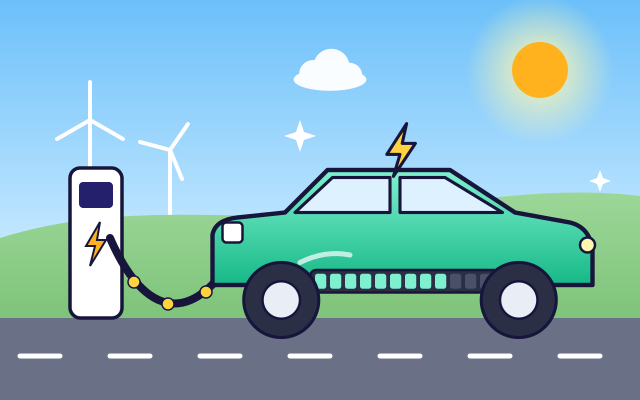
How do electric cars work?
Follow energy from the battery to the motor and wheels. Drive a short course, recharge the battery, and explore how regenerative braking recovers energy.
#10
Flight & transportation
How do electric cars work?
Follow energy from the battery to the motor and wheels. Drive a short course, recharge the battery, and explore how regenerative braking recovers energy.
 #123
Flight & transportation
How do parachutes slow a fall?
Change canopy size and cargo mass, then compare descent and landing in a simulation.
#123
Flight & transportation
How do parachutes slow a fall?
Change canopy size and cargo mass, then compare descent and landing in a simulation.
 #124
Flight & transportation
How do hot-air balloons rise and descend?
Heat or cool the balloon's air and observe changes in lift and height.
#124
Flight & transportation
How do hot-air balloons rise and descend?
Heat or cool the balloon's air and observe changes in lift and height.
 #125
Flight & transportation
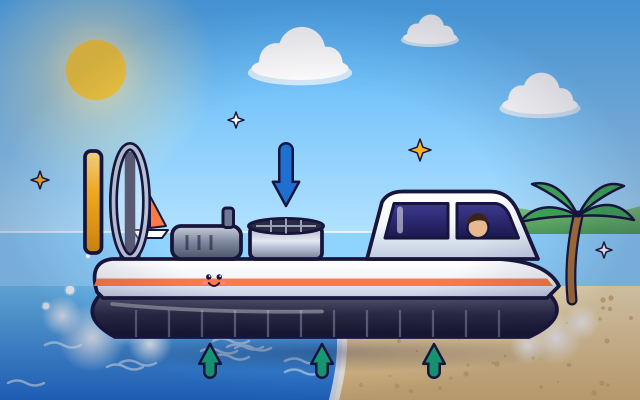
How do hovercraft travel over land and water?
Follow air into the cushion beneath a hovercraft and steer across different surfaces.
#125
Flight & transportation
How do hovercraft travel over land and water?
Follow air into the cushion beneath a hovercraft and steer across different surfaces.
Keep exploring
Games to play next
- City Driving AdventureExplore the city behind the wheel, park safely and collect roadside deliveries.
- Plane Flight SimulatorTake off from the runway and thread numbered sky hoops in order. Every clean flight is a new personal best.
- Machine RepairFix levers, pulleys, gears and ramps so every contraption works.
Draw it or make it
- How to draw a carDrawing lesson
Guide for grown-ups
- How to start homeschooling: a step-by-step guide for familiesA guide for parents · 7 min read
Science games by grade
Science worksheets by grade
- Preschool Science Worksheets
- Pre-K Science Worksheets
- Kindergarten Science Worksheets
- 1st Grade Science Worksheets
- 2nd Grade Science Worksheets
- 3rd Grade Science Worksheets
- 4th Grade Science Worksheets
- 5th Grade Science Worksheets
- 6th Grade Science Worksheets
- 7th Grade Science Worksheets
- 8th Grade Science Worksheets