How is bread made, and why does dough rise?
Flour, water, salt and living yeast become a soft, bubbly loaf. See how the bubbles get in and stay put.
The big idea: Yeast eat sugar and give off carbon dioxide gas. A stretchy net called gluten traps the gas in bubbles, so the dough rises. Baking sets the bubbles in place.
It's like
The interactive parts didn't load. The explanations below still work; try reloading the page.
From flour to loaf
- Bread starts with just four things: flour, water, salt and yeast. Yeast is alive! It is made of tiny single cells, too small to see.
- Kneading pushes and folds the dough. Proteins in the flour join up into long, stretchy strands called gluten, like a net made of rubber bands.
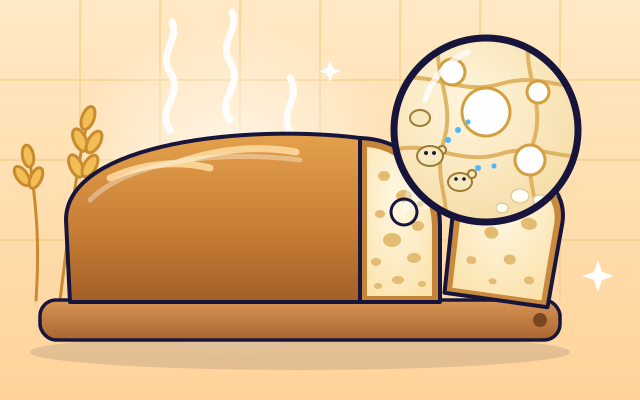
- Zoom in! Each yeast cell eats sugar and gives off a gas called carbon dioxide. The gluten net traps the gas in millions of little bubbles.
- While the dough rests somewhere warm, the yeast keep making gas. In an hour or two the dough doubles in size. Bakers call this rising, or proofing.
- In the hot oven the gas bubbles swell and the loaf jumps up. The yeast stop working, the inside sets firm, and the outside turns brown and crunchy.
- Cut a slice and look closely. All those little holes are the gas bubbles that the yeast made, frozen in place by the heat. Bakers call the soft inside the crumb.
Zoom into dough and bread
Tap each part of the loaf, then look through the magnifier at what's happening inside the dough.
- Crust. The outside of the loaf gets the hottest and driest in the oven. Sugars and proteins there turn brown and tasty, making a crunchy crust.
- Crumb. The soft inside of bread is called the crumb. Its holes are the gas bubbles that the yeast made, set firm by the heat.
- Yeast cells. Yeast are tiny living things, each just one cell. They eat sugar from the flour and give off carbon dioxide gas. They make new yeast by budding.
- Gas bubbles. The yeast's carbon dioxide gas collects in little pockets of air that got folded in during mixing. The pockets swell like tiny balloons.
- Gluten net. When flour gets wet and kneaded, two proteins link up into gluten: long, stretchy strands that make a net. The net traps the gas, like the skin of a balloon.
- Starch grains. Most of flour is starch, packed in tiny grains. Enzymes in the flour snip some starch into sugar, which feeds the yeast. In the oven, the starch soaks up water and sets soft.
Rising time and temperature
Change how long the dough rises and how warm it is. Watch the bubbles in the magnifier, then bake to see what kind of loaf you get.
Experiment: What happens to the loaf if the dough rises for longer and longer?
- Keep the dough on the kitchen counter.
- Slide the rising time from short to long, baking a loaf at each step.
- Watch the bubbles in the magnifier. What happens to the gluten net when the dough rises too long?
What we found: A short rise gives a small, heavy loaf because there's hardly any gas. A good rise doubles the dough and bakes into a tall, fluffy loaf. Rise too long and the gluten net stretches too thin, bubbles pop and join, and the loaf flops.
Turn on JavaScript to try it yourself.
Bread for the party
The party starts in 2 hours. Pick a spot for the dough and bake a tall, fluffy loaf before time runs out.
Yeast, gluten and the hot oven
Yeast is a living thing, a kind of fungus made of just one cell. A packet of dry yeast holds billions of them, asleep. When you add warm water, they wake up and start eating the sugars in the flour.
As yeast eat, they give off carbon dioxide gas, just like you breathe it out. The gas collects in tiny pockets of air that got mixed into the dough and makes them grow, like blowing up millions of balloons.
Those balloons need a skin. That's the gluten: stretchy strands made by two proteins in wheat flour when they get wet and are kneaded. The gluten net stretches around each bubble and holds the gas in, so the whole dough rises.
In the oven the bubbles swell one last time, then the heat stops the yeast and sets the dough firm, like a sponge. The outside dries, gets very hot and turns brown and crunchy. Every hole in your slice was once a yeast bubble!
Key words
- Yeast
- Tiny one-celled living things that eat sugar and make gas.
- Gluten
- Stretchy strands that form when wheat flour gets wet and is kneaded.
- Fermentation
- When yeast eat sugar and give off gas.
- Proofing
- Letting shaped dough rest and rise before baking.
- Crumb
- The soft inside of a loaf, with its pattern of holes.
- Oven spring
- The last quick rise in the first minutes of baking, as gas expands and water turns to steam.
Check your thinking
-
Which gas makes bread dough rise?
Show the answer
Carbon dioxide. Yeast give off carbon dioxide gas as they eat sugar, and the gas fills the bubbles.
-
Where will dough rise fastest?
Show the answer
In a warm kitchen. Warmth speeds the yeast up. Cold slows them down a lot.
-
What job does gluten do in dough?
Show the answer
It makes a stretchy net that traps the gas. Gluten stretches around the bubbles like a balloon's skin, so the gas stays in.
-
What are the holes in a slice of bread?
Show the answer
Gas bubbles set in place by the heat. Heat firms the dough around each bubble, so the holes stay.
-
Why does the crust turn brown but the inside stays pale?
Show the answer
The surface dries and gets much hotter than 100 °C, so browning reactions happen. Inside, water turning to steam holds the temperature near 100 °C. The dry surface heats past 150 °C, where Maillard browning is fast.
You're a Food & farming expert!
You watched, looked inside, tried it, solved the challenge and went deeper. Pick another question below, or switch the age at the top to see this topic another way.
More about food & farming
 #22
Food & farming
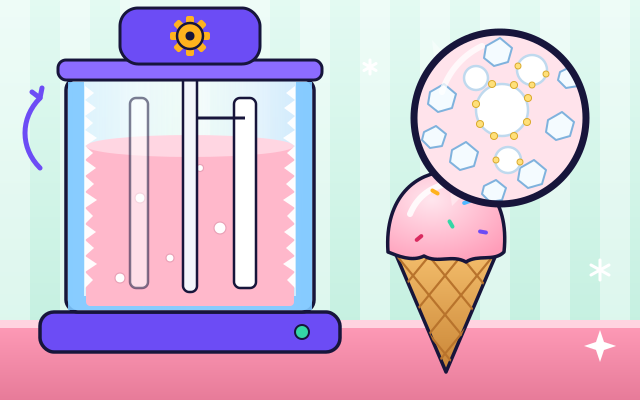
How is ice cream made?
Follow mixing, chilling, and churning inside a transparent machine. Experiment with simulated churning conditions and explore how air and ice crystals affect texture.
#22
Food & farming
How is ice cream made?
Follow mixing, chilling, and churning inside a transparent machine. Experiment with simulated churning conditions and explore how air and ice crystals affect texture.
 #23
Food & farming
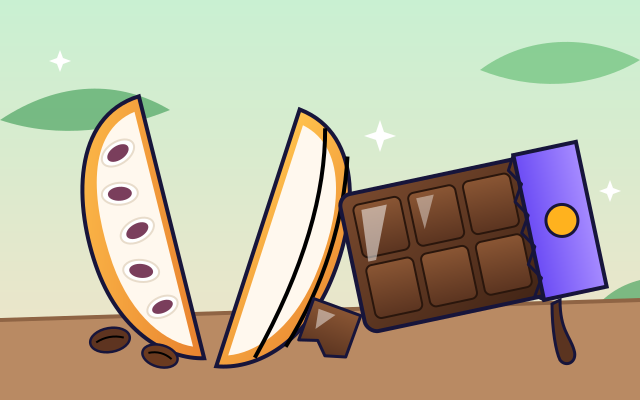
How is chocolate made?
Follow cacao from pods through fermentation, drying, roasting, grinding, mixing, and molding. Run a miniature chocolate factory and design a finished shape.
#23
Food & farming
How is chocolate made?
Follow cacao from pods through fermentation, drying, roasting, grinding, mixing, and molding. Run a miniature chocolate factory and design a finished shape.
 #24
Food & farming
Why does popcorn pop?
Look inside a kernel as it heats. Watch pressure build and the kernel expand, then compare what happens under different simulated heating conditions.
#24
Food & farming
Why does popcorn pop?
Look inside a kernel as it heats. Watch pressure build and the kernel expand, then compare what happens under different simulated heating conditions.
 #25
Food & farming
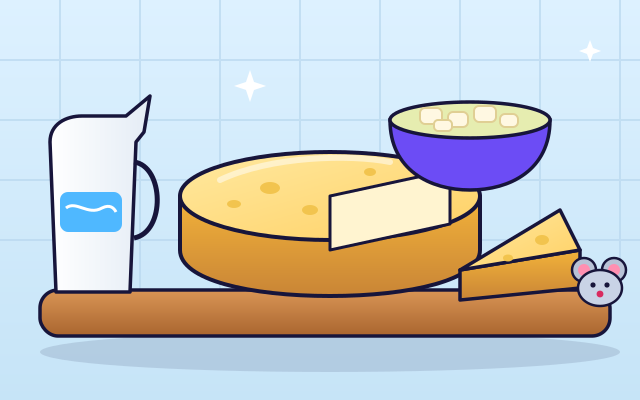
How is cheese made?
Watch milk form curds, separate curds from whey, and explore pressing and aging. Compare the production stages of fresh and aged cheeses.
#25
Food & farming
How is cheese made?
Watch milk form curds, separate curds from whey, and explore pressing and aging. Compare the production stages of fresh and aged cheeses.
Keep exploring
Games to play next
- Ratio KitchenScale recipes, fill ratio tables and find the better buy.
- Garden AutomationProgram a garden robot with sensor rules — then watch a whole day play out.
- Label LabPut the right labels on beautiful science diagrams, from bean plants to heart chambers.
Guide for grown-ups
- How to start homeschooling: a step-by-step guide for familiesA guide for parents · 7 min read
Science games by grade
Science worksheets by grade
- Preschool Science Worksheets
- Pre-K Science Worksheets
- Kindergarten Science Worksheets
- 1st Grade Science Worksheets
- 2nd Grade Science Worksheets
- 3rd Grade Science Worksheets
- 4th Grade Science Worksheets
- 5th Grade Science Worksheets
- 6th Grade Science Worksheets
- 7th Grade Science Worksheets
- 8th Grade Science Worksheets