How is ice cream made?
Ice cream is freezing plus stirring: tiny ice crystals and little air bubbles make it smooth and scoopable.
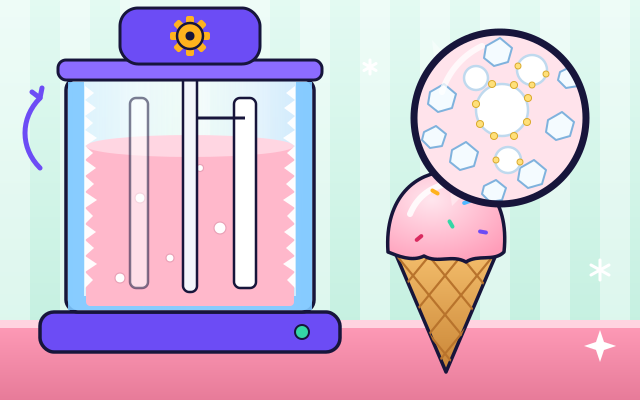
The big idea: As the mix freezes against a very cold wall, a paddle scrapes and stirs it. That keeps the ice crystals tiny, so it feels smooth, and whips in air, so it feels light.
It's like
The interactive parts didn't load. The explanations below still work; try reloading the page.
From milk to scoop
- Ice cream starts as a sweet mix of milk, cream and sugar, plus a flavor like vanilla or strawberry. Everything is stirred together until the sugar dissolves.
- Next the mix rests in the fridge for a few hours. Cold mix freezes faster in the machine, and the fat droplets firm up, ready to hold air.
- The machine's bowl has a freezing-cold wall. A thin layer of mix freezes on the wall, and a paddle called a dasher spins and scrapes it off again and again.
- Zoom in! Scraping makes lots of tiny ice crystals. Tiny crystals feel smooth on your tongue. If the mix freezes slowly without stirring, the crystals grow big and crunchy.
- Stirring also whips in tiny air bubbles, and bits of fat hold them in place. The ice cream swells up, becoming lighter and softer to scoop.
- The soft ice cream goes into a freezer to harden. Sugar keeps some water from freezing, so you can still scoop it. Time for a cone!
Inside the machine and the ice cream
Tap each part of the machine, then look through the magnifier at what ice cream is made of.
- Motor. An electric motor on top turns the paddle slowly and steadily for about 20 minutes while the mix freezes.
- Dasher (paddle). The dasher scrapes frozen mix off the cold wall and stirs it back in. It also folds in air.
- Freezing wall. The inside wall of the bowl is much colder than ice. The mix touching it freezes in a thin layer.
- Cold liquid in the wall. Home machines have a hollow bowl filled with a special liquid. You freeze the bowl first, and it pulls heat out of the mix.
- Ice crystals. Ice cream is full of tiny ice crystals. When they are very small, your tongue can't feel them, so the ice cream tastes smooth.
- Air bubbles. Stirring whips in air bubbles. Without them, ice cream would be as hard as an ice cube.
- Fat droplets. Cream has tiny drops of fat. During churning they stick together around the air bubbles and hold them in place, which makes ice cream creamy.
- Sweet syrup. Between the crystals is a very sweet, cold syrup. Sugar stops all the water from freezing, so ice cream stays soft enough to scoop.
Churning lab: speed and cold
Change how fast the paddle churns and how cold the wall is. Watch the ice crystals and air bubbles in the magnifier, and see what kind of scoop you get.
Experiment: What does churning do to ice cream?
- Stop the paddle (slide speed to still) and look at the crystals.
- Now churn fast. What happens to the crystals and the bubbles?
- Try a warmer wall and a colder wall too.
What we found: Churning scrapes the ice off the cold wall while it is still tiny, so the ice cream stays smooth. It also whips in air, which makes it lighter and softer. Still mix freezes into big, crunchy crystals, and a colder wall helps keep crystals small.
Turn on JavaScript to try it yourself.
The ice cream shop
Three customers want three different textures. Set the speed and the cold, then press Churn to make each order.
Crystals, bubbles and sugar
If you just put sweet milk in the freezer, you get a hard, icy block. Ice cream is different because it is frozen while it is being stirred. That stirring changes everything.
Freezing happens on the very cold wall of the machine. A paddle called a dasher scrapes the frozen layer off before the ice crystals can grow big. Lots of tiny crystals feel smooth on your tongue, while a few big ones feel crunchy and icy.
The stirring also whips in air. Little drops of fat from the cream gather around the air bubbles and keep them from popping. Air makes ice cream lighter and softer, which is why a tub of ice cream weighs less than a tub of water.
Sugar has a secret job too. It stops some of the water from freezing, so between the crystals there is always a bit of sweet, cold syrup. That's why you can scoop ice cream, but not an ice cube.
Key words
- Ice crystal
- A tiny piece of frozen water.
- Dasher
- The paddle that scrapes the cold wall and stirs the mix inside an ice cream machine.
- Overrun
- How much bigger the ice cream gets from the air whipped in.
- Freezing point
- The temperature where a liquid starts to freeze. Sugar water freezes at a lower temperature than plain water.
- Emulsion
- A mix of tiny droplets of one liquid spread through another, like fat drops in milk.
- Micrometer
- One thousandth of a millimeter. A human hair is about 70 micrometers wide.
Check your thinking
-
Why does ice cream feel smooth instead of crunchy?
Show the answer
Its ice crystals are too tiny to feel. Scraping and stirring keep the crystals tiny, and your tongue can't feel them.
-
What does churning whip into ice cream?
Show the answer
Air. Air bubbles make ice cream lighter and softer.
-
Why can you scoop ice cream but not an ice cube?
Show the answer
Sugar keeps some of the water from freezing. Sugary water freezes at a lower temperature, so there's always some soft syrup between the crystals.
-
What happens if you freeze the mix without stirring?
Show the answer
Big ice crystals grow and it's hard and icy. No scraping means crystals grow big, and no air gets whipped in.
-
In an old-fashioned churn, why is salt added to the ice around the can?
Show the answer
Salt water melts at a lower temperature, so the ice-salt slush gets colder than plain ice. Salt lowers the melting point of ice. As the ice melts it absorbs heat, and the brine can drop well below 0 °C, cold enough to freeze the mix.
You're a Food & farming expert!
You watched, looked inside, tried it, solved the challenge and went deeper. Pick another question below, or switch the age at the top to see this topic another way.
More about food & farming
 #23
Food & farming
How is chocolate made?
Follow cacao from pods through fermentation, drying, roasting, grinding, mixing, and molding. Run a miniature chocolate factory and design a finished shape.
#23
Food & farming
How is chocolate made?
Follow cacao from pods through fermentation, drying, roasting, grinding, mixing, and molding. Run a miniature chocolate factory and design a finished shape.
 #24
Food & farming
Why does popcorn pop?
Look inside a kernel as it heats. Watch pressure build and the kernel expand, then compare what happens under different simulated heating conditions.
#24
Food & farming
Why does popcorn pop?
Look inside a kernel as it heats. Watch pressure build and the kernel expand, then compare what happens under different simulated heating conditions.
 #25
Food & farming
How is cheese made?
Watch milk form curds, separate curds from whey, and explore pressing and aging. Compare the production stages of fresh and aged cheeses.
#25
Food & farming
How is cheese made?
Watch milk form curds, separate curds from whey, and explore pressing and aging. Compare the production stages of fresh and aged cheeses.
 #26
Food & farming
How is flour made from wheat?
Follow grain through cleaning, grinding, and sifting. Look inside a wheat kernel and compare how whole-wheat and white flour are produced.
#26
Food & farming
How is flour made from wheat?
Follow grain through cleaning, grinding, and sifting. Look inside a wheat kernel and compare how whole-wheat and white flour are produced.
Keep exploring
Games to play next
- Ratio KitchenScale recipes, fill ratio tables and find the better buy.
- Garden AutomationProgram a garden robot with sensor rules — then watch a whole day play out.
- Label LabPut the right labels on beautiful science diagrams, from bean plants to heart chambers.
Draw it or make it
- How to draw an ice-cream coneDrawing lesson
Guide for grown-ups
- How to start homeschooling: a step-by-step guide for familiesA guide for parents · 7 min read
Science games by grade
Science worksheets by grade
- Preschool Science Worksheets
- Pre-K Science Worksheets
- Kindergarten Science Worksheets
- 1st Grade Science Worksheets
- 2nd Grade Science Worksheets
- 3rd Grade Science Worksheets
- 4th Grade Science Worksheets
- 5th Grade Science Worksheets
- 6th Grade Science Worksheets
- 7th Grade Science Worksheets
- 8th Grade Science Worksheets