How is cheese made?
Milk turns into curds and whey. Squeezing and waiting turn the curds into anything from soft fresh cheese to hard, tangy old cheese.
The big idea: Milk is full of tiny protein balls. Rennet and a little acid make them stick together into a soft gel called curd. Cutting and squeezing push out the watery whey, and aging slowly builds flavor.
It's like

The interactive parts didn't load. The explanations below still work; try reloading the page.
From milk to cheese
- Milk is mostly water, but it's full of tiny balls of protein called casein, plus little drops of fat. Fuzzy hairs on the protein balls keep them apart.
- The cheesemaker warms the milk and adds good bacteria called a culture. They eat the milk sugar and make lactic acid, which makes the milk slightly sour.
- Next comes rennet. It snips the fuzzy hairs off the protein balls, so they stick together into a web. In about half an hour, the milk sets into a soft, wobbly curd.
- The curd is cut into cubes. Watery liquid called whey seeps out. Smaller cubes and gentle warming squeeze out more whey, which makes a firmer cheese.
- For fresh cheese, the curds are just drained and eaten soon. For firm cheese, the curds are salted, packed into a mold and pressed to squeeze out even more whey.
- Firm cheeses age in cool, damp rooms for months or even years. Tiny helpers slowly change them, building strong flavors and a hard outside called the rind.
Cheese making, step by step
Follow the milk through each step. Watch for the moment curds and whey separate.
- Warm the milk and add culture. The milk is warmed until it is a little cooler than your body, and a culture of good bacteria is stirred in. They start making lactic acid.
- Add rennet. A small amount of rennet is stirred in, then the milk is left completely still so the curd can form.
- The curd sets. After about half an hour, the milk has set into a soft gel. The cheesemaker checks for a clean break: the curd splits neatly, with clear whey in the crack.
- Cut the curd. Long knives cut the curd into cubes. Small cubes make hard cheese; big cubes make soft cheese.
- Cook and stir. The curds are stirred and gently warmed. They shrink and get bouncy as more whey comes out.
- Drain the whey. The whey is drained away. It's mostly water with milk sugar, some protein and minerals. Some is even used to make another cheese, ricotta!
- Salt, mold and press. The curds are salted, packed into a mold and pressed. Salt adds flavor and keeps bad microbes away. Pressing joins the curds into one solid cheese.
- Age. The cheese ages in a cool, damp room and is turned often. Over months the flavor grows stronger, the inside gets firmer and a rind forms.
Curd lab: temperature and time
Change how warm the milk is and how long you wait after adding rennet. Watch the protein balls in the magnifier. When the curd is firm, cut it.
Experiment: How does the milk's temperature change how fast curds form?
- Wait one hour with cold milk. Does it set?
- Now try warm milk, then very hot milk.
- When the curd is firm, press Cut the curd.
What we found: Rennet works best when the milk is warm, a bit cooler than your body. Cold milk barely changes, and very hot milk stops the rennet working, so no curd forms.
Turn on JavaScript to try it yourself.
The cheese shop
Make three cheeses: fresh and soft, medium and springy, and hard and sharp. Choose the cut, the press and how long to age each one.
Why there are so many cheeses
Milk looks like a smooth white liquid, but it is full of tiny balls of protein called casein. Each ball has fuzzy hairs on the outside that keep it from sticking to the others, so the milk stays runny.
Cheesemakers add good bacteria and a helper called rennet. The bacteria make the milk a little sour, and the rennet snips the fuzzy hairs off. Now the protein balls stick together into a web that traps the fat and water: a soft gel called curd.
Next the cheesemaker decides what kind of cheese to make. Cutting the curd small, warming it and pressing it hard squeezes out the watery whey, so the cheese ends up firm. Leaving the curds big and pressing gently keeps the whey in, so the cheese is soft.
Then comes waiting. Fresh cheeses are eaten within days and taste mild and milky. Others age for months or years while tiny helpers break down proteins and fats into strong flavors. Same milk, very different cheeses!
Key words
- Curd
- The solid part when milk proteins clump together; it becomes the cheese.
- Whey
- The watery liquid left after curds form.
- Rennet
- A helper (an enzyme) that makes milk set into curd.
- Casein
- The main protein in milk, found in tiny balls.
- Culture
- Good bacteria added to milk that turn milk sugar into lactic acid.
- Ripening
- Aging cheese so its flavor and texture develop.
Check your thinking
-
What two parts does milk separate into when making cheese?
Show the answer
Curds and whey. Curds are the solid part that becomes cheese; whey is the watery part.
-
What does rennet do to the protein balls in milk?
Show the answer
Snips their fuzzy hairs so they stick together. Without their hairs, the protein balls stick together into a web: the curd.
-
Which makes a harder cheese?
Show the answer
Small curds pressed hard. Small curds and pressing squeeze out more whey, so the cheese is drier and firmer.
-
Why do aged cheeses taste stronger than fresh ones?
Show the answer
Tiny helpers slowly break down proteins and fats into new flavors. Over months, enzymes and microbes turn proteins and fats into tasty new molecules.
-
Why does very hot milk (about 70 °C) fail to set with rennet?
Show the answer
The enzyme is denatured by the heat. Like most enzymes, chymosin loses its shape and activity at high temperature, so κ-casein isn't cleaved.
You're a Food & farming expert!
You watched, looked inside, tried it, solved the challenge and went deeper. Pick another question below, or switch the age at the top to see this topic another way.
More about food & farming
 #26
Food & farming
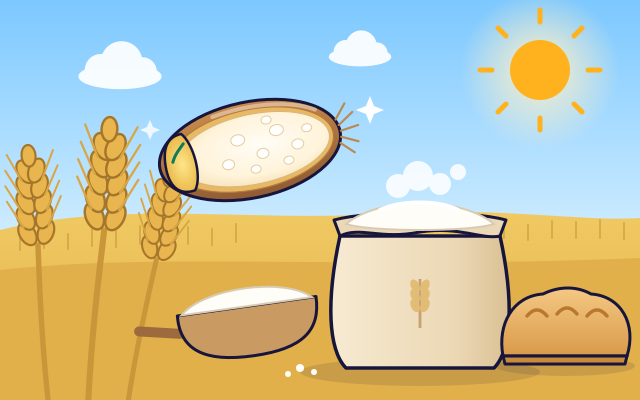
How is flour made from wheat?
Follow grain through cleaning, grinding, and sifting. Look inside a wheat kernel and compare how whole-wheat and white flour are produced.
#26
Food & farming
How is flour made from wheat?
Follow grain through cleaning, grinding, and sifting. Look inside a wheat kernel and compare how whole-wheat and white flour are produced.
 #27
Food & farming
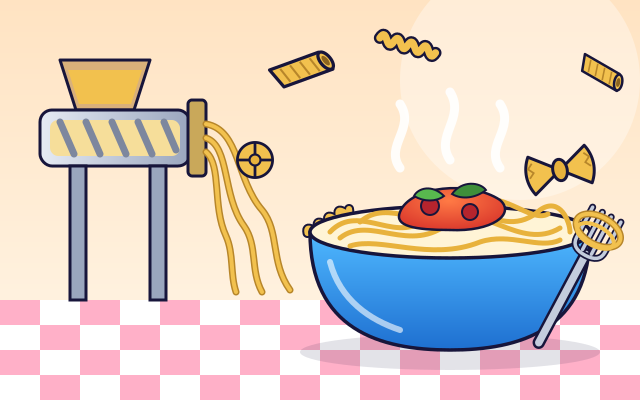
How is pasta made?
Mix dough, roll or push it through different shapes, and explore drying and cooking. Create a pasta shape and watch how it changes.
#27
Food & farming
How is pasta made?
Mix dough, roll or push it through different shapes, and explore drying and cooking. Create a pasta shape and watch how it changes.
 #28
Food & farming
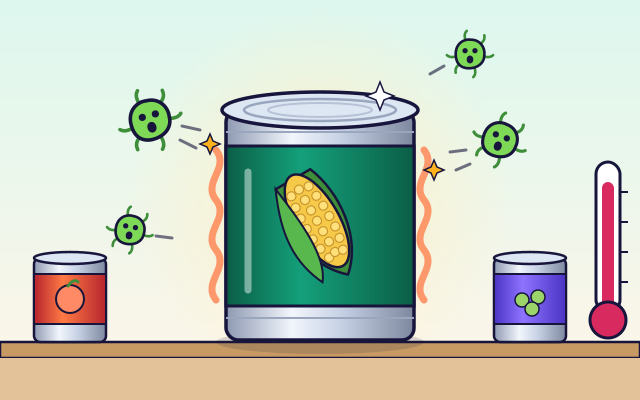
How does canned food stay fresh?
Follow a factory's preparation, filling, sealing, and heat-treatment stages. Explore how processing and sealed packaging help preserve food.
#28
Food & farming
How does canned food stay fresh?
Follow a factory's preparation, filling, sealing, and heat-treatment stages. Explore how processing and sealed packaging help preserve food.
 #29
Food & farming
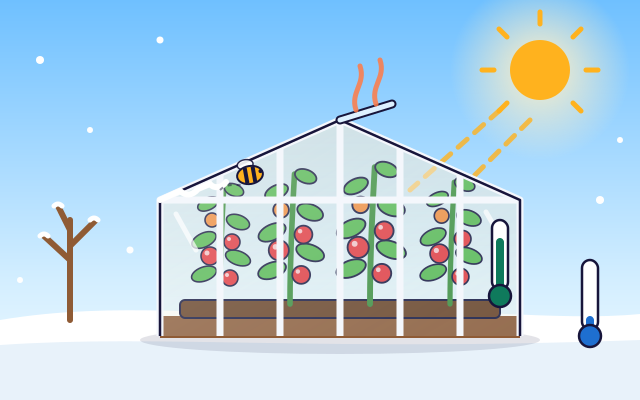
How do greenhouses help plants grow?
Manage sunlight, ventilation, temperature, and water in a virtual greenhouse. Grow a crop while responding to changing outdoor conditions.
#29
Food & farming
How do greenhouses help plants grow?
Manage sunlight, ventilation, temperature, and water in a virtual greenhouse. Grow a crop while responding to changing outdoor conditions.
Keep exploring
Games to play next
- Ratio KitchenScale recipes, fill ratio tables and find the better buy.
- Garden AutomationProgram a garden robot with sensor rules — then watch a whole day play out.
- Label LabPut the right labels on beautiful science diagrams, from bean plants to heart chambers.
Guide for grown-ups
- How to start homeschooling: a step-by-step guide for familiesA guide for parents · 7 min read
Science games by grade
Science worksheets by grade
- Preschool Science Worksheets
- Pre-K Science Worksheets
- Kindergarten Science Worksheets
- 1st Grade Science Worksheets
- 2nd Grade Science Worksheets
- 3rd Grade Science Worksheets
- 4th Grade Science Worksheets
- 5th Grade Science Worksheets
- 6th Grade Science Worksheets
- 7th Grade Science Worksheets
- 8th Grade Science Worksheets