How is chocolate made?
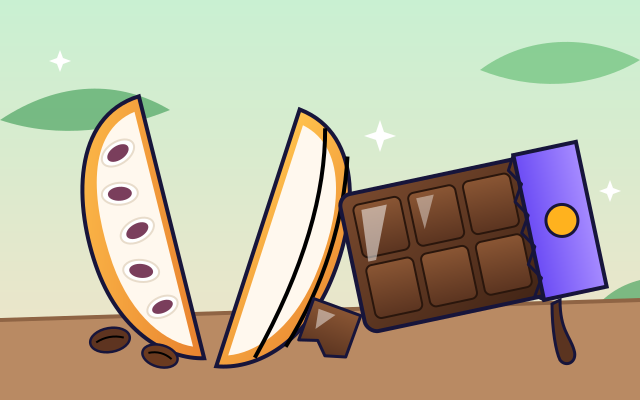
From a pod on a rainforest tree to a shiny bar: fermenting, drying, roasting, grinding, mixing and molding.
The big idea: Cacao beans are fermented and dried to build flavor, roasted to make the chocolate taste, then ground so finely that they feel smooth. Careful warming and cooling, called tempering, makes the bar shiny and snappy.
It's like
The interactive parts didn't load. The explanations below still work; try reloading the page.
The journey of a cacao bean
- Cacao trees grow in hot, rainy places near the equator. Tiny flies pollinate their little flowers, and big pods grow right out of the trunk and branches.
- Farmers cut the ripe pods and split them open. Inside are about 30 to 50 beans, covered in a sweet, white pulp. The raw beans taste very bitter!
- The beans and pulp are piled under banana leaves for about a week. Tiny microbes eat the sweet pulp and make heat. This fermenting starts to build the chocolate flavor.
- The beans dry in the sun for days, then they are roasted. The heat changes chemicals inside the beans, and the wonderful chocolate smell appears.
- The roasted beans are cracked into bits called nibs, and the shells blow away. Grinding the nibs melts their fat, making a runny paste. Sugar is mixed in, and everything is ground super smooth.
- The chocolate is warmed and cooled carefully, called tempering, then poured into molds. When it sets, it is shiny, pops out of the mold, and snaps when you break it.
Bean to bar, step by step
Follow the beans through every step. Each one changes them in a new way.
- Harvest the pods. Pods take five to six months to ripen. Farmers pick them by hand, because pods on the same tree ripen at different times.
- Ferment. Beans and pulp sit under banana leaves for about a week. Microbes eat the pulp and warm the pile, and the beans change color from purple to brown.
- Dry. The beans are spread out in the sun and turned often until they are dry. Dry beans don't go moldy, so they can travel around the world.
- Roast. A spinning drum roasts the beans so they heat evenly. Roasting makes the chocolate smell and taste, and loosens the shells.
- Crack and winnow. A machine cracks the beans into small pieces called nibs. A fan blows away the light, papery shells, and the heavier nibs fall down.
- Grind. Grinding crushes the nibs. They are about half fat, called cocoa butter. The heat from grinding melts the fat, so the nibs turn into a runny paste.
- Mix, refine and conch. Sugar is added (and milk powder for milk chocolate). Heavy rollers grind everything super fine, then a machine stirs the warm chocolate for hours to make it smooth and mellow.
- Temper. Tempering means melting the chocolate, cooling it, then warming it a little. This makes the fat set into just the right kind of tiny crystals, so the bar is shiny and snappy.
- Mold and cool. The tempered chocolate is poured into molds and tapped to remove bubbles. As it cools it shrinks a tiny bit, so the bars pop right out.
Roasting and grinding lab
Change the roast and the grinding time. Watch the bits get smaller in the magnifier, and see how the flavor and the smoothness change.
Experiment: What happens to chocolate as it is ground for longer?
- Set the roast to just right.
- Start with no grinding, then grind longer and longer.
- Watch the magnifier and the smoothness meter.
What we found: The longer the grinding, the smaller the bits of cocoa and sugar get. When they are smaller than about 30 micrometers, your tongue can't feel them, and the chocolate feels silky smooth.
Turn on JavaScript to try it yourself.
Design your own chocolate
Tap the squares to design your chocolate shape, choose how to temper it, then press Make it! It must be one piece and shiny.
Flavor, smoothness and shine
Fresh cacao beans don't taste like chocolate at all. They are bitter and sour. The chocolate flavor is made by people, step by step, starting with fermenting. Tiny microbes eat the sweet pulp around the beans and warm them up, starting chemical changes inside.
Roasting finishes the job. Heat makes the chemicals react and form the smells and tastes we call chocolate. Too little roasting leaves the beans sour; too much makes them burnt and bitter. Chocolate makers test and taste to find the best roast for each kind of bean.
Next comes smoothness. Your tongue can feel bumps that are bigger than about 30 micrometers, much thinner than a hair. So the cocoa and sugar are ground for hours until almost every bit is smaller than that.
Last comes shine and snap. Cocoa butter, the fat in chocolate, can set in several different ways. Tempering, by melting, cooling and gently warming, makes it set in the best way: shiny, snappy and melting just below body temperature, right in your mouth.
Key words
- Cacao
- The tree, pods and beans that chocolate comes from.
- Fermentation
- When microbes eat the sweet pulp and warm the beans, starting flavor changes.
- Nibs
- Small pieces of roasted cacao bean, with the shells removed.
- Cocoa butter
- The natural fat in cacao beans. It melts just below body temperature.
- Tempering
- Melting, cooling and gently warming chocolate so it sets shiny and snappy.
- Bloom
- A dull, gray-white coating on chocolate that was badly tempered or got too warm.
Check your thinking
-
Where on the cacao tree do pods grow?
Show the answer
Right on the trunk and big branches. Cacao flowers and pods grow straight out of the trunk and thick branches.
-
Which step creates most of the chocolate flavor and smell?
Show the answer
Fermenting and roasting. Fermenting builds flavor ingredients, and roasting turns them into the chocolate taste.
-
Why is chocolate ground for so long?
Show the answer
So the bits are too small for your tongue to feel. Tiny bits feel smooth; big bits feel gritty.
-
Why does chocolate melt in your mouth but not in your cupboard?
Show the answer
Cocoa butter melts just below body temperature. Cocoa butter stays solid at room temperature but melts at mouth temperature.
-
What causes gray, streaky fat bloom on badly tempered chocolate?
Show the answer
Unstable cocoa butter crystals slowly change into Form VI and rise to the surface. Without enough Form V seeds, cocoa butter sets in unstable forms that later rearrange into Form VI, leaving dull fat crystals on the surface.
You're a Food & farming expert!
You watched, looked inside, tried it, solved the challenge and went deeper. Pick another question below, or switch the age at the top to see this topic another way.
More about food & farming
 #24
Food & farming
Why does popcorn pop?
Look inside a kernel as it heats. Watch pressure build and the kernel expand, then compare what happens under different simulated heating conditions.
#24
Food & farming
Why does popcorn pop?
Look inside a kernel as it heats. Watch pressure build and the kernel expand, then compare what happens under different simulated heating conditions.
 #25
Food & farming
How is cheese made?
Watch milk form curds, separate curds from whey, and explore pressing and aging. Compare the production stages of fresh and aged cheeses.
#25
Food & farming
How is cheese made?
Watch milk form curds, separate curds from whey, and explore pressing and aging. Compare the production stages of fresh and aged cheeses.
 #26
Food & farming
How is flour made from wheat?
Follow grain through cleaning, grinding, and sifting. Look inside a wheat kernel and compare how whole-wheat and white flour are produced.
#26
Food & farming
How is flour made from wheat?
Follow grain through cleaning, grinding, and sifting. Look inside a wheat kernel and compare how whole-wheat and white flour are produced.
 #27
Food & farming
How is pasta made?
Mix dough, roll or push it through different shapes, and explore drying and cooking. Create a pasta shape and watch how it changes.
#27
Food & farming
How is pasta made?
Mix dough, roll or push it through different shapes, and explore drying and cooking. Create a pasta shape and watch how it changes.
Keep exploring
Games to play next
- Label LabPut the right labels on beautiful science diagrams, from bean plants to heart chambers.
- Ratio KitchenScale recipes, fill ratio tables and find the better buy.
- Garden AutomationProgram a garden robot with sensor rules — then watch a whole day play out.
Guide for grown-ups
- How to start homeschooling: a step-by-step guide for familiesA guide for parents · 7 min read
Science games by grade
Science worksheets by grade
- Preschool Science Worksheets
- Pre-K Science Worksheets
- Kindergarten Science Worksheets
- 1st Grade Science Worksheets
- 2nd Grade Science Worksheets
- 3rd Grade Science Worksheets
- 4th Grade Science Worksheets
- 5th Grade Science Worksheets
- 6th Grade Science Worksheets
- 7th Grade Science Worksheets
- 8th Grade Science Worksheets