How is flour made from wheat?
Follow wheat kernels through a mill as they are cleaned, ground and sifted into flour.
The big idea: A wheat kernel has three parts: the bran skin, the germ and the starchy endosperm. A mill crushes kernels and sifts the pieces. White flour keeps only the endosperm. Whole-wheat flour keeps all three parts.
It's like
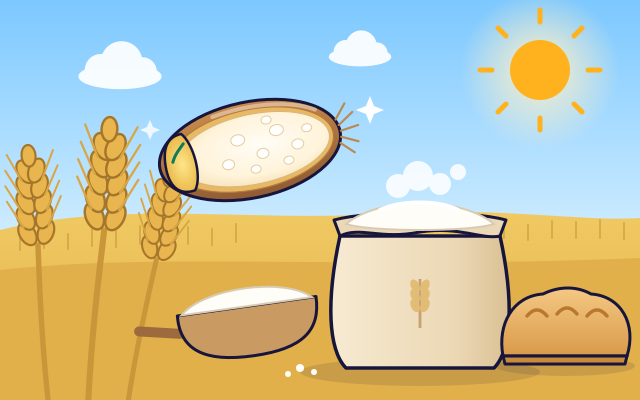
The interactive parts didn't load. The explanations below still work; try reloading the page.
The journey through the mill
- Wheat plants grow heads full of seeds called kernels. When the field turns golden and dry, a combine harvester cuts the wheat and collects the kernels.
- Inside each kernel are three parts: the bran, a tough outer skin; the germ, a baby plant; and the endosperm, a store of food for that baby plant.
- At the mill, machines shake, blow and sort the wheat to remove stones, straw, dust and weed seeds. Then water is added, and the wheat rests for many hours.
- Pairs of steel rollers spin toward each other. Ridged rollers crack the kernels open. Later, smooth rollers squeeze the white pieces into fine powder.
- After each grinding, the pieces are shaken over screens. Fine flour falls through the tiny holes. Bigger bits go back to the rollers, and the flaky bran is sorted out.
- White flour is made only from the endosperm. Whole-wheat flour puts the bran and germ back in, so it is browner and has much more fiber.
Inside a wheat kernel
This kernel is cut in half and made huge. Tap each part to find out what it is and where it goes in the mill.
- Bran. Bran is the kernel's tough, papery coat, made of several thin layers. It is full of fiber. Whole-wheat flour keeps it; white flour takes it out.
- Aleurone layer. Just under the bran is one layer of boxy cells called the aleurone. It is packed with protein, minerals and vitamins.
- Endosperm. The endosperm is the kernel's food store: tiny grains of starch held together by protein. It becomes white flour.
- Germ. The germ is the embryo, the part that sprouts into a new wheat plant. It is small but full of oil and vitamins.
- Brush hairs. At the top of the kernel is a tuft of tiny hairs called the brush. Dust can hide in it, so cleaning machines scrub the grain.
- Crease. A deep groove called the crease runs along one side. The bran folds deep inside it, so you can't just peel a wheat kernel.
Mini flour mill
Run wheat through the mill. Change how many times it is ground and which sifter screen you use, then try whole-wheat. Compare how much flour you get and how it looks.
Experiment: From the same bucket of wheat, which flour gives you more flour and more fiber?
- Make white flour first. Look at the flour bag and the bran bin.
- Now switch on Whole wheat and watch what happens to the bran.
- Compare the amount of flour and the fiber meter.
What we found: Whole-wheat flour keeps the whole kernel, so the same wheat makes more flour, and it has much more fiber from the bran. White flour uses only the endosperm, so it is whiter and softer, but less of the kernel ends up in the bag.
Turn on JavaScript to try it yourself.
The bakery orders
Fill three bakery orders. Set the mill so each bag has the right kind of flour, and enough of it.
Why mills grind and sift again and again
People have ground grain into flour for thousands of years. Long ago, they rubbed grain between two stones by hand. Later, water wheels and windmills turned huge millstones. Today, most flour comes from roller mills with rows of spinning steel rollers.
A roller mill does not smash a kernel to dust in one go. If it did, the brown bran would break into tiny bits and mix into the flour. Instead, the rollers crack the kernels gently, a sifter sorts the pieces, and the bigger bits go back for another grinding. This can happen many times.
The bran is tough and comes off in flakes, so the sifters can catch it. The white endosperm crumbles easily, so it becomes fine flour that falls through the screens. The germ is soft and oily. It gets squashed flat by the rollers and is sifted out too.
For whole-wheat flour, the mill keeps everything: bran, germ and endosperm. That makes the flour browner, with more fiber, vitamins and minerals. White flour is lighter and makes soft, fluffy bread and cakes. Both are good foods.
Key words
- Kernel
- One wheat seed: bran, germ and endosperm.
- Endosperm
- The starchy food store inside the kernel. White flour is made from it.
- Bran
- The tough, fiber-rich outer layers of the kernel.
- Tempering
- Adding water to clean wheat and letting it rest so the bran toughens and separates more cleanly.
- Extraction rate
- The percent of the grain's weight that becomes flour.
- Sifter
- A stack of shaking screens that sorts ground pieces by size.
Check your thinking
-
Which flour keeps the bran and germ?
Show the answer
Whole-wheat flour. Whole-wheat flour keeps all three parts, so it is browner and has more fiber.
-
Why does a mill sift the pieces after every grinding?
Show the answer
To sort fine flour from big bits and bran. Fine flour falls through the screen. Bigger pieces go back to be ground again, and bran is sorted out.
-
Which part of the kernel is the baby plant?
Show the answer
The germ. The germ is the embryo. It would sprout into a new wheat plant if planted.
-
Why do mills add water to wheat and let it rest before grinding?
Show the answer
So the bran gets tough and comes off in big flakes. This is called tempering. Tough, damp bran peels away in flakes instead of breaking into tiny bits.
-
What grinds the wheat in a modern mill?
Show the answer
Pairs of steel rollers. Pairs of rollers spin toward each other and squeeze the grain between them.
You're a Food & farming expert!
You watched, looked inside, tried it, solved the challenge and went deeper. Pick another question below, or switch the age at the top to see this topic another way.
More about food & farming
 #27
Food & farming
How is pasta made?
Mix dough, roll or push it through different shapes, and explore drying and cooking. Create a pasta shape and watch how it changes.
#27
Food & farming
How is pasta made?
Mix dough, roll or push it through different shapes, and explore drying and cooking. Create a pasta shape and watch how it changes.
 #28
Food & farming
How does canned food stay fresh?
Follow a factory's preparation, filling, sealing, and heat-treatment stages. Explore how processing and sealed packaging help preserve food.
#28
Food & farming
How does canned food stay fresh?
Follow a factory's preparation, filling, sealing, and heat-treatment stages. Explore how processing and sealed packaging help preserve food.
 #29
Food & farming
How do greenhouses help plants grow?
Manage sunlight, ventilation, temperature, and water in a virtual greenhouse. Grow a crop while responding to changing outdoor conditions.
#29
Food & farming
How do greenhouses help plants grow?
Manage sunlight, ventilation, temperature, and water in a virtual greenhouse. Grow a crop while responding to changing outdoor conditions.
 #30
Food & farming
How does a combine harvester work?
Look inside the machine as it cuts a crop, separates grain, and stores it. Drive across a field and follow the material's journey.
#30
Food & farming
How does a combine harvester work?
Look inside the machine as it cuts a crop, separates grain, and stores it. Drive across a field and follow the material's journey.
Keep exploring
Games to play next
- Ratio KitchenScale recipes, fill ratio tables and find the better buy.
- Garden AutomationProgram a garden robot with sensor rules — then watch a whole day play out.
- Label LabPut the right labels on beautiful science diagrams, from bean plants to heart chambers.
Guide for grown-ups
- How to start homeschooling: a step-by-step guide for familiesA guide for parents · 7 min read
Science games by grade
Science worksheets by grade
- Preschool Science Worksheets
- Pre-K Science Worksheets
- Kindergarten Science Worksheets
- 1st Grade Science Worksheets
- 2nd Grade Science Worksheets
- 3rd Grade Science Worksheets
- 4th Grade Science Worksheets
- 5th Grade Science Worksheets
- 6th Grade Science Worksheets
- 7th Grade Science Worksheets
- 8th Grade Science Worksheets