How is pasta made?
From golden semolina to your plate: mixing, rolling, pushing through shaped holes, drying and cooking.
The big idea: Pasta dough is pushed through a shaped hole or rolled flat and cut. Drying takes the water out so it keeps for a long time. Cooking puts water back in, so the pasta swells and softens from the outside in.
It's like
The interactive parts didn't load. The explanations below still work; try reloading the page.
How pasta is made
- Most dried pasta starts with durum wheat, a very hard wheat. Mills grind it into semolina, a coarse, golden flour that feels a bit like sand.
- Water is mixed into the semolina. It makes a stiff, crumbly dough. As it mixes, proteins in the flour link up into a stretchy web called gluten.
- Fresh pasta is often made with flour and eggs. The dough is rolled into a thin sheet and cut into ribbons, or folded into shapes like bow ties.
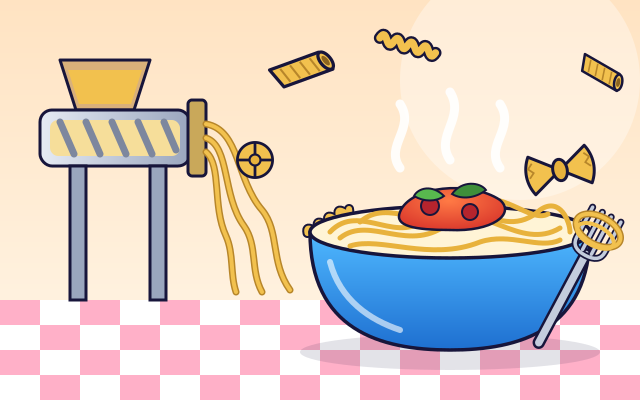
- In a factory, a turning screw pushes the dough hard through a metal plate with shaped holes, called a die. The hole's shape makes the pasta's shape. A spinning knife cuts it.
- The pasta dries slowly in warm, damp air for hours. If it dried too fast, the outside would shrink before the inside and crack. Dry pasta keeps for months.
- In boiling water, the pasta soaks up water from the outside in. Starch inside swells and softens. Cooked pasta weighs about twice as much as dry pasta!
Inside a pasta factory press
This press is cut open so you can see inside. Tap each part. Watch it move!
- Hopper and water. Semolina pours in from the hopper while a pipe adds just the right amount of water.
- Mixer. Spinning paddles stir the semolina and water together until every grain is damp and crumbly.
- Vacuum chamber. A pump sucks the air out of the dough. Air bubbles would make the pasta pale, spotty and weaker.
- Screw. A long screw turns inside a tube, squeezing the dough and pushing it toward the end, like toothpaste in a tube.
- Die. The die is a metal plate full of shaped holes. Round holes make spaghetti. Holes with a pin in the middle make tubes.
- Spinning knife. A knife spins past the die and slices the pasta as it comes out. Spin faster for shorter pieces.
- Dryer. Warm, damp air blows gently over the pasta for hours, so it dries evenly without cracking.
Cooking lab: thin and thick pasta
Pick a pasta and slide the cooking time. Watch the magnifier: the white middle is still dry. Find the time when each pasta is al dente.
Experiment: Does thick pasta need more or less cooking time than thin pasta?
- Choose Angel hair and slide the time until it says Al dente.
- Now choose Thick tubes and do it again.
- Compare the two times.
What we found: Thick pasta takes much longer. Water soaks in from the outside, so it has farther to travel to reach the middle of a thick piece.
Turn on JavaScript to try it yourself.
Pasta factory orders
Make three orders. Choose the right way to shape the pasta, the right length, and dry it so it doesn't crack or go moldy.
Why pasta holds its shape
Pasta dough is mostly two things: starch and protein. When you add water and mix, some proteins link together into a stretchy web called gluten. The gluten web traps the starch, a bit like a net holding marbles. That web is what lets pasta keep its shape.
Dried pasta is usually made from durum wheat semolina. Durum has lots of strong protein, so its pasta stays firm when cooked. Fresh pasta is often made with eggs, whose proteins help hold it together too.
To dry pasta, factories use warm, damp air and take their time. If the outside dried much faster than the inside, the outside would shrink and crack, like mud cracking in the sun. Well-dried pasta has so little water that molds and bacteria can't grow, so it keeps for a long time.
When you cook pasta, water soaks in from the outside. The starch grains swell up and soften, while the gluten web keeps the noodle in one piece. That is why pasta grows bigger. "Al dente" is Italian for "to the tooth": cooked, but with a little bite left in the middle.
Key words
- Semolina
- Coarse, golden flour ground from durum wheat.
- Gluten
- A stretchy web of wheat proteins that holds dough together.
- Die
- A metal plate with shaped openings that gives extruded pasta its shape.
- Al dente
- Italian for "to the tooth": cooked but still slightly firm in the middle.
- Gelatinization
- When starch grains soak up water in heat, swell and get soft.
- Diffusion
- How water slowly spreads into the pasta from the outside.
Check your thinking
-
Why does pasta get bigger when you cook it?
Show the answer
It soaks up water and its starch swells. Water soaks in from the outside, and the starch inside swells and softens.
-
What gives extruded pasta its shape?
Show the answer
The shape of the holes in the die. The dough comes out in the shape of the die's openings.
-
Why is pasta dried slowly in warm, damp air?
Show the answer
So it dries evenly and doesn't crack. If the outside dried much faster than the inside, the outside would shrink and crack.
-
Which pasta cooks fastest?
Show the answer
Thin angel hair. Thin pasta has the shortest distance for water to soak in.
-
Why does dried pasta keep for months?
Show the answer
It has too little water for germs to grow. Molds and bacteria need water. Dry pasta doesn't have enough for them.
You're a Food & farming expert!
You watched, looked inside, tried it, solved the challenge and went deeper. Pick another question below, or switch the age at the top to see this topic another way.
More about food & farming
 #28
Food & farming
How does canned food stay fresh?
Follow a factory's preparation, filling, sealing, and heat-treatment stages. Explore how processing and sealed packaging help preserve food.
#28
Food & farming
How does canned food stay fresh?
Follow a factory's preparation, filling, sealing, and heat-treatment stages. Explore how processing and sealed packaging help preserve food.
 #29
Food & farming
How do greenhouses help plants grow?
Manage sunlight, ventilation, temperature, and water in a virtual greenhouse. Grow a crop while responding to changing outdoor conditions.
#29
Food & farming
How do greenhouses help plants grow?
Manage sunlight, ventilation, temperature, and water in a virtual greenhouse. Grow a crop while responding to changing outdoor conditions.
 #30
Food & farming
How does a combine harvester work?
Look inside the machine as it cuts a crop, separates grain, and stores it. Drive across a field and follow the material's journey.
#30
Food & farming
How does a combine harvester work?
Look inside the machine as it cuts a crop, separates grain, and stores it. Drive across a field and follow the material's journey.
 #276
Food & farming
How is yogurt made?
Follow helpful bacteria changing milk and compare simulated fermentation conditions.
#276
Food & farming
How is yogurt made?
Follow helpful bacteria changing milk and compare simulated fermentation conditions.
Keep exploring
Games to play next
- Ratio KitchenScale recipes, fill ratio tables and find the better buy.
- Garden AutomationProgram a garden robot with sensor rules — then watch a whole day play out.
- Label LabPut the right labels on beautiful science diagrams, from bean plants to heart chambers.
Guide for grown-ups
- How to start homeschooling: a step-by-step guide for familiesA guide for parents · 7 min read
Science games by grade
Science worksheets by grade
- Preschool Science Worksheets
- Pre-K Science Worksheets
- Kindergarten Science Worksheets
- 1st Grade Science Worksheets
- 2nd Grade Science Worksheets
- 3rd Grade Science Worksheets
- 4th Grade Science Worksheets
- 5th Grade Science Worksheets
- 6th Grade Science Worksheets
- 7th Grade Science Worksheets
- 8th Grade Science Worksheets