How are aluminum drink cans made?
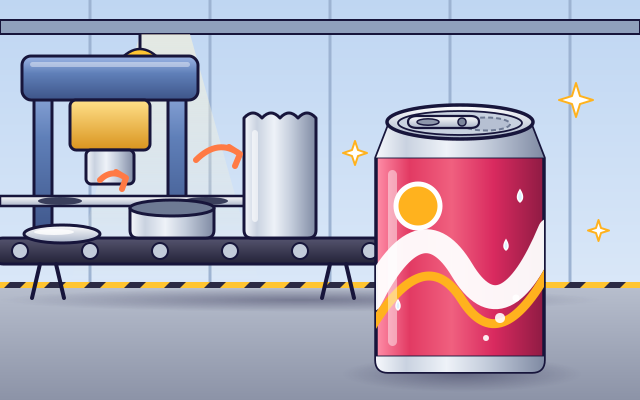
A can starts as a flat disc of aluminum. Machines push it into a cup, stretch it tall, then trim, wash, print, coat, fill and seal it.
The big idea: A drink can body is one piece of metal with no joins. A punch pushes a disc into a cup, then pushes the cup through tight rings that squeeze its walls thinner, so the can grows taller. Only the lid is added at the end.
It's like pushing your fist into pizza dough: the dough wraps around your hand, and the more it stretches, the thinner it gets.
The interactive parts didn't load. The explanations below still work; try reloading the page.
How a can is made
- Pick up a drink can and turn it around. There is no join down the side. The whole body, bottom and all, is one piece of aluminum. How?
- A big roll of aluminum sheet feeds a press. Thump! It cuts out a flat disc and, in the same stroke, pushes the disc into a wide, shallow cup.
- A punch pushes the cup through three rings, each a little tighter than the last. The rings squeeze the walls thinner, so the same metal has to stretch into a taller can.
- Stretching leaves a wavy top edge, so a spinning cutter trims every can to the same height. Then the cans are washed and dried to get rid of the oil from the machines.
- The can spins against a roller that carries all the colors of the design at once. Then a spray gun coats the inside with a thin, clear layer, so the drink never touches bare metal. Ovens bake both dry.
- The top of the can is squeezed narrower, so it can take a smaller lid. The can is filled with drink, and a machine rolls the edge of the lid and the can together into a tight seal.
Look inside a drink can
Tap each part of the can. A piece has been cut away so you can see inside.
- Thin wall. The side wall is squeezed so thin that it is about as thick as a sheet of paper. That saves metal and makes the can light.
- Domed bottom. The bottom is pushed up into a dome. A curved shape can hold the push of the fizzy drink much better than a flat one, just like an arch in a bridge.
- Inside coating. A thin, clear layer is sprayed all over the inside. It keeps the drink from touching the metal, so the drink tastes right and the can does not wear away.
- Printed outside. All the colors are rolled onto the can in one quick spin, then covered with clear varnish so the picture does not scratch off.
- Neck. The top of the can is squeezed narrower. A smaller top needs a smaller lid, and the lid is the thickest, most costly part.
- Double seam. The edge of the lid and the edge of the can are curled around each other and squeezed flat, like folding the top of a paper bag over twice. Nothing can leak out.
- Tab. The tab is a tiny lever. When you lift the back, the front pushes down on the lid and pops it open. The tab stays on, so there is no litter.
- Scored opening. A line is pressed part of the way through the lid. The lid is strong enough to hold the fizz, but it tears open neatly along that line when the tab pushes.
Push it through the rings
Drag the punch through the rings, or press the button. Then change how tight the rings are and push again. What happens to the can?
Experiment: The rings squeeze the can's wall thinner. What happens to the can?
- Choose loose rings and push the punch all the way.
- Choose tight rings and push again.
- Compare the two cans on the ruler.
What we found: Tighter rings make a thinner wall and a taller can. No metal is added and none is cut away, so when the wall gets thinner the same metal has to go somewhere: up!
Turn on JavaScript to try it yourself.
Set up the finishing line
Tap the machines to put them on the line in the right order. Then run the line and see if a finished can comes out.
One piece of metal, one clever shape
A drink can looks simple, but it is one of the most carefully designed objects you will ever hold. The body is a single piece of aluminum. It begins as a flat disc about as wide as your hand is long. A press pushes the disc into a cup, and then a punch drives the cup through three tight rings.
The rings are the clever part. Each one is a tiny bit smaller than the last, so it squeezes the wall thinner. Nothing is cut off, so the metal has to go somewhere, and it goes up. The can gets taller and taller. This is where the pizza dough picture fits: stretch the dough and it gets thinner. But dough can tear easily, while aluminum can be squeezed very thin and stay strong.
After that the wavy top is trimmed, and the can is washed, printed and sprayed inside with a clear coating. The coating matters: fizzy drinks are a little bit sour, and without it they would slowly eat into the metal. Then the top is narrowed, the drink goes in, and the lid is rolled on.
Every shape on a can has a job. The domed bottom and the narrow neck help the thin metal hold the push of the fizz. The tab is a small lever that pushes the lid open along a line pressed into it. And when you are done, the can is recycled: it can be melted and made into a new can again and again.
Key words
- Blank
- The flat disc of metal that a can body starts from.
- Drawing
- Pushing a flat disc into a cup shape.
- Ironing
- Squeezing the can's wall thinner by pushing it through tight rings.
- Necking
- Squeezing the top of the can narrower so it takes a smaller lid.
- Double seam
- The rolled-up edge that joins the lid to the can.
- Work hardening
- Metal getting stronger because it has been squeezed and stretched.
Check your thinking
-
What shape is the piece of metal a can body starts from?
Show the answer
A flat disc. A flat disc is punched from a sheet and pushed into a cup. There is never a seam on the side.
-
Why does the can get taller when the rings squeeze its wall?
Show the answer
The same metal is squeezed thinner, so it has to stretch upward. No metal is added or taken away. Thinner walls mean the metal must spread over more height.
-
A cup's wall is ironed from 0.30 mm down to 0.10 mm. About how many times taller does the wall become?
Show the answer
3 times. Metal volume is conserved, so thickness times height stays the same. A third of the thickness gives three times the height.
-
Why is the inside of the can sprayed with a clear coating?
Show the answer
So the drink never touches the bare metal. Fizzy drinks are a little sour. The coating keeps them apart from the metal, so the taste stays right and the can lasts.
-
Why is the bottom of a can domed instead of flat?
Show the answer
A curved shape holds the push of the fizz better. A dome works like an arch. A flat bottom would bulge outward.
-
Which step has to come last on the can line?
Show the answer
Sealing on the lid. Once the lid is on, nothing else can go in. So the drink goes in first and the lid goes on last.
You're a Making everyday things expert!
You watched, looked inside, tried it, solved the challenge and went deeper. Pick another question below, or switch the age at the top to see this topic another way.
More about making everyday things
 #303
Making everyday things
How are rubber tires made?
Assemble rubber layers, reinforcement, and tread before shaping and curing in a mold.
#303
Making everyday things
How are rubber tires made?
Assemble rubber layers, reinforcement, and tread before shaping and curing in a mold.
 #304
Making everyday things
How are shoes made?
Assemble upper pieces around a foot-shaped form and attach the sole.
#304
Making everyday things
How are shoes made?
Assemble upper pieces around a foot-shaped form and attach the sole.
 #305
Making everyday things
How is paint made?
Combine pigments and binders and compare how different mixtures cover surfaces.
#305
Making everyday things
How is paint made?
Combine pigments and binders and compare how different mixtures cover surfaces.
 #306
Making everyday things
How is sticky tape made?
Coat a backing with adhesive, roll it onto a core, and cut different widths.
#306
Making everyday things
How is sticky tape made?
Coat a backing with adhesive, roll it onto a core, and cut different widths.
Keep exploring
Games to play next
- Machine RepairFix levers, pulleys, gears and ramps so every contraption works.
- Geometry Architect 3DCount, build and fold solids like a real architect.
- Sorting FactoryTurn a work order into if/else rules and watch the conveyor sort every item.
Guide for grown-ups
- How to start homeschooling: a step-by-step guide for familiesA guide for parents · 7 min read
Science games by grade
Science worksheets by grade
- Preschool Science Worksheets
- Pre-K Science Worksheets
- Kindergarten Science Worksheets
- 1st Grade Science Worksheets
- 2nd Grade Science Worksheets
- 3rd Grade Science Worksheets
- 4th Grade Science Worksheets
- 5th Grade Science Worksheets
- 6th Grade Science Worksheets
- 7th Grade Science Worksheets
- 8th Grade Science Worksheets