How are shoes made?
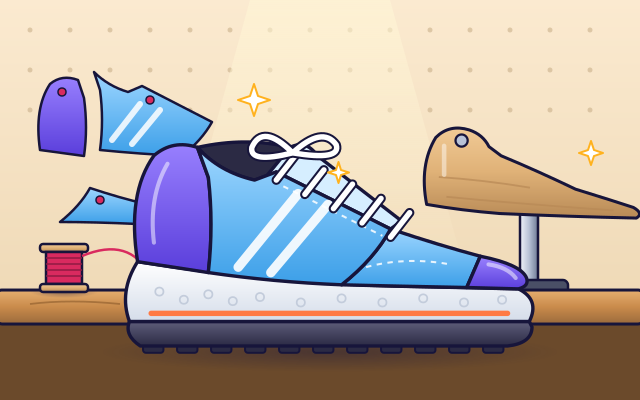
A shoe starts as flat pieces. They are sewn into a top part called the upper, shaped over a foot-shaped form called a last, and then glued to a sole.
The big idea: Flat cloth or leather cannot hold the shape of a foot by itself. Shoemakers sew the pieces together and pull them tight over a foot-shaped form called a last. The shoe keeps that shape, so the last decides how the shoe fits.
It's like papier-mâché on a balloon: soft, flat strips are laid over a shape and keep that shape when the balloon is taken out.
The interactive parts didn't load. The explanations below still work; try reloading the page.
From flat pieces to a finished shoe
- A shoe looks like one thing, but a sneaker can have more than twenty pieces. There is the top, called the upper, and the sole underneath. How do they come together?
- Each piece of the upper is cut from cloth or leather, like cutting cookies from dough. The shapes are fitted close together so that very little is wasted.
- A sewing machine stitches the pieces together. Now they make the upper: the whole top of the shoe, with holes for the laces. But it is still floppy.
- The upper is pulled tight over a foot-shaped form called a last and fixed underneath. Stretched over the last, often with a little heat, the upper takes on the shape of a foot.
- Glue is brushed on the bottom of the upper and on the sole. First comes a soft foam layer for cushioning, then tough rubber for grip. A press squeezes them together until the glue holds.
- The last is pulled out, and the shoe keeps its shape. A soft insole goes inside, the laces are threaded, and every shoe is checked. Time to run!
Look inside a sneaker
Tap each part of the sneaker. A window in the side shows the layers under your foot.
- Upper. The upper is the whole top of the shoe. It is made of pieces of cloth, mesh or leather sewn together, and it holds your foot in place.
- Toe cap. The toe cap is a stiffer piece at the front. It protects your toes and stops the front of the shoe from collapsing.
- Tongue. The tongue is the padded flap under the laces. It spreads out the squeeze of the laces so they do not dig into your foot.
- Laces and eyelets. Laces zigzag through holes called eyelets. Pulling them tight draws the two sides of the upper together, so the shoe fits your own foot snugly.
- Heel counter. Hidden inside the back of the shoe is a stiff cup called the heel counter. It grips your heel and stops it from wobbling.
- Insole. The insole is the soft layer right under your foot. You can often lift it out. It makes the shoe comfy and soaks up sweat.
- Midsole. The midsole is a thick layer of foam full of tiny bubbles. It squashes when your foot lands and springs back, which cushions every step.
- Outsole. The outsole is the tough rubber layer that touches the ground. Its bumps and grooves grip so you do not slip, and it wears away slowly.
The last decides the fit
Tap the pieces to build the upper on the last, then pull it tight. A foot will try the shoe on. Now pick a different last. What changes?
Experiment: What decides the size and shape of the finished shoe?
- Put every piece on the last and pull it tight.
- Watch the foot try the shoe on.
- Pick a smaller or bigger last and compare.
What we found: The shoe takes the shape of the last. A small last makes a shoe that pinches, a big last makes one that slips off, and a last just a little longer than the foot makes a shoe that fits.
Turn on JavaScript to try it yourself.
Attach the sole
Attach the sole so it will last: glue first, then the layers in the right order, then the press. A foot will test your shoe.
Flat pieces, foot shape
Your foot is a tricky shape: curved on top, narrow at the heel, wide at the toes. Cloth and leather are flat. So how do you make something flat fit something so curvy? Shoemakers solved that puzzle a very long time ago, and the answer is still used in almost every shoe factory.
First, flat pieces are cut out and sewn together into the upper. On its own the upper is floppy, like a sock with no foot in it. Then comes the clever part: the upper is pulled tightly over a last, which is a solid form shaped like a foot. Stretched and warmed, the upper takes the shape of the last and keeps it.
That is why the last matters so much. A shoe can only be as good a fit as the last it was made on. Factories keep a different last for every size, for left and right feet, and for wide and narrow shoes. This is where the papier-mâché picture fits: the shape comes from the form inside. But a shoe is stretched over its form, not just laid on it, and the last is used again and again.
Last of all comes the sole. A soft foam midsole full of tiny bubbles cushions your steps. A tough rubber outsole underneath grips the ground and takes the wear. Glue and a strong press hold them on. The last is pulled out, an insole and laces go in, and the shoe is ready.
Key words
- Last
- A solid, foot-shaped form that a shoe is built around.
- Upper
- The top part of a shoe that covers the foot.
- Lasting
- Pulling the upper tight over the last so it takes the shape of a foot.
- Midsole
- The foam layer between your foot and the outsole. It cushions each step.
- Outsole
- The tough rubber bottom of the shoe that touches the ground.
- Toe room
- The little gap between your longest toe and the front of the shoe.
Check your thinking
-
What is a last?
Show the answer
A foot-shaped form the shoe is built around. The upper is stretched over the last and keeps its shape. That is how flat pieces become a shoe.
-
Why is the midsole made of foam?
Show the answer
It squashes and springs back, so it cushions your steps. The tiny bubbles in foam squash when your foot lands and then push back.
-
A shoe was made on a last that is too small. What will it be like?
Show the answer
Too tight, with no room for the toes. The shoe copies the last. A small last makes a small space inside.
-
Why does the rubber outsole go on the outside, under the foam?
Show the answer
Rubber is tough and grippy, so it should touch the ground. Foam would wear away quickly on the road. Rubber resists wear and grips.
-
After gluing, why is the sole squeezed in a press?
Show the answer
Pressing pushes the glued surfaces together so the glue holds everywhere. Glue only works where the two surfaces really touch. The press makes them touch all over.
You're a Making everyday things expert!
You watched, looked inside, tried it, solved the challenge and went deeper. Pick another question below, or switch the age at the top to see this topic another way.
More about making everyday things
 #305
Making everyday things
How is paint made?
Combine pigments and binders and compare how different mixtures cover surfaces.
#305
Making everyday things
How is paint made?
Combine pigments and binders and compare how different mixtures cover surfaces.
 #306
Making everyday things
How is sticky tape made?
Coat a backing with adhesive, roll it onto a core, and cut different widths.
#306
Making everyday things
How is sticky tape made?
Coat a backing with adhesive, roll it onto a core, and cut different widths.
 #307
Making everyday things
How are plastic bottles made?
Watch a heated starter piece expand against a mold using compressed air.
#307
Making everyday things
How are plastic bottles made?
Watch a heated starter piece expand against a mold using compressed air.
 #308
Making everyday things
How are balloons made?
Dip molds into liquid latex, dry the coating, and remove finished balloons.
#308
Making everyday things
How are balloons made?
Dip molds into liquid latex, dry the coating, and remove finished balloons.
Keep exploring
Games to play next
- Machine RepairFix levers, pulleys, gears and ramps so every contraption works.
- Geometry Architect 3DCount, build and fold solids like a real architect.
- Sorting FactoryTurn a work order into if/else rules and watch the conveyor sort every item.
Guide for grown-ups
- How to start homeschooling: a step-by-step guide for familiesA guide for parents · 7 min read
Science games by grade
Science worksheets by grade
- Preschool Science Worksheets
- Pre-K Science Worksheets
- Kindergarten Science Worksheets
- 1st Grade Science Worksheets
- 2nd Grade Science Worksheets
- 3rd Grade Science Worksheets
- 4th Grade Science Worksheets
- 5th Grade Science Worksheets
- 6th Grade Science Worksheets
- 7th Grade Science Worksheets
- 8th Grade Science Worksheets