How is sticky tape made?
A factory spreads a thin sticky layer on a long ribbon of film, rolls it up and slices it into rolls.
The big idea: Tape is a thin backing with an even layer of soft adhesive on one side. When you press it, the adhesive flows into tiny bumps and grips.
It's like making a jelly roll cake: spread a thin, even layer of jam on a flat sheet, roll the sheet up, then slice the roll into pieces.
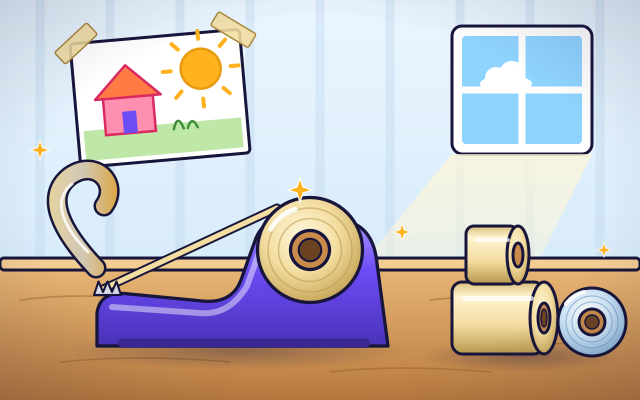
The interactive parts didn't load. The explanations below still work; try reloading the page.
How a tape factory works
- Sticky tape holds a picture up in a second. No water, no waiting. It is a thin ribbon with a sticky layer on one side. Let's see how a factory makes it.
- It starts with the backing: a giant roll of thin plastic film, wider than a door and many kilometers long. Rollers pull the film along the line.
- Liquid adhesive flows onto the moving film. A straight blade just above the film scrapes it into a thin, even layer. The gap under the blade sets how thick the layer is.
- The adhesive is mixed with water or another liquid so it can flow. A long, warm oven dries that liquid away. What stays on the film is a soft, sticky layer.
- The finished tape winds onto a cardboard tube called a core. The back of the film has a slippery coating, so the roll can be unwound again later.
- The wide roll is far too big for a desk. Round knives press into it as it spins and slice it into narrow rolls. Moving the knives changes how wide each roll is.
- Up close, paper is bumpy. When you press the tape, the soft adhesive flows into the bumps and touches much more of the surface. More touching means more grip.
Look inside the tape line
Tap each station of the line. The film travels from left to right.
- Backing film roll. This giant roll holds the backing, the thin plastic ribbon that the sticky layer rides on. It unrolls all day long.
- Adhesive hopper. The hopper holds the liquid adhesive and lets it flow down onto the moving film, just behind the blade.
- Spreader blade. The blade sits a tiny bit above the film. Only a thin layer of adhesive can squeeze under it, so the layer comes out smooth and even.
- Drying oven. Warm air in the oven dries the liquid out of the adhesive. The film comes out with a soft, sticky layer that does not drip.
- Slitting knives. A row of round knives slices the wide film into narrow strips. Sliding the knives closer together makes thinner tape.
- Cardboard core. The tape winds around a cardboard tube called a core. It gives the roll its shape and lets it spin on a dispenser.
Coat the film: how thick?
Drag the blade to change how thick the adhesive layer is. Watch the film, the roll and the picture hanging from a test strip.
Experiment: What happens to the tape as the adhesive layer gets thicker and thicker?
- Start with the blade low, for a very thin layer. Does the picture stay up?
- Raise the blade a little at a time and press Record.
- Keep going to the top. Look at the edge of the roll.
What we found: A very thin layer leaves bare patches, so the tape cannot grab enough of the wall. A medium layer covers everything and holds well. Past that, extra adhesive barely helps: it just squeezes out of the sides of the roll and makes a sticky mess.
Turn on JavaScript to try it yourself.
Cut the order
Wind the big roll until it reaches the green band. Then set the knives to cut 2 wide rolls and 2 narrow rolls, and press Cut.
How tape is made, and why it sticks
A roll of tape has two main parts. The backing is the thin ribbon you see: plastic film for clear tape, paper for masking tape, cloth for strong repair tape. The adhesive is the soft, sticky layer on one side.
In the factory, the backing unrolls from a giant roll and runs through a coating machine. Liquid adhesive flows onto it, and a blade spreads the adhesive into a thin, even layer. Then a warm oven dries the liquid away and leaves the sticky layer behind. The layer is thinner than one of your hairs.
Next the wide, sticky film is wound up and sliced by round knives into narrow rolls, each on its own cardboard core. The back of the film has a slippery coating. That is why tape peels off its own roll but grips the paper you press it onto.
Why does it stick? The adhesive is soft, a bit like very thick honey that never dries out. When you press, it flows into the tiny bumps of the surface and touches a lot of it. All that touching adds up to a strong hold. The jelly roll comparison stops here: jam is wet and soaks in, but tape adhesive stays soft and sits on top.
Key words
- Backing
- The thin ribbon of film, paper or cloth that carries the sticky layer.
- Adhesive
- A material that makes two things stick together.
- Core
- The cardboard tube in the middle of a roll.
- Slitting
- Cutting a wide roll into narrow ones with round knives.
- Release coating
- A slippery layer on the back of tape so it can peel off its own roll.
Check your thinking
-
What are the two main parts of a piece of tape?
Show the answer
A backing and a layer of adhesive. The backing is the ribbon and the adhesive is the sticky layer on it.
-
Why does the factory spread the adhesive with a blade?
Show the answer
To make the layer thin and even all the way across. Only a thin layer fits under the blade, so the adhesive comes out smooth and even.
-
Why does pressing tape down firmly make it hold better?
Show the answer
The soft adhesive flows into the tiny bumps and touches more of the surface. More of the adhesive touches the surface, and more touching means more grip.
-
A wide roll is cut with 3 knives. How many rolls come out?
Show the answer
4 rolls. Each cut adds one more roll. Three cuts turn one roll into four.
-
Why can tape peel off its own roll?
Show the answer
The back of the film has a slippery coating. The adhesive holds only weakly to the slippery back of the film, so the tape unrolls.
You're a Making everyday things expert!
You watched, looked inside, tried it, solved the challenge and went deeper. Pick another question below, or switch the age at the top to see this topic another way.
More about making everyday things
 #307
Making everyday things
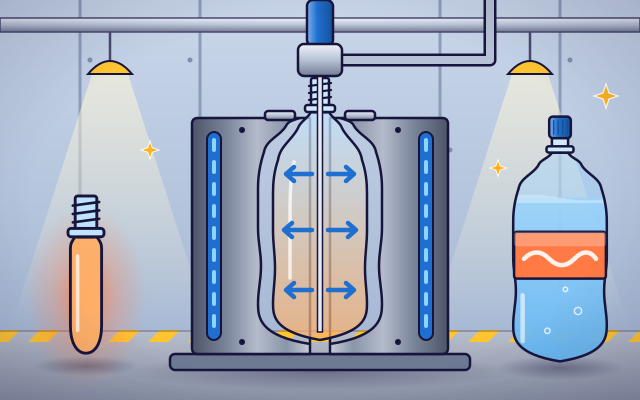
How are plastic bottles made?
Watch a heated starter piece expand against a mold using compressed air.
#307
Making everyday things
How are plastic bottles made?
Watch a heated starter piece expand against a mold using compressed air.
 #308
Making everyday things
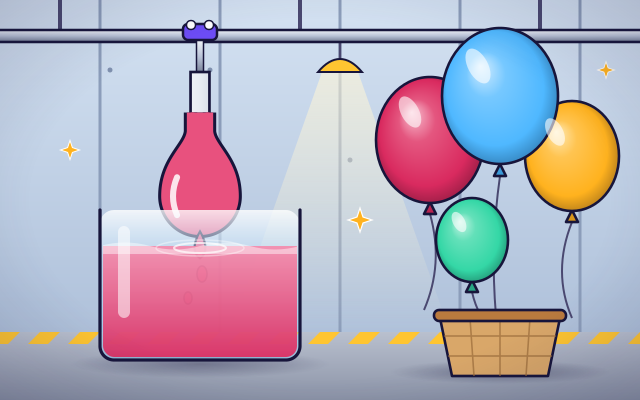
How are balloons made?
Dip molds into liquid latex, dry the coating, and remove finished balloons.
#308
Making everyday things
How are balloons made?
Dip molds into liquid latex, dry the coating, and remove finished balloons.
 #309
Making everyday things
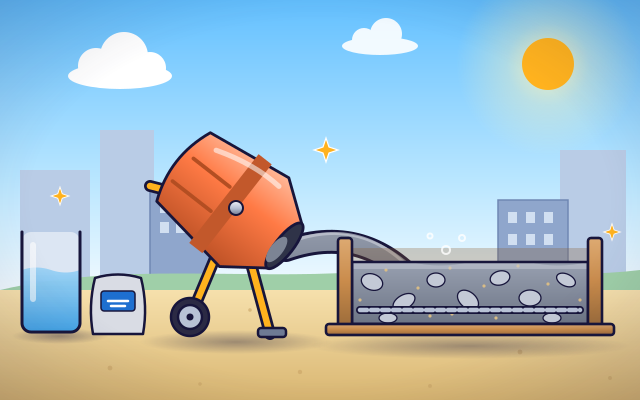
How is concrete made?
Mix cement, water, sand, and gravel and explore filling molds and curing.
#309
Making everyday things
How is concrete made?
Mix cement, water, sand, and gravel and explore filling molds and curing.
 #310
Making everyday things
How is plywood made?
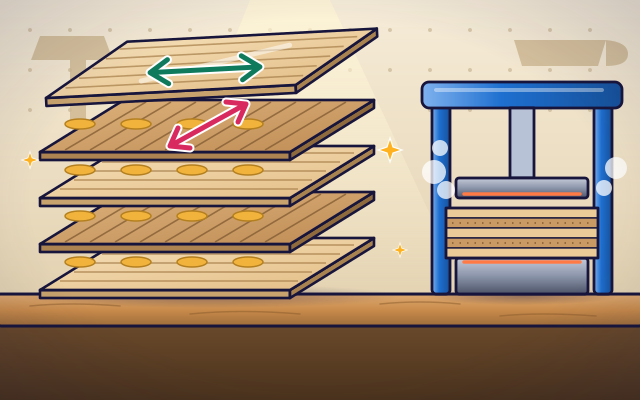
Alternate thin wood sheets' grain directions and press the glued layers together.
#310
Making everyday things
How is plywood made?
Alternate thin wood sheets' grain directions and press the glued layers together.
Keep exploring
Games to play next
- Machine RepairFix levers, pulleys, gears and ramps so every contraption works.
- Geometry Architect 3DCount, build and fold solids like a real architect.
- Sorting FactoryTurn a work order into if/else rules and watch the conveyor sort every item.
Guide for grown-ups
- How to start homeschooling: a step-by-step guide for familiesA guide for parents · 7 min read
Science games by grade
Science worksheets by grade
- Preschool Science Worksheets
- Pre-K Science Worksheets
- Kindergarten Science Worksheets
- 1st Grade Science Worksheets
- 2nd Grade Science Worksheets
- 3rd Grade Science Worksheets
- 4th Grade Science Worksheets
- 5th Grade Science Worksheets
- 6th Grade Science Worksheets
- 7th Grade Science Worksheets
- 8th Grade Science Worksheets