How is leather made?
Tanning changes a hide so it will not rot or go hard. Then drying, softening and finishing turn it into leather.
The big idea: A hide is made of tiny fibers. Tanning liquid soaks in and holds the fibers so they cannot rot or stick together. After that the hide is dried, bent until it is soft, and given its color.
It's like making a pickle: a fresh cucumber goes bad in days, but after a long soak in the right liquid it keeps for a very long time.
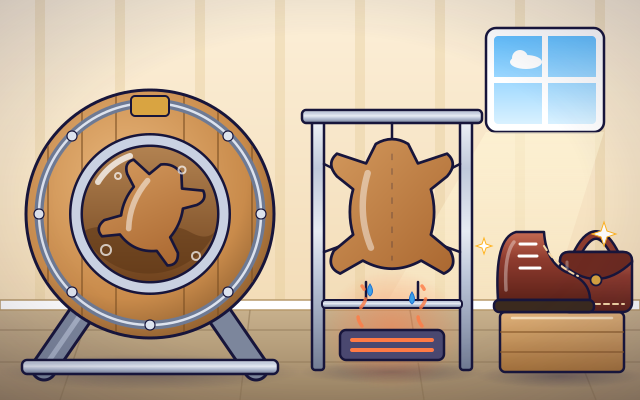
The interactive parts didn't load. The explanations below still work; try reloading the page.
How a hide becomes leather
- Leather starts as a hide, the skin of an animal such as a cow. First the hide is washed and soaked until it is clean and soft. But it will not stay that way.
- So the hide goes into a big turning drum full of tanning liquid. The liquid soaks in slowly from both sides and turns the hide brown, right to the middle.
- Zoom in very close. The hide is a tangle of tiny fibers. The tanning bits grab on to the fibers and link them together. Now the fibers cannot rot, and they cannot glue themselves together.
- The tanned hide is still soaking wet. It is stretched flat on a frame, and warm air dries it slowly so it does not wrinkle or shrink too much.
- After drying, the leather feels stiff. A machine with many little pins bends and stretches it again and again. That loosens the fibers, and oils help them slide. Now it is soft.
- Last comes the finish. The leather is dyed, sprayed with a thin coat to protect it, and polished. Then it is cut and stitched into shoes, bags, belts and balls.
Follow a hide through the tannery
Step through the tannery. Watch what each stage does to the hide.
- Soaking. The hide soaks in clean water. Hair and anything else that is not needed is cleaned away, and the hide swells up, soft and ready.
- Tanning. In the turning drum, tanning liquid soaks into the hide from both sides. A thick hide needs longer, because the liquid has further to go to reach the middle.
- Drying. The wet leather is clipped flat to a frame so it cannot curl up. Warm air carries the water away, a little at a time.
- Softening. Rows of pins push and bend the leather as it moves along. Every bend loosens the fibers a little more, so the leather gets softer and softer.
- Finishing. A spray gun adds color and a thin, clear coat that keeps out dirt and water. A polish makes it shine. The leather is finished.
Tanning test: does it bend or crack?
Change the time in the tanning drum and look at the slice in the magnifier. Then pull the ring to bend the dried strip.
Experiment: What happens when a hide is dried without being tanned all the way through?
- Set the time to zero and pull the ring to bend the strip.
- Slide the time up until the slice in the magnifier is brown all the way through.
- Bend the strip again. What changed?
What we found: An untanned hide dries hard, because its fibers glue themselves together, so it cracks instead of bending. Once the tanning liquid has reached the middle, the fibers stay apart and the dry leather bends easily.
Turn on JavaScript to try it yourself.
Leather for a school bag
Make leather for a school bag from a thick hide: tanned right through, and not too stiff or too floppy. Choose the settings, then tap the machines in order.
What tanning does
Leather is made from hides, the skins of animals such as cows. Most hides are left over from farming animals for food, and making leather puts them to good use. A fresh hide does not last, though. If it stays wet, it rots. If it dries, it turns as hard as a board. People worked out how to fix this many thousands of years ago.
The answer is tanning. A hide is made of countless tiny fibers. Tanning liquid soaks in from both sides and its tanning bits grab on to the fibers. The fibers can no longer rot, and they can no longer glue themselves together when they dry. A thick hide needs much longer, because the liquid has to reach the very middle.
After tanning, the hide is leather, but it is not finished. It is stretched on a frame and dried slowly. Then machines bend and stretch it again and again, and oils help the fibers slide past each other. That is what makes leather soft. Stiff leather for belts gets less of this, and soft leather for gloves gets more.
Last comes the finish: color, a thin coat to protect it, and a polish. Our pickle comparison is a good start, but it is not perfect. A pickle only has to keep. Leather also has to bend thousands of times without cracking, which is why the softening steps matter so much.
Key words
- Hide
- The skin of a large animal, before it is made into leather.
- Tanning
- Soaking a hide in a special liquid so it will not rot or go hard.
- Tannin
- A brown stuff from tree bark and leaves that tans hides. It is in tea, too.
- Collagen
- The tiny, strong fibers that skin is made of.
- Staking
- Bending and stretching dry leather by machine to make it soft.
- Diffusion
- The slow spreading of a substance from where there is a lot of it to where there is little.
Check your thinking
-
What does tanning do to a hide?
Show the answer
It changes the fibers so they do not rot or go hard. The tanning bits hold on to the fibers, so they stay strong and stay apart.
-
A thick hide and a thin hide go into the drum together. Which is tanned to the middle first?
Show the answer
The thin hide. The liquid soaks in from both sides, and in a thin hide it does not have far to go.
-
Why is leather bent and stretched by machines after it is dried?
Show the answer
To loosen the fibers so the leather is soft. Each bend pulls the fibers apart a little, and oils help them slide.
-
What would happen if you dried a hide without tanning it?
Show the answer
It would go hard and stiff. Without tanning, the fibers glue themselves together as they dry.
-
Which step comes last in making leather?
Show the answer
Finishing: color, a thin coat and a polish. The order is soak, tan, dry, soften and then finish.
You're a Making everyday things expert!
You watched, looked inside, tried it, solved the challenge and went deeper. Pick another question below, or switch the age at the top to see this topic another way.
More about making everyday things
 #323
Making everyday things
How are screws manufactured?
Shape a head, roll threads into the shaft, and inspect the fastener.
#323
Making everyday things
How are screws manufactured?
Shape a head, roll threads into the shaft, and inspect the fastener.
 #324
Making everyday things
How are foam cushions made?
Watch bubbles form inside material and compare different foam structures.
#324
Making everyday things
How are foam cushions made?
Watch bubbles form inside material and compare different foam structures.
 #325
Making everyday things
How are coins made?
Prepare metal blanks, press designs onto both sides, and inspect the results.
#325
Making everyday things
How are coins made?
Prepare metal blanks, press designs onto both sides, and inspect the results.
 #11
Making everyday things
How is paper made?
Turn wood or recycled paper into pulp, spread it into a sheet, press out water, dry it, and cut it in a miniature paper mill.
#11
Making everyday things
How is paper made?
Turn wood or recycled paper into pulp, spread it into a sheet, press out water, dry it, and cut it in a miniature paper mill.
Keep exploring
Games to play next
- Machine RepairFix levers, pulleys, gears and ramps so every contraption works.
- Geometry Architect 3DCount, build and fold solids like a real architect.
- Sorting FactoryTurn a work order into if/else rules and watch the conveyor sort every item.
Guide for grown-ups
- How to start homeschooling: a step-by-step guide for familiesA guide for parents · 7 min read
Science games by grade
Science worksheets by grade
- Preschool Science Worksheets
- Pre-K Science Worksheets
- Kindergarten Science Worksheets
- 1st Grade Science Worksheets
- 2nd Grade Science Worksheets
- 3rd Grade Science Worksheets
- 4th Grade Science Worksheets
- 5th Grade Science Worksheets
- 6th Grade Science Worksheets
- 7th Grade Science Worksheets
- 8th Grade Science Worksheets