How are screws manufactured?
A screw starts as plain steel wire. Machines squash a head onto it and roll a thread into it, without cutting anything away.
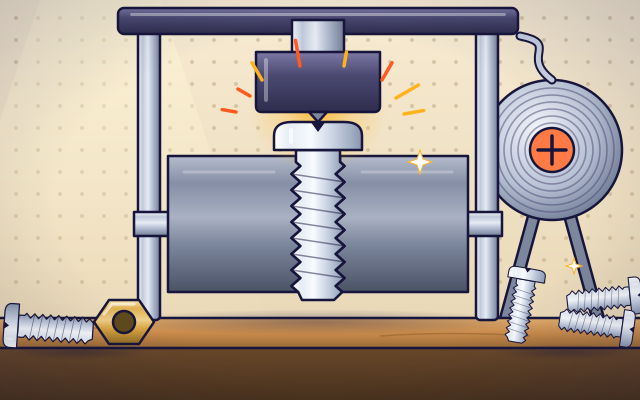
The big idea: Screws are squeezed into shape. A punch squashes one end of a piece of wire into a head, and two grooved plates roll the thread into the rest. The metal is only pushed around, so none is wasted.
It's like rolling a snake of play dough under a comb: the teeth press in grooves, and the dough they push aside rises up into ridges.
The interactive parts didn't load. The explanations below still work; try reloading the page.
How a screw is made
- Sam wonders how his screw was made. It began as a big coil of steel wire. A machine pulls the wire straight and snips off a short piece, called a blank.
- The blank sits in a hole with one end sticking out. A punch hits that end hard. The steel cannot go down, so it spreads out sideways into a head.
- A second punch has a cross on its tip. It presses a cross-shaped slot into the head. That slot is where the screwdriver will grip.
- Now the blank is rolled between two plates with slanted ridges. The ridges press a groove that winds around the blank. The steel that is pushed aside rises up into the sharp edge of the thread.
- Next the screws are heated until they glow and then cooled quickly, which makes the steel much harder. A thin coat of zinc is added last, so they will not rust.
- Last comes a check. A test nut must spin on smoothly. Cameras and gauges look at every screw, and any that are bent or the wrong size are taken out and recycled.
A screw and the tools that shape it
Tap each part of the screw, and the tools around it. See which tool made which part!
- Head. The head is the wide top of the screw. It presses down on whatever the screw is holding, and it gives the screwdriver something to turn.
- Drive slot. The cross pressed into the head is called the drive. The tip of a screwdriver fits into it, so you can turn the screw.
- Thread. The thread is a ridge that winds around the screw like a slide around a tower. When you turn the screw, the thread pulls it in and holds it tight.
- Tip. The end of the screw is narrowed a little. That helps it find the hole and start turning straight.
- Heading punch. The punch slams into the end of the blank and squashes it into a head. A second punch with a cross tip presses in the slot.
- Thread-rolling dies. These two hard steel plates have slanted ridges. One slides past the other, the blank rolls between them, and the ridges press the thread in.
- Zinc coat. A very thin layer of zinc covers the whole screw. Zinc keeps water and air away from the steel, so the screw does not rust.
Punch a head, roll a thread
Pull the punch down to form the head, then roll the thread. Look at the dotted lines: is the screw wider or thinner after rolling?
Experiment: The thread is rolled into the blank. What happens to how wide the screw is?
- Pull the punch down to form the head.
- Look at the dotted lines beside the blank. They show how wide it is now.
- Roll the thread, then look at the lines again.
What we found: The screw gets wider! The ridges on the plates press grooves into the steel, and the steel they push aside rises up between the grooves. Nothing is cut off, so the tops of the thread stand out past the dotted lines.
Turn on JavaScript to try it yourself.
Be the inspector
Inspect each screw. Keep the good ones and reject any with a fault. Look closely: some faults are small!
Squeezed, not cut
You could make a screw by carving it out of a thick steel rod, but that would be slow, and most of the steel would end up as scrap. Factories do something smarter. They start with wire about as thick as the screw, and they squeeze it into shape.
First a short piece, called a blank, is cut from the wire. It is pushed into a hole with one end sticking out, and a punch hits that end. The steel has nowhere to go but sideways, so it spreads into a head. A second punch presses in the slot for the screwdriver.
Then comes the thread. The blank rolls between two hard plates covered in slanted ridges. The ridges press a groove that winds around the blank. The steel that is pushed out of the groove piles up beside it, and that makes the sharp ridge of the thread. So the screw ends up a little wider than the blank was.
Last, the screws are heated and cooled quickly to make them hard, coated with zinc so they do not rust, and checked. Our play dough comparison works well, with one difference: play dough is soft, but steel only flows like this under an enormous push from a very strong machine.
Key words
- Blank
- A short piece of wire cut to the right length, before it is shaped.
- Cold heading
- Squashing the end of a blank into a head with a punch, without heating it.
- Thread rolling
- Pressing a thread into a blank by rolling it between ridged plates.
- Pitch
- The distance from one ridge of the thread to the next.
- Die
- A very hard tool with a shape that is pressed into softer metal.
- Tolerance
- How much bigger or smaller than the plan a part is allowed to be.
Check your thinking
-
How is the head of a screw made?
Show the answer
A punch squashes the end of the blank so it spreads out. The steel cannot go down into the hole, so it spreads sideways into a head.
-
After the thread is rolled, the screw is wider than the blank was. Why?
Show the answer
Steel pushed out of the grooves rises up into ridges. Nothing is added or cut away. The steel just moves from the grooves into the ridges.
-
What does the thread do when you turn a screw?
Show the answer
It pulls the screw in and holds it tight. The thread is like a ramp wound around the screw, so turning moves it forward.
-
The dies are set too far apart during thread rolling. What is wrong with the screw?
Show the answer
The thread is too shallow, because the crests are not filled. A wide gap means the ridges do not sink in far enough, so too little metal is displaced into the crests.
-
Why are screws heated and then cooled quickly?
Show the answer
To make the steel harder. Heating and fast cooling changes the steel inside so it is much harder.
You're a Making everyday things expert!
You watched, looked inside, tried it, solved the challenge and went deeper. Pick another question below, or switch the age at the top to see this topic another way.
More about making everyday things
 #324
Making everyday things
How are foam cushions made?
Watch bubbles form inside material and compare different foam structures.
#324
Making everyday things
How are foam cushions made?
Watch bubbles form inside material and compare different foam structures.
 #325
Making everyday things
How are coins made?
Prepare metal blanks, press designs onto both sides, and inspect the results.
#325
Making everyday things
How are coins made?
Prepare metal blanks, press designs onto both sides, and inspect the results.
 #11
Making everyday things
How is paper made?
Turn wood or recycled paper into pulp, spread it into a sheet, press out water, dry it, and cut it in a miniature paper mill.
#11
Making everyday things
How is paper made?
Turn wood or recycled paper into pulp, spread it into a sheet, press out water, dry it, and cut it in a miniature paper mill.
 #12
Making everyday things
How are books made?
Arrange words and pictures, print pages, fold sheets, bind them, and add a cover. Create a small digital book while exploring the manufacturing stages.
#12
Making everyday things
How are books made?
Arrange words and pictures, print pages, fold sheets, bind them, and add a cover. Create a small digital book while exploring the manufacturing stages.
Keep exploring
Games to play next
- Machine RepairFix levers, pulleys, gears and ramps so every contraption works.
- Sorting FactoryTurn a work order into if/else rules and watch the conveyor sort every item.
- Geometry Architect 3DCount, build and fold solids like a real architect.
Guide for grown-ups
- How to start homeschooling: a step-by-step guide for familiesA guide for parents · 7 min read
Science games by grade
Science worksheets by grade
- Preschool Science Worksheets
- Pre-K Science Worksheets
- Kindergarten Science Worksheets
- 1st Grade Science Worksheets
- 2nd Grade Science Worksheets
- 3rd Grade Science Worksheets
- 4th Grade Science Worksheets
- 5th Grade Science Worksheets
- 6th Grade Science Worksheets
- 7th Grade Science Worksheets
- 8th Grade Science Worksheets