How are balloons made?
Balloon-shaped molds are dipped in liquid latex, baked until stretchy, and the balloons are peeled off.
The big idea: A mold dipped in liquid latex comes out wearing a thin coat. Heat turns the coat into stretchy rubber, and then it is peeled off as a balloon.
It's like dipping a strawberry in melted chocolate: a thin coat sticks all over, and when the coat sets it keeps the shape of the strawberry.
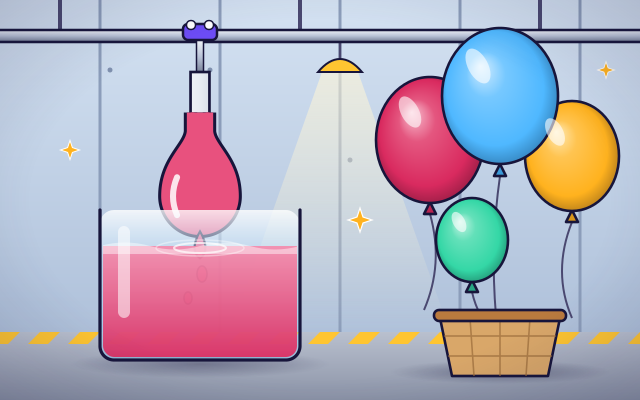
The interactive parts didn't load. The explanations below still work; try reloading the page.
How balloons are dipped
- A balloon stretches to many times its size and snaps right back. That stretchy skin is rubber, and it starts as the milky sap of a tree.
- Workers cut a thin, slanted groove in the bark of a rubber tree. White sap, called latex, trickles down the groove into a cup. The cut is shallow, so the tree keeps growing.
- A mold shaped like a small balloon is first dipped in a salty liquid that makes latex cling. Then it dips into colored latex and comes up wearing a thin, even coat.
- Spinning brushes roll the top edge of the wet coat down into a ring. That rolled ring is the balloon's lip, the firm part you blow into and tie.
- The coated mold rides through a warm oven. Heat dries the latex and links the rubber together, so it becomes strong and springs back when it is stretched.
- Finally a puff of air and a gentle pull slide the balloon off its mold. The mold goes around again, and the new balloon is ready to blow up.
Look inside the dipping line
Tap a station and the mold travels there to show what happens.
- Balloon mold. The mold, called a form, is shaped like a balloon that has not been blown up. The latex coat takes its shape.
- Coagulant tank. The first tank holds a salty liquid. A thin layer of it on the mold makes the latex cling and turn from runny to jelly-like.
- Latex tank. This tank holds colored liquid latex. The mold dips in and comes out with a thin coat. A longer dip makes a thicker coat.
- Lip-rolling brushes. Two spinning brushes roll the top of the wet coat down into a ring. That ring is the lip you blow into.
- Curing oven. Heat in the oven dries the coat and links the rubber together. Now it stretches and snaps back instead of tearing.
- Stripping station. A puff of air gets between the balloon and the mold. The balloon slides off and drops into a basket.
How long should the dip be?
Drag the mold down into the latex and hold it there, or set the dip time and press Dip. Then see how the balloon does when it is blown up.
Experiment: What happens to a balloon whose mold was dipped for only a moment?
- Set a very short dip and press Dip. Watch the balloon being blown up.
- Try a dip in the middle.
- Try the longest dip. How big does that balloon get?
What we found: A quick dip leaves a coat that is too thin, so the balloon pops as it is blown up. A medium dip gives a skin that stretches wide and holds. A very long dip makes a thick, stiff skin that is hard to blow up and uses far more latex.
Turn on JavaScript to try it yourself.
Run the line in order
The machines are mixed up. Tap them in the right order to turn the bare mold into a finished balloon.
From tree sap to stretchy balloon
Most party balloons are made of natural rubber. It comes from the rubber tree. When a worker cuts a thin groove in the bark, a white, milky sap called latex trickles out and is caught in a cup. Latex is mostly water, with tiny bits of rubber floating in it.
At the factory, color is stirred into the latex. Then molds shaped like small balloons are dipped. First they go into a salty liquid, which makes latex cling. Then they go into the latex itself, and each mold comes out wearing a thin, wet coat. A longer dip gives a thicker coat.
Next, spinning brushes roll the top edge of the coat into a ring. That is the lip you blow into. Then the molds ride through a warm oven. The heat dries the coat and ties the rubber together, so it becomes strong and stretchy instead of soft and sticky.
Last, a puff of air loosens each balloon and it is peeled off its mold. The chocolate-dipped strawberry comparison works for the dipping, but not for the end: chocolate sets by cooling and stays on the strawberry, while rubber is set by heat and peeled off.
Key words
- Latex
- The milky sap of the rubber tree: water with tiny bits of rubber in it.
- Form
- The balloon-shaped mold that is dipped. The balloon is made on its outside.
- Coagulant
- A salty liquid that makes latex cling and thicken on the mold.
- Curing
- Heating rubber so it becomes strong and springy.
- Elastic
- Able to stretch and then spring back to its old shape.
Check your thinking
-
What is latex?
Show the answer
Milky tree sap with tiny bits of rubber in it. Latex is the white sap of the rubber tree. It is mostly water with tiny bits of rubber floating in it.
-
A mold is left in the latex for longer. What happens to its coat?
Show the answer
The coat gets thicker. The longer the mold stays in, the more rubber gathers on it.
-
Why are the coated molds baked in an oven?
Show the answer
Heat makes the rubber strong and springy. Heat dries the coat and links the rubber together. Without baking it would be weak and sticky.
-
What would happen if the mold skipped the salty liquid?
Show the answer
The latex would not cling well, and the coat would be too thin. The salty liquid is what makes latex cling and thicken on the mold.
-
What is the rolled ring at the top of a balloon for?
Show the answer
It is the firm lip you blow into and tie. The rolled lip is thicker and stronger, so it does not tear when you blow or tie.
You're a Making everyday things expert!
You watched, looked inside, tried it, solved the challenge and went deeper. Pick another question below, or switch the age at the top to see this topic another way.
More about making everyday things
 #309
Making everyday things
How is concrete made?
Mix cement, water, sand, and gravel and explore filling molds and curing.
#309
Making everyday things
How is concrete made?
Mix cement, water, sand, and gravel and explore filling molds and curing.
 #310
Making everyday things
How is plywood made?
Alternate thin wood sheets' grain directions and press the glued layers together.
#310
Making everyday things
How is plywood made?
Alternate thin wood sheets' grain directions and press the glued layers together.
 #311
Making everyday things
How is lumber prepared for building?
Follow logs through sawing, drying, grading, and planing into construction boards.
#311
Making everyday things
How is lumber prepared for building?
Follow logs through sawing, drying, grading, and planing into construction boards.
 #312
Making everyday things
How is wooden furniture made?
Turn a design into measured pieces, assemble joints, and choose a finish.
#312
Making everyday things
How is wooden furniture made?
Turn a design into measured pieces, assemble joints, and choose a finish.
Keep exploring
Games to play next
- Machine RepairFix levers, pulleys, gears and ramps so every contraption works.
- Geometry Architect 3DCount, build and fold solids like a real architect.
- Sorting FactoryTurn a work order into if/else rules and watch the conveyor sort every item.
Draw it or make it
- How to draw a party balloonDrawing lesson
Guide for grown-ups
- How to start homeschooling: a step-by-step guide for familiesA guide for parents · 7 min read
Science games by grade
Science worksheets by grade
- Preschool Science Worksheets
- Pre-K Science Worksheets
- Kindergarten Science Worksheets
- 1st Grade Science Worksheets
- 2nd Grade Science Worksheets
- 3rd Grade Science Worksheets
- 4th Grade Science Worksheets
- 5th Grade Science Worksheets
- 6th Grade Science Worksheets
- 7th Grade Science Worksheets
- 8th Grade Science Worksheets