How does soundproofing reduce noise?
Heavy walls bounce sound back, soft materials soak it up, and sealing every gap stops it from leaking through.
The big idea: Sound is air shaking. A heavy wall is hard to shake, so it bounces most sound back. Soft, fluffy materials soak sound up. But sound squeezes through any gap, so gaps must be sealed.
It's like keeping water in a bucket: thick sides hold it in, a sponge soaks some of it up, and one small hole lets it leak away.
The interactive parts didn't load. The explanations below still work; try reloading the page.
How to stop a noise
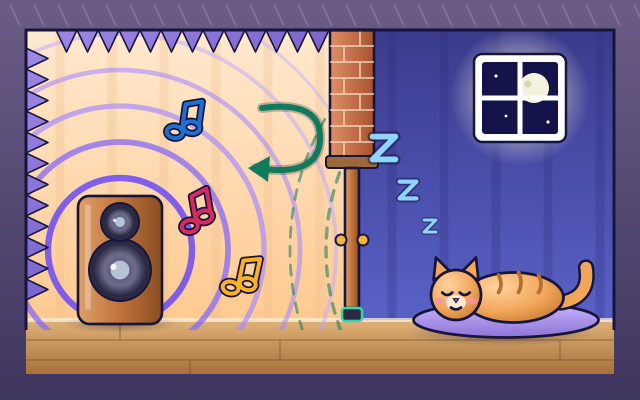
- Max is playing loud music. Next door, Pip the kitten is trying to sleep, but the sound comes straight through the thin wall. How can we keep the noise in?
- Sound is air shaking back and forth. When it hits a thin, light wall, the wall shakes a tiny bit too, and it passes the shaking on to the air on the other side.
- A thick, heavy wall is much harder to shake. Most of the sound bounces off it and stays in the noisy room. A heavy wall is a good barrier.
- But look under the door. Sound is moving air, so it slips through any gap, like water through a hole in a bucket. A strip of rubber seals the gap.
- Soft panels are full of tiny holes and fibers. Sound goes in, rubs against them and fades away. That soaks up echoes, so the noisy room itself gets quieter.
- Use all three together: a heavy wall to bounce sound back, sealed gaps so it cannot leak, and soft panels to soak it up. Max plays on, and Pip sleeps soundly.
Look inside a soundproof wall
A soundproof wall is sliced open. A sound wave comes in from the left. Tap each layer to see how it makes the wave smaller.
- Soft panel. This foam panel is full of tiny holes. Sound that goes in rubs against the foam and fades, so it does not bounce back into the room.
- Heavy boards. These thick, heavy boards are hard for sound to shake. Most of the sound bounces off them. Two layers are heavier, so they block even more.
- Fluffy filling. The hollow part of the wall is stuffed with fluffy wool. It soaks up sound that gets inside, so the wall does not boom like a drum.
- Air gap. The two halves of the wall do not touch each other. When sound shakes one side, there is no solid path to carry the shaking across.
- Sealed edges. A bead of squishy sealant fills the cracks where the wall meets the floor. With no gaps, sound has no easy way to leak around the wall.
The noisy room model
Try a thick wall, soft panels and a sealed gap, one at a time and together. Watch the waves and the meter next door.
Experiment: You build a thick, heavy wall but leave the gap under the door. What will it sound like next door?
- Switch on the thick wall and look at the meter next door.
- Now seal the gap under the door. What happens?
- Add the soft panels and compare the waves in the noisy room.
What we found: A heavy wall alone hardly helps while there is a gap, because the sound simply goes through the gap. Seal the gap and the heavy wall can do its job. Soft panels make the noisy room itself quieter.
Turn on JavaScript to try it yourself.
Two fixes only
You can afford only two fixes. Choose the two that make it quiet enough for Pip to sleep, then press Test.
Three ways to stop a noise
Sound is air shaking back and forth. To keep a noise from getting from one room to another, you have to stop that shaking on its way. Builders use three different tools, and each one does a different job.
The first tool is a barrier: something heavy and solid, like a brick wall or thick boards. Sound has to shake a wall to get through it, and heavy things are hard to shake. So most of the sound bounces back. The second tool is an absorber: something soft and full of tiny holes, like foam, thick curtains or carpet. Sound goes in, rubs against the fibers and fades away. Absorbers stop echoes and make a noisy room calmer, but they are too light to block sound on their own.
The third tool is the one people forget: sealing gaps. Sound travels wherever air can go. A crack under a door, a keyhole or an open vent lets sound pour through, like water through a hole in a bucket. A heavy wall with a gap is a bucket with a hole.
The bucket idea is not perfect. Water cannot get through a solid bucket at all, but a little sound always gets through a solid wall, because the wall itself shakes. That is why the best quiet rooms use all three tools together, and sometimes two walls with a gap of air between them.
Key words
- Barrier
- Something heavy and solid that sound bounces off.
- Absorber
- A soft material full of tiny holes that soaks up sound.
- Decibel (dB)
- The unit for how loud a sound is.
- Transmission loss
- How many decibels of sound are lost on the way through a wall.
- Echo
- Sound that bounces off a hard surface and comes back.
Check your thinking
-
A heavy wall has a gap under its door. What happens to the sound?
Show the answer
It leaks through the gap. Sound goes wherever air can go, so the gap lets it pour through.
-
Why does a heavy wall block sound better than a light one?
Show the answer
Heavy things are harder for sound to shake. Sound must shake the wall to get through. A heavy wall barely moves, so most sound bounces off.
-
What do soft foam panels on the walls of a music room do best?
Show the answer
Soak up echoes inside the room. Soft panels soak up sound so it does not bounce around. They are too light to stop sound going through a wall.
-
You double the mass of a sealed wall. About how much more sound does it block?
Show the answer
About 6 dB more. The mass law gives roughly 6 dB of extra loss for each doubling of mass per square meter.
-
Your neighbor plays music. Which part of it are you most likely to hear through the wall?
Show the answer
The deep, low thump. Low sounds are the hardest to block, so the deep thump gets through when the rest does not.
You're a Light & sound expert!
You watched, looked inside, tried it, solved the challenge and went deeper. Pick another question below, or switch the age at the top to see this topic another way.
More about light & sound
 #443
Light & sound
How do noise-canceling headphones work?
Combine a noise waveform with an opposing signal in a simplified model.
#443
Light & sound
How do noise-canceling headphones work?
Combine a noise waveform with an opposing signal in a simplified model.
 #444
Light & sound
Why does a passing siren change pitch?
Move a virtual sound source past a listener and inspect wave spacing.
#444
Light & sound
Why does a passing siren change pitch?
Move a virtual sound source past a listener and inspect wave spacing.
 #445
Light & sound
How does resonance make vibrations stronger?
Drive a model oscillator at different rhythms and compare its response.
#445
Light & sound
How does resonance make vibrations stronger?
Drive a model oscillator at different rhythms and compare its response.
 #426
Light & sound
How do mirrors form reflections?
Trace light rays and compare flat and curved mirrors.
#426
Light & sound
How do mirrors form reflections?
Trace light rays and compare flat and curved mirrors.
Keep exploring
Games to play next
- Listen and FindOlly whispers a clue or plays a sound. Can you find it in the picture?
- Mirror MazeBend a beam of light with mirrors to light up every crystal — in the right order.
- Shadow SculptorStack cubes under three lamps until every shadow matches the outline.
Guide for grown-ups
- How to start homeschooling: a step-by-step guide for familiesA guide for parents · 7 min read
Science games by grade
Science worksheets by grade
- Preschool Science Worksheets
- Pre-K Science Worksheets
- Kindergarten Science Worksheets
- 1st Grade Science Worksheets
- 2nd Grade Science Worksheets
- 3rd Grade Science Worksheets
- 4th Grade Science Worksheets
- 5th Grade Science Worksheets
- 6th Grade Science Worksheets
- 7th Grade Science Worksheets
- 8th Grade Science Worksheets