How is steel made?
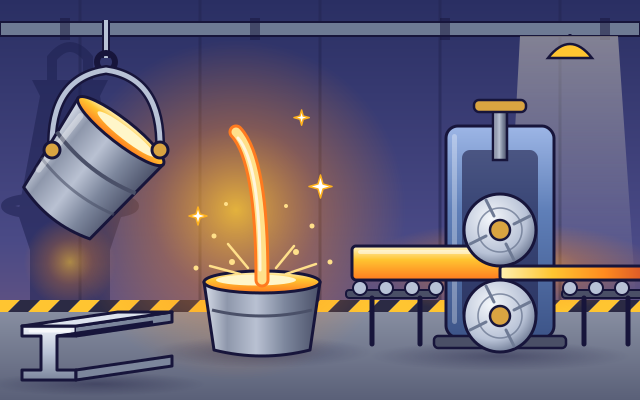
Iron ore is melted in a giant furnace, cleaned up with oxygen, then cast and rolled into beams, rails and sheets.
The big idea: A blast furnace pulls iron out of rock. That iron holds too much carbon, so it is brittle. Oxygen burns most of the carbon away, and what is left is steel: strong, tough and easy to shape while it is hot.
It's like making a clay pot: you dig up the stuff, take out what you do not want, and shape it while it is still soft.
The interactive parts didn't load. The explanations below still work; try reloading the page.
A trip through the steelworks
- Bridges, bikes, cars and spoons are made of steel. It is strong, it bends without snapping, and it starts out as rock in the ground.
- Three things ride up the belt: iron ore, a rusty rock with iron locked inside; coke, which is baked coal; and limestone, which helps clean the iron.
- Hot air is blasted in at the bottom, and the coke burns fiercely. Gas from the burning coke grabs the oxygen out of the ore, so liquid iron trickles down into a glowing pool.
- Iron from the blast furnace holds too much carbon, so it is brittle. In the next furnace a pipe called a lance blows in pure oxygen, which burns most of the carbon away. Now it is steel.
- The liquid steel flows into a mold with no bottom. Water cools it, a skin freezes around it, and a long glowing bar slides out, like toothpaste from a tube.
- While it still glows, the slab is squeezed between heavy rollers again and again. It gets thinner and longer, and shaped rollers turn it into beams, rails and sheets.
Look inside a steelworks
Tap each part of the steelworks, from the rocks going in to the steel coming out.
- Ore, coke and limestone. Iron ore, coke and limestone are tipped in at the top in layers. They sink slowly as the bottom of the pile melts away.
- Hot air blast. Air is heated first, then blasted in through nozzles near the bottom. Hot air makes the coke burn much hotter. That blast gives the furnace its name.
- Blast furnace. Inside the tall furnace, hot gas rises while the rocks sink. The gas pulls the oxygen out of the ore, and what is left is iron.
- Liquid iron. Liquid iron collects in a pool at the bottom. Workers open a hole, and it runs along a channel into a giant bucket called a ladle.
- Slag. The limestone grabs sand and ash and turns them into slag. Slag is lighter than iron, so it floats on top and can be run off separately.
- Oxygen furnace. Here a long pipe blows oxygen onto the liquid iron. The oxygen burns out most of the carbon, and scrap steel is melted in too. Out comes steel.
- Casting machine. Liquid steel flows into a cooled mold and comes out the bottom as one long glowing bar. Water sprays freeze it all the way through.
- Rolling mill. Heavy rollers squeeze the hot slab thinner and longer with every pass, like a rolling pin on dough. Different rollers make sheets, beams or rails.
The oxygen blow
Blow oxygen for a shorter or longer time. Each time, a test bar is poured and pressed. Watch the carbon dots and what the bar does.
Experiment: What happens to the metal as oxygen burns more and more of the carbon out?
- Leave the blow at zero and look at the test bar.
- Slide the blow up a little at a time.
- Compare the bar with no blow, a medium blow and a long blow.
What we found: With no blow, the iron is full of carbon and the bar snaps. As oxygen burns the carbon out, the bar bends instead of breaking. Leave a little carbon and you get hard, springy steel for tools. Leave very little and you get soft steel that is easy to press into car doors and cans.
Turn on JavaScript to try it yourself.
Roll a ship plate
Roll the hot slab down to a plate 20 to 25 millimeters thick for a ship. Roll while it glows: cooler steel cracks if you squeeze it hard.
From rusty rock to strong steel
Iron is one of the most common metals on Earth, but you almost never find a shiny lump of it. In the ground, iron atoms are stuck to oxygen atoms. That is iron ore, and it looks like rusty rock. To get the iron, you have to pull the oxygen away.
A blast furnace does that with coke, which is coal that has been baked until it is almost pure carbon. Hot air makes the coke burn, and the gas from the burning coke grabs the oxygen out of the ore. The iron melts and runs to the bottom. Limestone soaks up the sandy bits and makes slag, which floats on top.
Iron straight from the blast furnace has soaked up a lot of carbon. That makes it hard but brittle: hit it and it cracks. So it goes into a second furnace, where pure oxygen is blown in. The oxygen burns away most of the carbon. With only a little carbon left, the metal is steel, which bends instead of snapping.
Liquid steel is cast into long slabs and then rolled while it is still glowing. Rollers squeeze it thinner and longer, like a rolling pin on dough. The bread and clay pictures only go so far, though: bread cannot be un-baked, but steel can be melted and made into new steel over and over.
Key words
- Iron ore
- Rock that has iron locked inside it, stuck to oxygen.
- Coke
- Coal that has been baked until it is nearly pure carbon. It is the furnace's fuel.
- Slag
- The melted leftover rock that floats on top of the liquid iron.
- Reduction
- Taking the oxygen away from the iron in the ore.
- Alloy
- A metal mixed with a little of something else to make it better. Steel is iron with a little carbon.
- Ductile
- Able to bend and stretch without snapping.
Check your thinking
-
Where does the iron in steel come from?
Show the answer
Rusty-looking rock called iron ore. Iron ore is rock with iron locked inside it. The furnace sets the iron free.
-
Why is hot air blasted into the bottom of the furnace?
Show the answer
It makes the coke burn much hotter. Burning needs air. A blast of hot air makes the coke burn fiercely, which gives the heat and the gas the furnace needs.
-
Iron from the blast furnace snaps easily. What fixes that?
Show the answer
Blowing in oxygen to burn out most of the carbon. Too much carbon makes iron brittle. Oxygen burns the extra carbon out, and the metal becomes steel.
-
You need steel that is easy to press into a car door. How much carbon should it keep?
Show the answer
Very little, so it is soft and bends easily. Less carbon means softer steel that can be shaped without cracking.
-
A slab 200 mm thick and 10 m long is rolled to 50 mm thick at the same width. About how long is it now?
Show the answer
40 m. Volume is conserved. A quarter of the thickness means four times the length: 10 m times 4 is 40 m.
-
Why is steel rolled while it is still glowing hot?
Show the answer
Hot steel is soft, so it can be squeezed without cracking. Heat makes steel soft enough to flow between the rollers. Cold steel is much harder to squeeze and can crack.
You're a Making everyday things expert!
You watched, looked inside, tried it, solved the challenge and went deeper. Pick another question below, or switch the age at the top to see this topic another way.
More about making everyday things
 #302
Making everyday things
How are aluminum drink cans made?
Form a metal disc into a can, then trim, coat, decorate, and attach a lid.
#302
Making everyday things
How are aluminum drink cans made?
Form a metal disc into a can, then trim, coat, decorate, and attach a lid.
 #303
Making everyday things
How are rubber tires made?
Assemble rubber layers, reinforcement, and tread before shaping and curing in a mold.
#303
Making everyday things
How are rubber tires made?
Assemble rubber layers, reinforcement, and tread before shaping and curing in a mold.
 #304
Making everyday things
How are shoes made?
Assemble upper pieces around a foot-shaped form and attach the sole.
#304
Making everyday things
How are shoes made?
Assemble upper pieces around a foot-shaped form and attach the sole.
 #305
Making everyday things
How is paint made?
Combine pigments and binders and compare how different mixtures cover surfaces.
#305
Making everyday things
How is paint made?
Combine pigments and binders and compare how different mixtures cover surfaces.
Keep exploring
Games to play next
- Machine RepairFix levers, pulleys, gears and ramps so every contraption works.
- Geometry Architect 3DCount, build and fold solids like a real architect.
- Sorting FactoryTurn a work order into if/else rules and watch the conveyor sort every item.
Guide for grown-ups
- How to start homeschooling: a step-by-step guide for familiesA guide for parents · 7 min read
Science games by grade
Science worksheets by grade
- Preschool Science Worksheets
- Pre-K Science Worksheets
- Kindergarten Science Worksheets
- 1st Grade Science Worksheets
- 2nd Grade Science Worksheets
- 3rd Grade Science Worksheets
- 4th Grade Science Worksheets
- 5th Grade Science Worksheets
- 6th Grade Science Worksheets
- 7th Grade Science Worksheets
- 8th Grade Science Worksheets