How do thermal cameras show heat patterns?
Everything gives off invisible heat light. A thermal camera catches it and paints a picture where every color means a temperature.
The big idea: Warm things send out invisible light called infrared. The hotter they are, the more they send. A thermal camera catches that light and turns it into colors you can see.
It's like a paint-by-numbers picture: the camera measures a temperature for every little square and paints it with the color for that number.
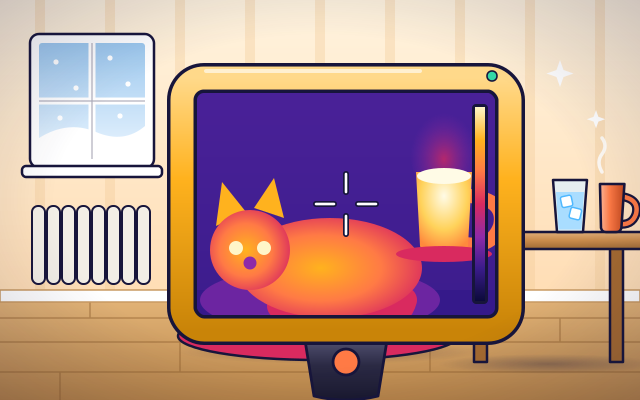
The interactive parts didn't load. The explanations below still work; try reloading the page.
Seeing heat
- Two mugs with lids look exactly the same. One holds hot cocoa and one holds cold milk. Leo's eyes cannot tell which is which, because eyes do not see heat.
- Everything sends out an invisible kind of light called infrared. You can feel it as warmth on your skin. Hot things send out a lot of it, and cold things only a little.
- A thermal camera has a special lens that lets infrared through. The lens focuses it onto a sensor: a grid of thousands of tiny squares, and each one warms up a little where infrared lands on it.
- A small computer reads every square and works out a temperature. Then it paints the picture: dark blue and purple for cold, orange and yellow for hot. The colors are a code, chosen by the camera.
- Leo points the camera at the mugs. On the screen one mug glows yellow and the other is dark purple. Now it is easy: the bright one holds the hot cocoa.
- Leo switches off the light. His eyes see nothing, but the camera's picture has not changed. The cat makes its own heat, so it makes its own infrared. No lamp is needed.
Inside a thermal camera
Tap each part. Follow the infrared from the lens at the front to the picture on the screen.
- Infrared lens. Ordinary glass blocks this kind of infrared, so the lens is made of a special material. It gathers the infrared and focuses it onto the sensor.
- Heat sensor grid. The sensor is a grid of thousands of tiny squares. Infrared from a hot thing warms its squares more than infrared from a cold thing.
- Processor. A small computer reads every square many times a second and turns each reading into a temperature.
- Color scale. The color scale is the key to the code. It shows which color the camera uses for each temperature, from the coldest at the bottom to the hottest at the top.
- Screen. The screen shows the finished heat picture, with every square painted in the color for its temperature.
- Battery and trigger. A rechargeable battery in the handle powers the sensor, the computer and the screen. Squeezing the trigger freezes the picture and saves it.
Eyes and heat camera, side by side
Move the thermal camera over each thing and compare it with what your eyes see. Then switch off the light.
Experiment: You switch off the room light. What happens to the thermal camera's picture?
- Move the camera over a warm thing and a cold thing.
- Switch the light off. What do your eyes see? What does the camera see?
- Touch the wall, then look at the spot with the camera.
What we found: The thermal picture stays the same in the dark. The camera does not use the room's light. It catches the infrared that warm things send out by themselves.
Turn on JavaScript to try it yourself.
Heat detective
Solve three mysteries in the dark room. Point the thermal camera at your answer and press the button.
How a camera can see heat
Light comes in many kinds. Your eyes can see only a small group of them, the colors of the rainbow. Just beyond red is a kind of light called infrared. You cannot see it, but you can feel it. When you hold your hand near a warm mug or stand in the sunshine, the warmth you feel on your skin is infrared arriving.
Everything sends out infrared all the time: mugs, walls, cats, ice cubes and you. The warmer a thing is, the more infrared it sends. A thermal camera has a sensor made of thousands of tiny squares that warm up when infrared lands on them. A computer measures each square and works out how warm that part of the scene must be.
Then the camera paints. It chooses a color for each temperature, often dark blue and purple for cold and orange, yellow and white for hot. These are not real colors. They are a code, like the colors on a weather map. Our paint-by-numbers comparison fits well, except that the camera repaints the whole picture many times every second.
Because warm things make their own infrared, a thermal camera works in total darkness. Firefighters use one to see through smoke. Builders use one to find where a house leaks heat. Wildlife scientists use one to count animals at night. But it cannot see through walls. It only shows how warm the surface of each thing is.
Key words
- Infrared
- A kind of light just beyond red that eyes cannot see. We feel it as warmth.
- Thermal image
- A picture in which each color stands for a surface temperature.
- False color
- Colors chosen as a code for a measurement, such as temperature, not the real colors of things.
- Sensor
- The grid of tiny squares that warm up when infrared lands on them.
- Emissivity
- How good a surface is at glowing with infrared. Matte things are good at it; shiny metal is bad at it.
- Warm-blooded
- Animals, such as cats and people, whose bodies make their own heat.
Check your thinking
-
What does a thermal camera catch to make its picture?
Show the answer
Invisible infrared light that things send out. Everything sends out infrared. The warmer it is, the more it sends, and the camera measures it.
-
Why does a thermal camera still work in a dark room?
Show the answer
Warm things make their own infrared, so no lamp is needed. The camera does not use reflected room light. It catches infrared that objects send out by themselves.
-
In the thermal picture, a mug looks bright yellow. What does the yellow mean?
Show the answer
The mug is hot. The colors are a code for temperature. Bright colors mean hot, whatever the mug's real color is.
-
A teddy bear has been sitting in the room all day. Why is it hard to see with the thermal camera?
Show the answer
It is the same temperature as the room, so it is the same color as the wall. The teddy makes no heat of its own, so it is as warm as everything around it and blends in.
-
You want to see a faint warm handprint that is only 2 degrees warmer than the wall. What should you do with the scale range?
Show the answer
Make it narrower, a few degrees around the wall's temperature. A narrow range spreads all the colors over a few degrees, so a 2 degree difference becomes a clear change of color.
-
Can a thermal camera see a person through a brick wall?
Show the answer
No. It only shows how warm the surface of the wall is. Infrared from the person is stopped by the wall. The camera sees only the wall's own surface.
You're a Measuring & instruments expert!
You watched, looked inside, tried it, solved the challenge and went deeper. Pick another question below, or switch the age at the top to see this topic another way.
More about measuring & instruments
 #393
Measuring & instruments
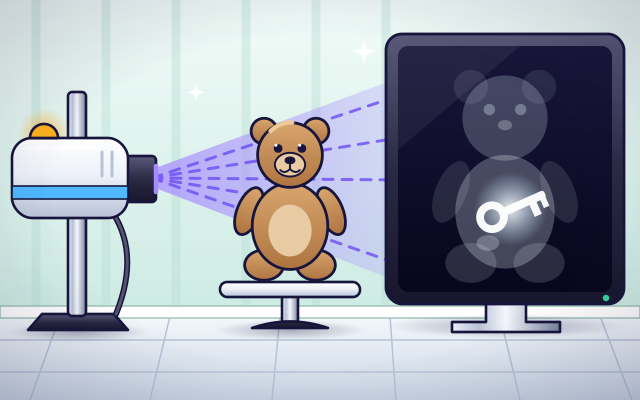
How do X-ray machines look inside objects?
Send simulated X-rays through different materials and compare their resulting images.
#393
Measuring & instruments
How do X-ray machines look inside objects?
Send simulated X-rays through different materials and compare their resulting images.
 #394
Measuring & instruments
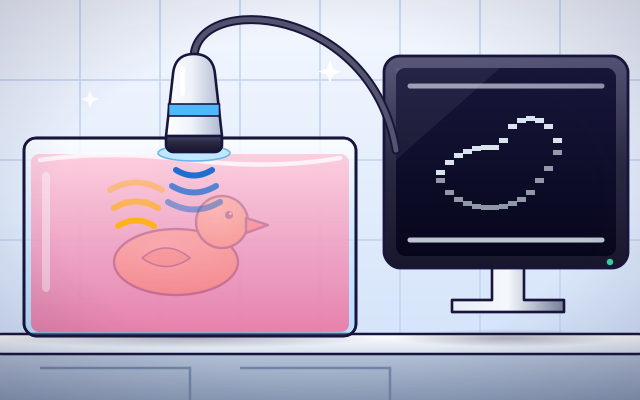
How do ultrasound scanners create pictures?
Send sound pulses into a model and build an image from returning echoes.
#394
Measuring & instruments
How do ultrasound scanners create pictures?
Send sound pulses into a model and build an image from returning echoes.
 #395
Measuring & instruments
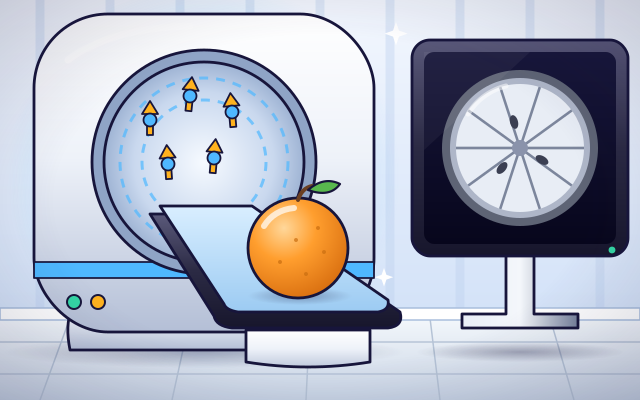
How does an MRI scanner see inside the body?
Explore magnets, radio signals, and the assembly of image slices in a simplified scanner.
#395
Measuring & instruments
How does an MRI scanner see inside the body?
Explore magnets, radio signals, and the assembly of image slices in a simplified scanner.
 #396
Measuring & instruments
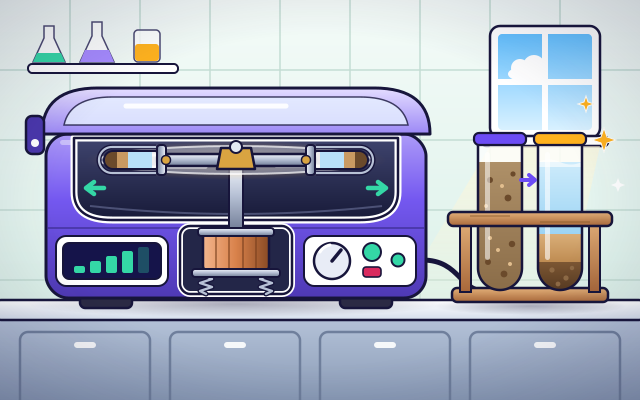
How do centrifuges separate samples?
Spin balanced virtual samples and watch components separate according to physical properties.
#396
Measuring & instruments
How do centrifuges separate samples?
Spin balanced virtual samples and watch components separate according to physical properties.
Keep exploring
Games to play next
- Clock TowerKeep the town on time: set the tower clock's hands just right.
- Mapmaker QuestFollow directions to make a map, then read its legend, compass rose and scale.
- Data DetectiveRead the clues hidden in graphs — and build your own.
Guide for grown-ups
- How to start homeschooling: a step-by-step guide for familiesA guide for parents · 7 min read
Science games by grade
Science worksheets by grade
- Preschool Science Worksheets
- Pre-K Science Worksheets
- Kindergarten Science Worksheets
- 1st Grade Science Worksheets
- 2nd Grade Science Worksheets
- 3rd Grade Science Worksheets
- 4th Grade Science Worksheets
- 5th Grade Science Worksheets
- 6th Grade Science Worksheets
- 7th Grade Science Worksheets
- 8th Grade Science Worksheets