How does a toilet flush?
A toilet uses no pump at all: just gravity, a clever bendy pipe called a siphon and a floating valve that refills the tank.
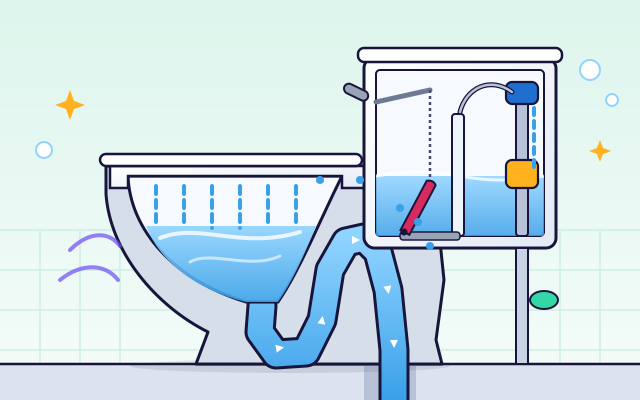
The big idea: When the tank dumps its water into the bowl very fast, the bendy pipe behind the bowl fills up completely. Then it works like a straw and pulls the bowl water down the drain until air gets in.
It's like
The interactive parts didn't load. The explanations below still work; try reloading the page.
Inside a flush
- Here's a toilet cut in half so we can see inside. The tank on top is full of clean water, held in by a rubber plug called the flapper.
- When you press the handle, a lever pulls a chain that lifts the flapper. Water rushes out of the tank and down into the bowl.
- The water pours in through little holes under the rim, so it rinses the whole bowl. The water level in the bowl quickly rises.
- Now the bendy pipe behind the bowl is completely full of water. The water falling down the long side pulls the rest along behind it. This is called a siphon. Whoosh!
- When the bowl is nearly empty, air gets into the pipe and the siphon stops with a gurgle. Everything has gone down the waste pipe to the sewer.
- With the tank empty, the float drops and opens the fill valve. Water refills the tank, and a little tube tops up the bowl. As the float rises, it shuts the valve.
- The water that stays in the bend is very important. It blocks smelly air from the sewer pipes, so it can't come up into your bathroom.
Look inside a toilet
Tap each part. Watch it work when you find it!
- Handle and lever. The handle turns a lever arm inside the tank. The lever pulls up a chain attached to the flapper.
- Flapper. The flapper is a rubber plug that covers the hole in the bottom of the tank. When lifted, water rushes out. When the tank empties, it drops back and seals the hole.
- Fill valve. The fill valve lets clean water from the pipes into the tank. It opens when the float drops and closes when the float rises.
- Float. The float bobs on the water. When the water goes down, the float goes down and turns the water on. When it goes up, it turns the water off.
- Overflow tube. If the fill valve doesn't shut off, extra water spills into the overflow tube and goes into the bowl, so the tank never floods the bathroom.
- Rim holes. Water from the tank flows around a hollow rim and pours out of small holes, rinsing the inside of the bowl.
- Trapway (siphon). The trapway is an S-shaped pipe. Its bend keeps water in the bowl, and when it fills up completely during a flush, it becomes a siphon.
- Waste pipe. The waste pipe carries everything away to the sewer or to a septic tank, where the dirty water gets cleaned.
Slow pour or fast pour?
Flush with the handle, or pour water straight into the bowl, slowly or fast. Watch the bendy pipe. Which ones start the whoosh?
Experiment: Will pouring water into the bowl make it flush? Does the speed matter?
- Press “Pour slowly” and watch the bendy pipe.
- Then press “Pour fast”.
- Which one made the whoosh?
What we found: A slow pour just trickles over the top of the bend, and the bowl goes back to normal. A fast pour fills the bendy pipe completely, so it becomes a siphon and whooshes the water away. That's why people can flush with a bucket of water!
Turn on JavaScript to try it yourself.
Fix the running toilet
Set the float so the tank fills to a good level: enough for a strong flush, but not so high that water runs down the overflow. Then flush the paper away.
The secret of the siphon
A toilet doesn't need a pump or electricity. It uses gravity and a clever pipe shape. Behind the bowl is an S-shaped pipe called the trapway. Its first bend goes up, so it always holds some water in the bowl.
When you flush, the tank lets lots of water rush into the bowl at once. The bowl fills faster than the water can trickle over the bend, so the whole bendy pipe fills up. Now it works like a siphon: the water falling down the long side of the pipe pulls the rest of the water after it, like a long train pulling its carriages.
When most of the water has gone, air gets into the pipe and the siphon stops with a gurgle. Meanwhile the float in the tank has dropped, which opens the fill valve. Clean water refills the tank, and a small tube tops up the bowl. When the float rises, it shuts the water off.
The water left in the bend has an important job: it blocks smelly air from the sewer pipes. That's why it's called a trap.
Key words
- Siphon
- A full, bendy pipe where water falling down one side pulls water up and over the bend.
- Trap
- The bend in a drain pipe that holds water to block smelly sewer air.
- Flapper
- The rubber plug at the bottom of the tank that lifts to start a flush.
- Float
- A part that floats on the water and turns the fill valve on or off.
- Fill valve
- The valve that lets clean water into the tank.
Check your thinking
-
What happens when you press the handle?
Show the answer
A chain lifts the flapper and water rushes into the bowl. The lever and chain lift the flapper, and gravity does the rest.
-
How does the tank know when to stop filling?
Show the answer
The float rises with the water and shuts the fill valve. The float measures the water level and closes the valve at the right height.
-
Why does a slow trickle of water not make a toilet flush?
Show the answer
It just spills over the bend without filling the pipe. The pipe has to fill completely to become a siphon, and that needs lots of water quickly.
-
Why does the water left in the trap matter after a flush?
Show the answer
It forms a seal that blocks sewer gases. Gases can't pass through the water in the bend, so the trap keeps sewer air out of the room.
-
What is the overflow tube for?
Show the answer
It stops the tank overflowing if the valve doesn't shut. Extra water spills into the overflow tube and goes into the bowl instead of onto the floor.
You're a Everyday machines expert!
You watched, looked inside, tried it, solved the challenge and went deeper. Pick another question below, or switch the age at the top to see this topic another way.
More about everyday machines
 #35
Everyday machines
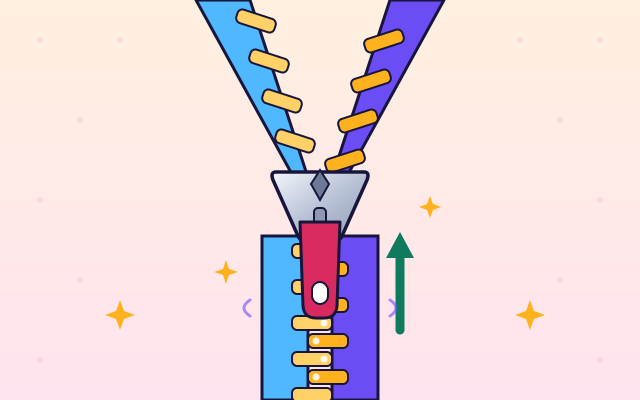
How does a zipper work?
Pull an oversized zipper slowly and watch the slider join or separate its teeth. Explore why alignment matters and what happens when fabric gets caught.
#35
Everyday machines
How does a zipper work?
Pull an oversized zipper slowly and watch the slider join or separate its teeth. Explore why alignment matters and what happens when fabric gets caught.
 #36
Everyday machines
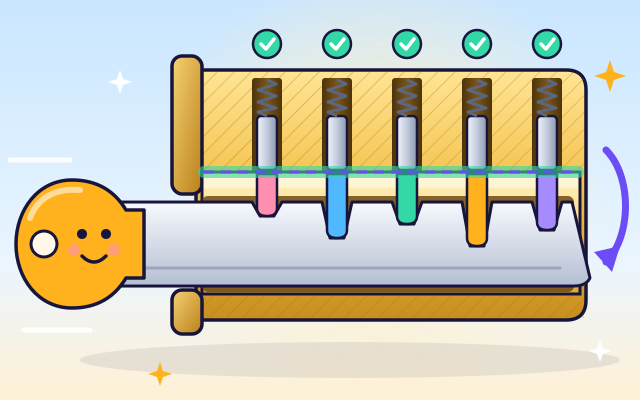
How do keys open locks?
Look inside a simplified pin-tumbler lock. Match a key's shape to the pins and watch how correct alignment allows the lock to turn.
#36
Everyday machines
How do keys open locks?
Look inside a simplified pin-tumbler lock. Match a key's shape to the pins and watch how correct alignment allows the lock to turn.
 #37
Everyday machines
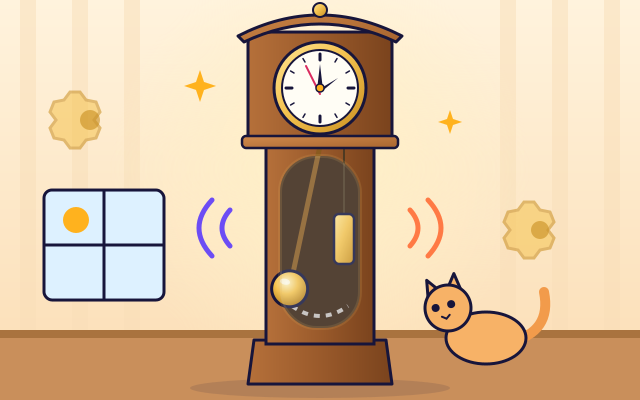
How does a pendulum clock keep time?
Explore the pendulum, gears, hands, and controlled release of stored energy. Change the pendulum's length and observe how the clock's rhythm changes.
#37
Everyday machines
How does a pendulum clock keep time?
Explore the pendulum, gears, hands, and controlled release of stored energy. Change the pendulum's length and observe how the clock's rhythm changes.
 #38
Everyday machines
How does a sewing machine make stitches?
Watch the needle, upper thread, and bobbin mechanism in slow motion. Join pieces of virtual fabric and compare stitch lengths and patterns.
#38
Everyday machines
How does a sewing machine make stitches?
Watch the needle, upper thread, and bobbin mechanism in slow motion. Join pieces of virtual fabric and compare stitch lengths and patterns.
Keep exploring
Games to play next
- Machine RepairFix levers, pulleys, gears and ramps so every contraption works.
- Circuit Workshop 3DWire up batteries, bulbs and switches on a 3D workbench.
- Clock TowerKeep the town on time: set the tower clock's hands just right.
Guide for grown-ups
- How to start homeschooling: a step-by-step guide for familiesA guide for parents · 7 min read
Science games by grade
Science worksheets by grade
- Preschool Science Worksheets
- Pre-K Science Worksheets
- Kindergarten Science Worksheets
- 1st Grade Science Worksheets
- 2nd Grade Science Worksheets
- 3rd Grade Science Worksheets
- 4th Grade Science Worksheets
- 5th Grade Science Worksheets
- 6th Grade Science Worksheets
- 7th Grade Science Worksheets
- 8th Grade Science Worksheets