How does a vacuum cleaner pick up dirt?
A fan pushes air out of the vacuum, and the air outside rushes in through the nozzle, dragging dust along with it.
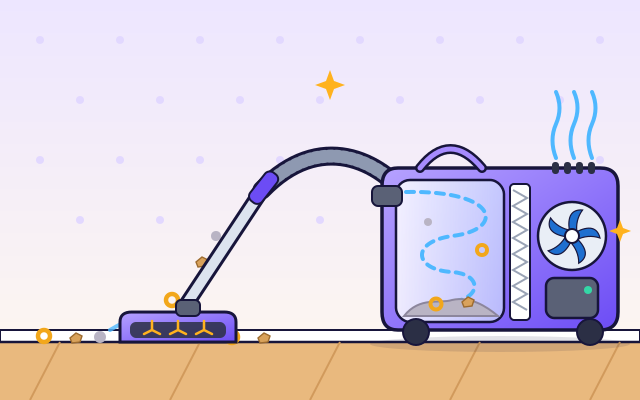
The big idea: The fan lowers the air pressure inside the vacuum. The air outside pushes its way in through the nozzle, and the fast-moving air carries dust into the bin. A filter catches the tiniest bits.
It's like
The interactive parts didn't load. The explanations below still work; try reloading the page.
Follow the air
- Crumbs, dust and cereal are all over the floor. A vacuum cleaner picks them up without touching them. How?
- Inside the vacuum, an electric motor spins a fan very fast. The fan throws air out through the exhaust vent.
- With air being thrown out, there is less air inside, so the pressure inside drops. The air in the room pushes in through the nozzle to fill the gap.
- Air rushes very fast into the narrow nozzle. The fast air drags dust and crumbs along with it. A spinning brush helps loosen dirt from the carpet.
- In the bin, the air spins round like a tornado. The heavier dirt flies to the outside, slows down and drops to the bottom.
- Before the air reaches the fan, it goes through a filter. The filter catches the tiny dust that the swirl missed, so clean air comes out.
- When the filter gets clogged with dust, air can't get through easily. Less air flows, so the vacuum can't lift heavier crumbs. Cleaning the filter fixes it!
Look inside a vacuum cleaner
Tap each part. Watch it work when you find it!
- Nozzle. The nozzle is the opening on the floor. It's narrow, so the air rushing in goes very fast.
- Brush roll. A brush spins inside the nozzle. Its bristles flick dirt and hair out of the carpet so the air can carry them away.
- Wand and hose. The wand and hose carry the air and dirt from the nozzle to the vacuum's body.
- Dust bin (cyclone). In the bin, the air spins round fast. The dirt flies to the sides and drops to the bottom, and the air goes on.
- Filter. The filter is folded into lots of pleats so it has a big surface. It catches the tiniest dust before the air reaches the fan.
- Fan. The fan has curved blades. As it spins, it throws air out of the vacuum, which lowers the pressure inside.
- Motor. An electric motor spins the fan very fast, using electricity from the plug or a battery.
- Exhaust vent. The air comes out here after being cleaned by the filter. All the air that went in at the nozzle comes out here.
Clean filter or clogged filter?
Switch on and slide the nozzle over the floor. Then compare a clean filter with a clogged one. What happens to the air and the crumbs?
Experiment: What happens to the airflow when the filter is clogged with dust?
- Switch on with a clean filter and slide the nozzle over the crumbs.
- Now choose the clogged filter.
- Watch the air dots and see which crumbs stay on the floor.
What we found: A clogged filter is like trying to breathe through a thick scarf. Less air can flow, so the air at the nozzle is slower and can only lift the lightest dust.
Turn on JavaScript to try it yourself.
Spotless floor
Pick up every crumb and cereal piece. The filter clogs as you go, so tap it to clean it when the suction gets weak.
Suction is really a push
We say a vacuum cleaner "sucks", but really the air around us does the pushing. Air is always pressing on everything with a force called air pressure. Inside the vacuum, a fast fan throws air out of the back, so there is less air inside and the pressure there is lower.
The air in the room pushes into the vacuum to fill that low-pressure space. Because the nozzle is narrow, the air has to rush in very fast, and fast air can drag dust, hair and crumbs along with it. A spinning brush helps by flicking dirt out of the carpet.
Inside, the air and dirt have to be separated. Many vacuums spin the air round in a cyclone: the heavier dirt flies to the outside and drops into the bin. Others use a bag that lets air through but keeps the dirt in. A filter then catches the tiniest dust before the clean air blows out.
When the filter or bin gets full, air can't flow easily, and the vacuum gets weak. That's why emptying the bin and cleaning the filter matter so much.
Key words
- Air pressure
- The push of the air on everything around us.
- Suction
- When lower pressure inside lets the higher pressure outside push air (and dirt) in.
- Airflow
- How much air moves through the vacuum each second.
- Filter
- A layer of fibers that lets air through but traps fine dust.
- Cyclone
- A fast swirl of air that throws heavier dirt to the outside, where it drops out.
Check your thinking
-
What makes the air move into a vacuum cleaner?
Show the answer
A fan lowers the pressure inside, so outside air pushes in. Lower pressure inside means the room air pushes its way in.
-
Why does a vacuum get weak when its filter is clogged?
Show the answer
Less air can get through, so the air at the nozzle is slower. A blocked filter slows the airflow, and slow air can't lift heavy crumbs.
-
What happens to the dirt in a cyclone bin?
Show the answer
It flies to the outside and drops to the bottom. Spinning flings the heavier dirt outward, where it slows and falls into the bin.
-
The same airflow goes through a nozzle with half the opening area. What happens to the air speed?
Show the answer
It doubles. Flow rate = speed × area, so halving the area at the same flow doubles the speed.
-
Where does the air go after it passes through the filter?
Show the answer
Through the fan and out of the exhaust. All the air that comes in at the nozzle goes out of the exhaust.
You're a Everyday machines expert!
You watched, looked inside, tried it, solved the challenge and went deeper. Pick another question below, or switch the age at the top to see this topic another way.
More about everyday machines
 #34
Everyday machines
How does a toilet flush?
Press the handle on a cutaway toilet. Follow water from the tank through the bowl and waste pipe, then watch the tank refill.
#34
Everyday machines
How does a toilet flush?
Press the handle on a cutaway toilet. Follow water from the tank through the bowl and waste pipe, then watch the tank refill.
 #35
Everyday machines
How does a zipper work?
Pull an oversized zipper slowly and watch the slider join or separate its teeth. Explore why alignment matters and what happens when fabric gets caught.
#35
Everyday machines
How does a zipper work?
Pull an oversized zipper slowly and watch the slider join or separate its teeth. Explore why alignment matters and what happens when fabric gets caught.
 #36
Everyday machines
How do keys open locks?
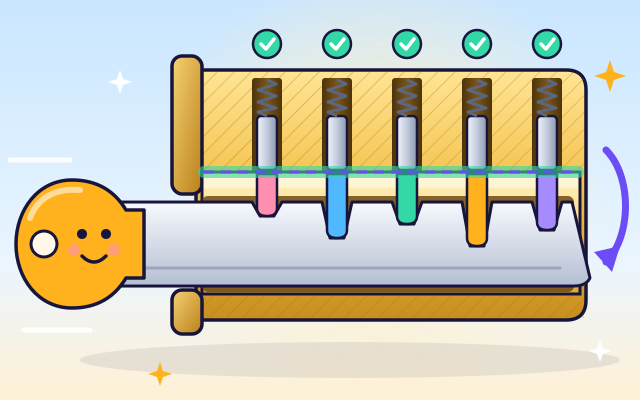
Look inside a simplified pin-tumbler lock. Match a key's shape to the pins and watch how correct alignment allows the lock to turn.
#36
Everyday machines
How do keys open locks?
Look inside a simplified pin-tumbler lock. Match a key's shape to the pins and watch how correct alignment allows the lock to turn.
 #37
Everyday machines
How does a pendulum clock keep time?
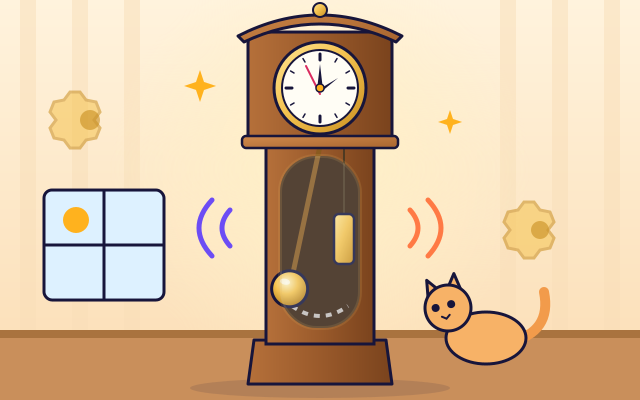
Explore the pendulum, gears, hands, and controlled release of stored energy. Change the pendulum's length and observe how the clock's rhythm changes.
#37
Everyday machines
How does a pendulum clock keep time?
Explore the pendulum, gears, hands, and controlled release of stored energy. Change the pendulum's length and observe how the clock's rhythm changes.
Keep exploring
Games to play next
- Machine RepairFix levers, pulleys, gears and ramps so every contraption works.
- Circuit Workshop 3DWire up batteries, bulbs and switches on a 3D workbench.
- Clock TowerKeep the town on time: set the tower clock's hands just right.
Guide for grown-ups
- How to start homeschooling: a step-by-step guide for familiesA guide for parents · 7 min read
Science games by grade
Science worksheets by grade
- Preschool Science Worksheets
- Pre-K Science Worksheets
- Kindergarten Science Worksheets
- 1st Grade Science Worksheets
- 2nd Grade Science Worksheets
- 3rd Grade Science Worksheets
- 4th Grade Science Worksheets
- 5th Grade Science Worksheets
- 6th Grade Science Worksheets
- 7th Grade Science Worksheets
- 8th Grade Science Worksheets