How does a washing machine clean clothes?
Water, detergent and movement team up to lift dirt out of clothes, then a super-fast spin flings the water out.
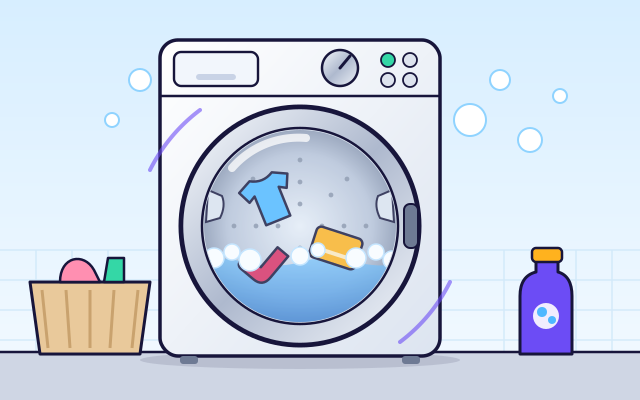
The big idea: Water soaks the clothes, detergent grabs greasy dirt, and tumbling pushes water through the fabric to carry the dirt away. Fast spinning throws the water out through holes in the drum.
It's like
The interactive parts didn't load. The explanations below still work; try reloading the page.
Inside the wash
- First, the dirty laundry goes into the drum. This shirt has mud, a greasy spot and some juice on it.
- A valve opens and water rushes in. On its way, it flows through the drawer and washes the detergent into the drum.
- The drum turns slowly one way, then the other. Paddles lift the clothes and drop them into the water, pushing soapy water through the fabric.
- Detergent is made of tiny molecules. One end loves water and the other end loves grease. They grab the grease, surround it and lift it off the fabric.
- The dirty, soapy water goes out, and clean water comes in. More tumbling rinses the last of the soap and dirt out of the clothes.
- A pump at the bottom pushes the water out through the drain hose and away down the pipe.
- Finally, the drum spins really fast. The clothes are pushed against the wall, but the water flies out through the little holes. The clothes come out clean and just damp.
Look inside a washing machine
Tap each part. Watch it work when you find it!
- Drum. The steel drum holds the clothes. It is full of little holes, so water can flow in and out but the clothes stay inside.
- Paddles. The paddles stick out from the drum wall. As the drum turns, they lift the clothes and let them fall into the water.
- Tub. The tub is a watertight container around the drum. It holds the water while the drum turns inside.
- Motor. An electric motor turns the drum, slowly for washing and very fast for spinning.
- Water valve. The water valve is like an electric tap. It opens to let water in and closes when there is enough.
- Detergent drawer. You pour detergent into the drawer. When water flows in, it carries the detergent into the drum at the right time.
- Heater. A heating element warms the water. Warm water helps detergent remove greasy stains.
- Drain pump. The drain pump pushes dirty water out of the tub, through the drain hose and down the pipe.
- Springs and shock absorbers. The tub hangs on springs, and shock absorbers underneath soak up the shaking. A heavy weight helps keep it steady.
What makes clothes clean?
Switch water, detergent and tumbling on or off, then wash the shirt. Watch the close-up of the fabric. Which stains come out?
Experiment: What does it take to get the greasy stain out?
- Turn the detergent off and press Wash. Watch the greasy spot.
- Turn the detergent back on and wash again.
- Compare the shirts. Which stain needed the detergent?
What we found: Water and tumbling get mud out, but grease doesn't mix with water. Detergent grabs the grease so the water can carry it away. All three work best together!
Turn on JavaScript to try it yourself.
Run the washing machine
Load the clothes, add detergent, then run the stages in the right order: wash, rinse, drain and spin.
The four helpers of clean
Getting clothes clean needs four helpers: water, detergent, movement and time. Warm water helps too. If one helper is missing, the others have to work much harder.
Water soaks into the fabric and carries away dirt like mud and juice. But greasy dirt, like butter or cooking oil, doesn't mix with water. That's where detergent comes in. Its tiny molecules have one end that loves water and one end that loves grease. They grab the grease, surround it and lift it off.
Movement matters as well. As the drum turns, paddles lift the clothes and drop them back into the water. This squishes water through the fabric again and again and shakes the dirt loose.
At the end, the drum spins very fast. The clothes press against the drum wall, but the water flies out through the holes, just like water flying off a dog shaking its fur. That's why your clothes come out damp, not soaking wet.
Key words
- Detergent
- A special soap for washing clothes that grabs greasy dirt.
- Surfactant
- A molecule with a water-loving head and a grease-loving tail that helps water remove oily dirt.
- Micelle
- A tiny ball of surfactant molecules with oily dirt trapped in the middle.
- Spin cycle
- The very fast spin at the end that throws water out of the clothes.
- Mechanical action
- The rubbing, lifting and dropping that shakes dirt loose from fabric.
Check your thinking
-
Which helper is needed to remove greasy stains?
Show the answer
Detergent. Detergent molecules grab grease with one end and hold onto water with the other.
-
Why do clothes come out only damp after the spin?
Show the answer
The fast spin throws water out through the drum's holes. The drum wall holds the clothes, but water flies out through the holes.
-
What do the paddles inside the drum do?
Show the answer
Lift the clothes and drop them into the water. Lifting and dropping pushes soapy water through the fabric and shakes dirt loose.
-
Which part of a hot wash usually uses the most electrical energy?
Show the answer
Heating the water. Water has a high specific heat capacity, so warming many liters takes a lot of energy.
-
What is the right order for the last stages?
Show the answer
Rinse, drain, spin. Rinse away the soap, drain the water out, then spin the clothes nearly dry.
You're a Everyday machines expert!
You watched, looked inside, tried it, solved the challenge and went deeper. Pick another question below, or switch the age at the top to see this topic another way.
More about everyday machines
 #33
Everyday machines
How does a vacuum cleaner pick up dirt?
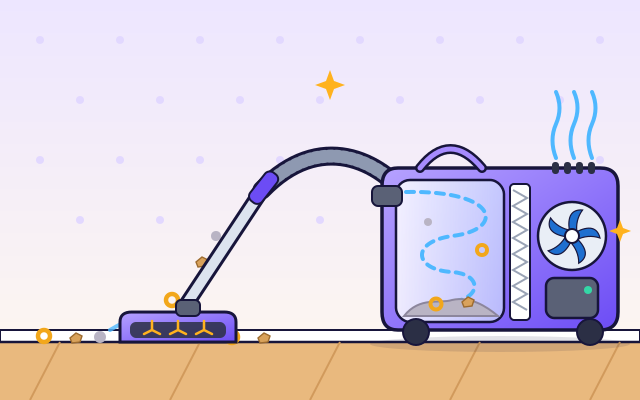
Follow moving air and dust through the nozzle, filter, and collection bin. Compare airflow with a clean filter and a clogged filter.
#33
Everyday machines
How does a vacuum cleaner pick up dirt?
Follow moving air and dust through the nozzle, filter, and collection bin. Compare airflow with a clean filter and a clogged filter.
 #34
Everyday machines
How does a toilet flush?
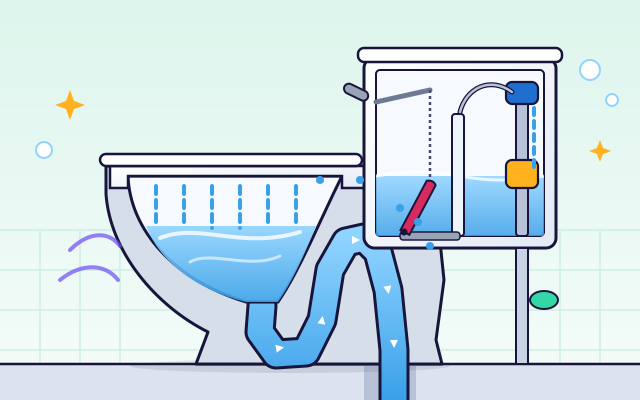
Press the handle on a cutaway toilet. Follow water from the tank through the bowl and waste pipe, then watch the tank refill.
#34
Everyday machines
How does a toilet flush?
Press the handle on a cutaway toilet. Follow water from the tank through the bowl and waste pipe, then watch the tank refill.
 #35
Everyday machines
How does a zipper work?
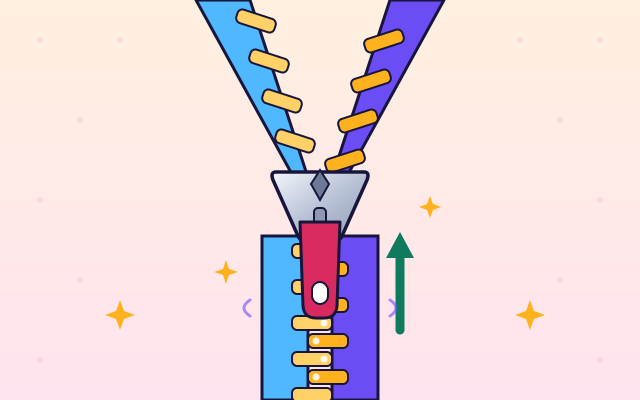
Pull an oversized zipper slowly and watch the slider join or separate its teeth. Explore why alignment matters and what happens when fabric gets caught.
#35
Everyday machines
How does a zipper work?
Pull an oversized zipper slowly and watch the slider join or separate its teeth. Explore why alignment matters and what happens when fabric gets caught.
 #36
Everyday machines
How do keys open locks?
Look inside a simplified pin-tumbler lock. Match a key's shape to the pins and watch how correct alignment allows the lock to turn.
#36
Everyday machines
How do keys open locks?
Look inside a simplified pin-tumbler lock. Match a key's shape to the pins and watch how correct alignment allows the lock to turn.
Keep exploring
Games to play next
- Machine RepairFix levers, pulleys, gears and ramps so every contraption works.
- Circuit Workshop 3DWire up batteries, bulbs and switches on a 3D workbench.
- Clock TowerKeep the town on time: set the tower clock's hands just right.
Guide for grown-ups
- How to start homeschooling: a step-by-step guide for familiesA guide for parents · 7 min read
Science games by grade
Science worksheets by grade
- Preschool Science Worksheets
- Pre-K Science Worksheets
- Kindergarten Science Worksheets
- 1st Grade Science Worksheets
- 2nd Grade Science Worksheets
- 3rd Grade Science Worksheets
- 4th Grade Science Worksheets
- 5th Grade Science Worksheets
- 6th Grade Science Worksheets
- 7th Grade Science Worksheets
- 8th Grade Science Worksheets