How do airplanes fly?
Wings, engines and flight controls work together to lift a heavy plane into the sky and steer it.
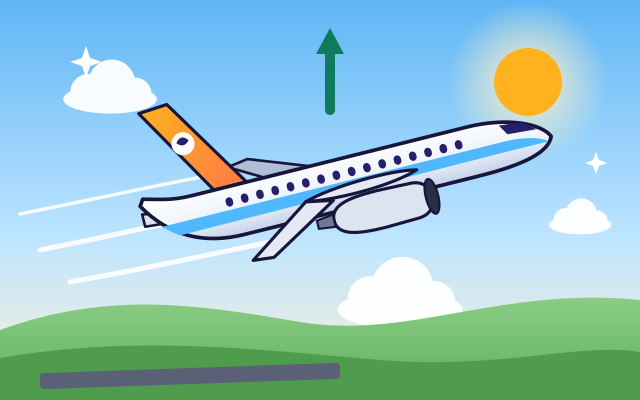
The big idea: When a wing moves fast through the air, it turns the air downward and the air pushes the wing up. That push is called lift.
It's like
The interactive parts didn't load. The explanations below still work; try reloading the page.
From runway to sky
- The engines suck in air and blast it out the back. That push, called thrust, sends the plane racing down the runway.
- As the plane speeds up, air flows over and under the curved wing. The wing is shaped and tilted to bend that air downward.
- When the plane is fast enough, the push from the air, called lift, becomes stronger than the plane's weight. The wheels leave the ground!
- Four forces act on every plane: lift pushes up, weight pulls down, thrust pushes forward and drag holds it back.
- To turn, the pilot moves flaps called ailerons on the wings. One wing goes up, the other goes down, and the plane leans into the turn.
- To land, the pilot slows down and lowers the flaps, which make the wings bigger and curvier so they still lift at low speed. Touchdown!
Look inside an airliner
Tap each part of the plane. Some of them move when you find them!
- Cockpit. The pilots sit in the cockpit. They use a control stick, pedals and screens to fly the plane and talk to air traffic control.
- Cabin. Passengers ride in the cabin. Air is pumped in so everyone can breathe easily, even high in the sky where the air is thin.
- Wing. The wing is curved on top and tilted slightly up. Moving air pushes it upward. Wings also hold the fuel!
- Jet engine. A giant fan at the front pulls in air. Some air is squeezed, mixed with fuel and burned, and the hot gas rushes out the back to push the plane forward.
- Tail fin and rudder. The tall tail fin keeps the plane flying straight. The rudder on its back edge swings left or right to point the nose.
- Elevator. The small back wing has a moving edge called the elevator. Tilting it makes the nose point up to climb or down to descend.
- Flaps and ailerons. Flaps slide out from the back of the wing for takeoff and landing. Ailerons near the wingtips tip the wings to turn.
- Landing gear. The wheels roll the plane along the runway. After takeoff they fold up into the plane so the air flows smoothly past.
- Cargo hold. Under the cabin floor is the cargo hold, where suitcases, mail and packages travel.
Wind tunnel: speed and wing angle
Change the air speed and the wing angle. Watch the air flow and the lift arrow. What makes the most lift?
Experiment: What happens to lift if you keep tilting the wing up more and more?
- Set the speed to fast.
- Start with the wing flat, then tilt it up a little at a time.
- Watch the lift arrow and the air behind the wing.
What we found: Tilting the wing makes more lift, but only up to a point. Tilt it too far and the air can't follow the wing's top. It swirls away and lift suddenly drops. Pilots call this a stall.
Turn on JavaScript to try it yourself.
Clear the trees
Take off before the runway ends and fly over the trees.
How wings make lift
A wing is a clever shape. It is rounded at the front, curved on top and thin at the back, and it is tilted up a little. When the wing moves fast, the air flowing over the top speeds up and the air underneath is pushed down.
Pushing air down makes the air push the wing up. You can feel the same thing if you hold your flat hand out of a car window (with a grown-up!) and tilt it up a little: your hand rises.
The faster a plane goes, the more lift its wings make. That's why planes race down long runways before they take off, and why they lower flaps to keep enough lift when they slow down to land.
But tilting a wing too far makes the air tumble away from the top of the wing. Then lift drops suddenly. This is called a stall, and pilots are trained to lower the nose to fix it.
Key words
- Lift
- The upward push from air on the wings.
- Thrust
- The forward push from the engines.
- Drag
- Air pushing back on the plane and slowing it down.
- Angle of attack
- The angle between the wing and the oncoming air.
- Stall
- When a wing is tilted too far and suddenly loses lift.
- Airfoil
- The cross-section shape of a wing.
Check your thinking
-
What is the upward push on a plane's wings called?
Show the answer
Lift. Lift comes from air flowing around the wings.
-
Why do planes race down a long runway before taking off?
Show the answer
To build up speed so the wings make enough lift. More speed means more lift. Once lift is bigger than weight, the plane can fly.
-
If a plane doubles its airspeed, how much does its lift change (same angle of attack)?
Show the answer
It becomes four times as big. Lift depends on v², so 2× speed gives 2² = 4× lift.
-
What happens if a pilot tilts the wing up too far?
Show the answer
The wing stalls and loses lift. Too much tilt makes the air tumble off the wing, so lift suddenly drops.
-
Which part makes the plane's nose point up or down?
Show the answer
The elevator. The elevator on the small back wing tips the nose up or down.
-
Why do pilots lower the flaps to land?
Show the answer
So the wings still make enough lift at slow speed. Flaps make the wings bigger and curvier, so they lift more when the plane is slow.
You're a Flight & transportation expert!
You watched, looked inside, tried it, solved the challenge and went deeper. Pick another question below, or switch the age at the top to see this topic another way.
More about flight & transportation
 #2
Flight & transportation
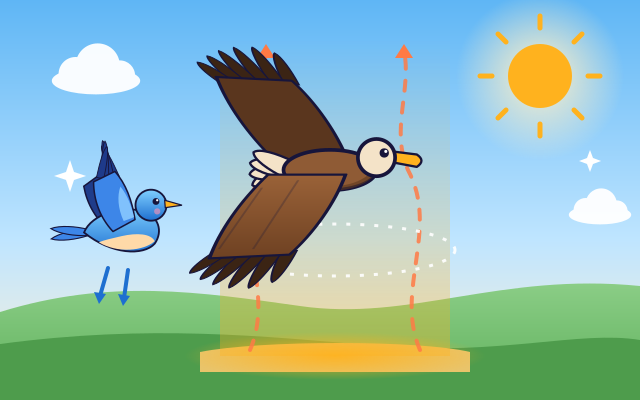
How do birds fly?
Watch wings and feathers in slow motion. Compare flapping, soaring, and gliding, then experiment with different wing shapes and flying conditions.
#2
Flight & transportation
How do birds fly?
Watch wings and feathers in slow motion. Compare flapping, soaring, and gliding, then experiment with different wing shapes and flying conditions.
 #3
Flight & transportation
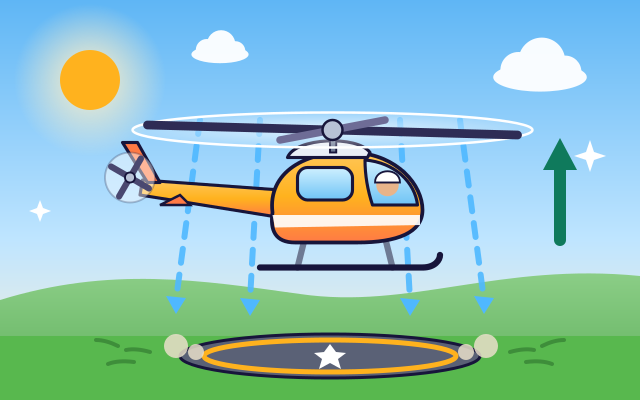
How do helicopters fly and hover?
Explore the main rotor, tail rotor, and controls. Adjust a simplified helicopter's lift and direction to take off, hover, turn, and land.
#3
Flight & transportation
How do helicopters fly and hover?
Explore the main rotor, tail rotor, and controls. Adjust a simplified helicopter's lift and direction to take off, hover, turn, and land.
 #4
Flight & transportation
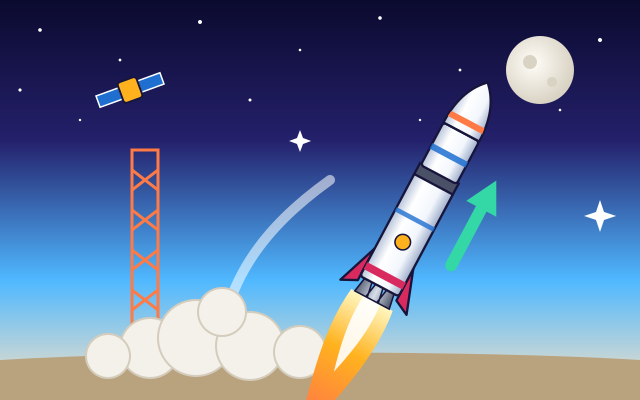
How do rockets reach space?
Look inside a rocket and follow its launch stages. Watch exhaust leave as the rocket accelerates, then experiment with thrust and cargo weight.
#4
Flight & transportation
How do rockets reach space?
Look inside a rocket and follow its launch stages. Watch exhaust leave as the rocket accelerates, then experiment with thrust and cargo weight.
 #5
Flight & transportation
How do boats and huge ships float?
Explore buoyancy using different hull shapes. Build a virtual boat, add cargo, and investigate how its shape affects how much it can carry.
#5
Flight & transportation
How do boats and huge ships float?
Explore buoyancy using different hull shapes. Build a virtual boat, add cargo, and investigate how its shape affects how much it can carry.
Keep exploring
Games to play next
- Plane Flight SimulatorTake off from the runway and thread numbered sky hoops in order. Every clean flight is a new personal best.
- Fly with OllyBe Olly the owl: waddle, take off and fly over the city of Owlbridge, through hoops and between skyscrapers, snatching snacks as you go.
- Machine RepairFix levers, pulleys, gears and ramps so every contraption works.
Draw it or make it
- Soft-Nose Paper AirplaneOrigami
- How to draw an airplaneDrawing lesson
Guide for grown-ups
- How to start homeschooling: a step-by-step guide for familiesA guide for parents · 7 min read
Science games by grade
Science worksheets by grade
- Preschool Science Worksheets
- Pre-K Science Worksheets
- Kindergarten Science Worksheets
- 1st Grade Science Worksheets
- 2nd Grade Science Worksheets
- 3rd Grade Science Worksheets
- 4th Grade Science Worksheets
- 5th Grade Science Worksheets
- 6th Grade Science Worksheets
- 7th Grade Science Worksheets
- 8th Grade Science Worksheets