How do birds fly?
Watch a wing in slow motion, then compare flapping, gliding and soaring with different wing shapes.
The big idea: A bird's wing pushes air down and back on every downstroke, so the air pushes the bird up and forward. Light feathers and hollow bones help, and rising air lets some birds fly without flapping at all.
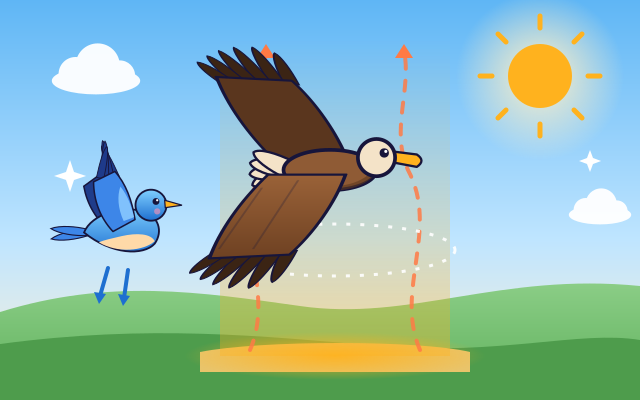
It's like
The interactive parts didn't load. The explanations below still work; try reloading the page.
A bird's flight, step by step
- To take off, a bird jumps with its strong legs and opens its wings at the same moment. The first big flaps push lots of air down.
- In slow motion you can see two parts. On the downstroke the wing spreads wide and pushes air down and back. On the upstroke it folds, and the feathers open to let air slip through.
- A flight feather has a stiff shaft down the middle. Hundreds of thin barbs grow from it, and tiny hooks zip them together into a smooth, light surface.
- When a bird glides, it holds its wings still. It slowly sinks, swapping height for distance. Long, thin wings like an albatross's glide the farthest.
- Sunshine heats the ground, and warm air rises in a column called a thermal. Eagles and vultures circle inside it and ride the air upward without flapping.
- To land, a bird tips its wings up, fans out its tail and pushes its feet forward. The wings and tail act like brakes, so it can touch down gently.
What makes a bird a flyer?
Tap each part. Some of them move when you find them!
- Flight feathers. The long feathers at the end of the wing are called primaries. They overlap to make a smooth wing on the downstroke, then open up on the upstroke.
- Feather zipper. A feather's vane is made of barbs. Tiny hooks on them grab each other, like a zipper or hook-and-loop tape, so air can't leak through.
- Alula (thumb feathers). The alula is a small tuft of feathers on the bird's thumb. When the bird flies slowly, it lifts the alula to keep air flowing smoothly over the wing.
- Hollow bones. Many of a bird's bones are hollow, with thin cross-braces inside. That makes them light but still strong and stiff.
- Flight muscles. A bird's biggest muscles are in its chest. They pull the wings down hard on every downstroke. They attach to a tall ridge on the breastbone called the keel.
- Lungs and air sacs. Birds have air sacs, like small balloons, that pump air through their lungs. Fresh air flows through the lungs when the bird breathes in and when it breathes out.
- Tail. The tail fans out and tilts to steer, balance and brake, a bit like a rudder and flaps together.
- Light beak. A beak is light, with no heavy teeth or jaw muscles up front. A muscly stomach called the gizzard grinds the food instead.
Flight lab: wings and weather
Choose a way to fly, a wing shape and the weather. Watch the bird's height and energy. Which wings glide best?
Experiment: Which wings let a gliding bird stay up the longest in calm air?
- Choose Glide and calm air.
- Try each wing shape and watch how fast the bird sinks.
- Now choose Soar and warm rising air. What changes?
What we found: Long, thin wings glide the farthest because they make lots of lift with little drag. Short, round wings sink faster, but they are great for quick takeoffs and dodging through trees. And no wing can soar upward without rising air!
Turn on JavaScript to try it yourself.
Back to the nest
Pick a wing shape and fly to the nest. You only have 10 flaps, so use the warm rising air to climb.
Three ways to fly
A bird's wing is curved like an airplane wing, so air flowing past it gets pushed downward. When the bird pushes air down, the air pushes the bird up. On every downstroke, the wingtip feathers also push air backward, which moves the bird forward.
Flapping is hard work, so many birds save energy by gliding. A gliding bird holds its wings still and slowly sinks, like sliding down a long, gentle hill made of air. Birds with long, thin wings, like albatrosses, glide the farthest.
Soaring is the cleverest trick. When sunshine warms the ground, bubbles of warm air rise up. Eagles, vultures and storks find these thermals and circle inside them, rising higher and higher without flapping. Birds also soar on wind that is pushed up over hills and cliffs.
Every part of a bird helps it fly: hollow bones and a toothless beak keep it light, big chest muscles power the wings, air sacs bring in plenty of air to breathe, and feathers zip together into strong, light wings.
Key words
- Downstroke
- The powerful downward flap that makes most of a bird's lift and thrust.
- Thermal
- A column of warm air that rises from ground heated by the sun.
- Glide ratio
- How far a bird travels forward for each bit of height it loses when gliding.
- Sink rate
- How fast a gliding bird loses height, in meters per second.
- Primaries
- The long flight feathers on the outer part of the wing.
- Wing loading
- How much weight each bit of wing has to hold up.
Check your thinking
-
On which stroke does a bird make most of its lift and thrust?
Show the answer
The downstroke. The downstroke pushes air down and back, which pushes the bird up and forward.
-
What do eagles and vultures ride to rise without flapping?
Show the answer
Thermals of rising warm air. Warm air rises in thermals. Circling inside one lifts the bird higher for free.
-
Which bird wings are best for gliding a very long way?
Show the answer
Long and thin, like an albatross. Long, thin wings make lots of lift with little drag, so the bird sinks very slowly.
-
How do hollow bones help a bird fly?
Show the answer
They are light but still strong. Thin cross-braces inside keep the hollow bones strong while saving weight.
-
A gliding bird enters a thermal rising at 2 m/s. While circling, it sinks through the air at 1.2 m/s. What happens?
Show the answer
It climbs at about 0.8 m/s. Its speed over the ground is the updraft minus its sink rate: 2 − 1.2 = 0.8 m/s upward.
-
What does the alula (thumb feather) do?
Show the answer
It helps the bird fly slowly without stalling. Lifting the alula keeps air flowing smoothly over the wing when the bird flies slowly.
You're a Flight & transportation expert!
You watched, looked inside, tried it, solved the challenge and went deeper. Pick another question below, or switch the age at the top to see this topic another way.
More about flight & transportation
 #3
Flight & transportation
How do helicopters fly and hover?
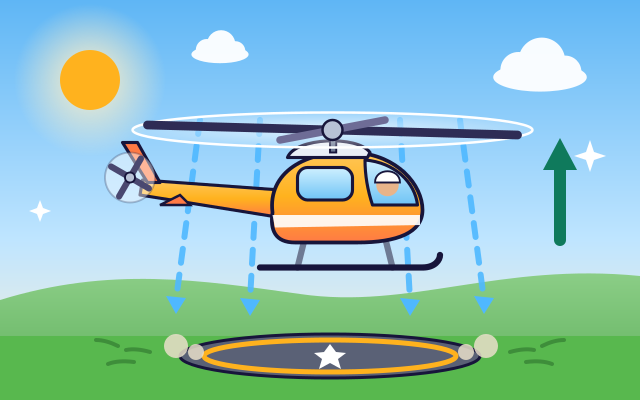
Explore the main rotor, tail rotor, and controls. Adjust a simplified helicopter's lift and direction to take off, hover, turn, and land.
#3
Flight & transportation
How do helicopters fly and hover?
Explore the main rotor, tail rotor, and controls. Adjust a simplified helicopter's lift and direction to take off, hover, turn, and land.
 #4
Flight & transportation
How do rockets reach space?
Look inside a rocket and follow its launch stages. Watch exhaust leave as the rocket accelerates, then experiment with thrust and cargo weight.
#4
Flight & transportation
How do rockets reach space?
Look inside a rocket and follow its launch stages. Watch exhaust leave as the rocket accelerates, then experiment with thrust and cargo weight.
 #5
Flight & transportation
How do boats and huge ships float?
Explore buoyancy using different hull shapes. Build a virtual boat, add cargo, and investigate how its shape affects how much it can carry.
#5
Flight & transportation
How do boats and huge ships float?
Explore buoyancy using different hull shapes. Build a virtual boat, add cargo, and investigate how its shape affects how much it can carry.
 #6
Flight & transportation
How do submarines dive and surface?
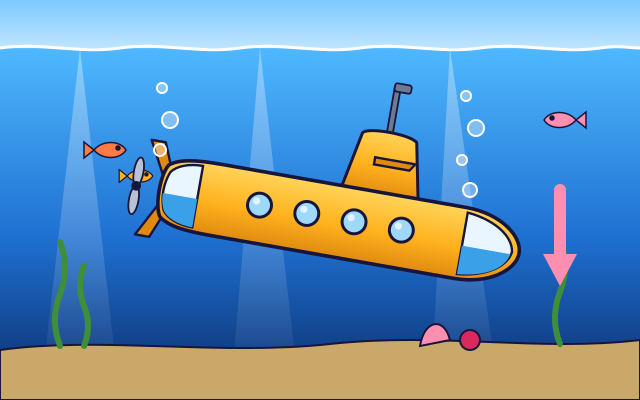
Look inside ballast tanks and follow the movement of water and air. Control a submarine's depth and balance during an underwater mission.
#6
Flight & transportation
How do submarines dive and surface?
Look inside ballast tanks and follow the movement of water and air. Control a submarine's depth and balance during an underwater mission.
Keep exploring
Games to play next
- Fly with OllyBe Olly the owl: waddle, take off and fly over the city of Owlbridge, through hoops and between skyscrapers, snatching snacks as you go.
- Plane Flight SimulatorTake off from the runway and thread numbered sky hoops in order. Every clean flight is a new personal best.
- Machine RepairFix levers, pulleys, gears and ramps so every contraption works.
Draw it or make it
- How to draw an owlDrawing lesson
- Traditional CraneOrigami
Guide for grown-ups
- How to start homeschooling: a step-by-step guide for familiesA guide for parents · 7 min read
Science games by grade
Science worksheets by grade
- Preschool Science Worksheets
- Pre-K Science Worksheets
- Kindergarten Science Worksheets
- 1st Grade Science Worksheets
- 2nd Grade Science Worksheets
- 3rd Grade Science Worksheets
- 4th Grade Science Worksheets
- 5th Grade Science Worksheets
- 6th Grade Science Worksheets
- 7th Grade Science Worksheets
- 8th Grade Science Worksheets