How do boats and huge ships float?
Discover buoyancy: shape a boat, load it with cargo, and find out why some shapes carry more.
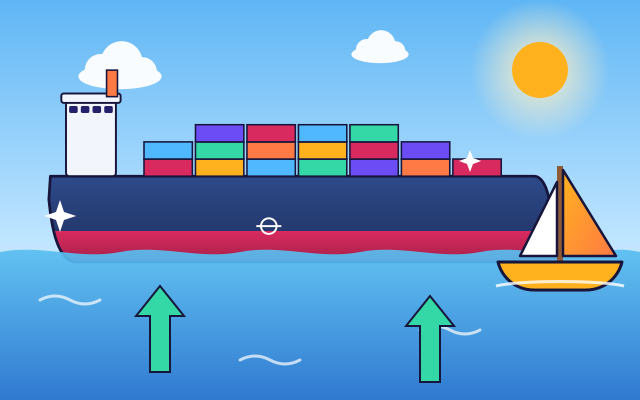
The big idea: A boat floats because the water it pushes aside pushes back up. A hollow boat with sides pushes aside lots of water, so even a heavy steel ship floats. More cargo makes it sit deeper, until water would come over the sides.
It's like
The interactive parts didn't load. The explanations below still work; try reloading the page.
Why do boats float?
- Here are two pieces of steel that weigh exactly the same. The ball sinks to the bottom, but the bowl-shaped boat floats. The difference is their shape.
- Water presses on every part of the boat that is underwater. The push on the bottom is biggest, so the water pushes the boat up. This push is called buoyancy.
- A floating boat pushes water out of its way. If we catch that water and weigh it, it weighs exactly the same as the boat. Look, the scale balances!
- Each block makes the boat heavier, so it sinks a little deeper until it pushes aside enough extra water. Ships have a load line painted on the side to show how deep is safe.
- With the same cargo, a wide boat sits high, but a narrow boat sits so low that water nearly comes in. A tall, thin boat is wobbly and can tip over.
- A giant cargo ship is made of steel, but inside it is mostly air and cargo. Its whole shape weighs less than the water it pushes aside, so it floats. A big propeller pushes water backward to move it forward.
Inside a cargo ship
Tap each part of the ship. Many of them move when you find them!
- Hull. The hull is the watertight steel shell. Its wide, hollow shape pushes aside a huge amount of water, which pushes the ship up.
- Bulbous bow. The round bulb under the front makes its own little wave that cancels some of the ship's bow wave, so the ship uses less fuel.
- Ballast tanks. When the ship is empty, it takes seawater into ballast tanks low down. The extra weight keeps it steady and deep enough for the propeller to work.
- Watertight bulkheads. Steel walls divide the hull into separate rooms. If one room leaks, the walls stop the water spreading, and the ship can still float.
- Cargo and containers. Containers are giant metal boxes that stack like blocks. Cranes lift them on and off, and heavy ones go lower down to keep the ship steady.
- Engine. Deep in the ship, a huge engine as tall as a house turns a long shaft that spins the propeller.
- Propeller. The propeller's twisted blades push water backward. The water pushes back on the ship, moving it forward.
- Rudder. The rudder is a big flat fin behind the propeller. Turning it sends water sideways, which swings the back of the ship around.
- Bridge. From the bridge, high up, the crew can see far ahead. They use radar, maps and radios to steer safely.
- Load line. The load line is painted on the side. If the water comes above it, the ship is carrying too much.
Boat lab: shape and cargo
Shape the same lump of clay into different boats. Add blocks one at a time. Which shape carries the most before the water comes in?
Experiment: Using the same clay, which boat shape can carry the most blocks?
- Try the ball first: does it float?
- Choose a boat and add blocks until water nearly comes in.
- Try the other shapes and compare.
What we found: The wide boat carries the most. It can push aside lots of water before water reaches its sides, and it is steady. The narrow boat fills up sooner, and the tall cup tips over.
Turn on JavaScript to try it yourself.
Help this boat carry more cargo
Carry at least 12 blocks across the pond. Small waves splash in if the boat sits too low!
Why heavy ships float
When you get into a bathtub, the water rises. Your body pushes water out of the way. The water pushes back by pressing up on you. This upward push is called buoyancy, and it is what holds boats up.
How big is the push? It is equal to the weight of the water that gets pushed aside. A boat sinks into the water until it has pushed aside exactly its own weight of water. Then the push up equals its weight, and it floats.
A lump of steel or clay is small, so it can only push aside a little water, and it sinks. Spread the same material into a hollow boat shape, and it can push aside much more water before the water reaches the top of its sides. That is why a giant steel ship floats.
When you add cargo, the boat sinks deeper so it can push aside more water. If the water reaches the top of the sides, it pours in and the boat sinks. Wide, steady boats can carry the most, and ships have a load line to show the safe limit.
Key words
- Buoyancy
- The upward push that water gives to things in it.
- Displacement
- The water pushed out of the way by a boat.
- Density
- How much mass is packed into a certain volume.
- Draft
- How deep the bottom of a boat sits below the waterline.
- Freeboard
- The height of the boat's side above the waterline.
- Hull
- The main watertight body of a boat or ship.
Check your thinking
-
What is the upward push of water on a boat called?
Show the answer
Buoyancy. Buoyancy is the water's upward push.
-
Why does a clay boat float when a clay ball of the same clay sinks?
Show the answer
The boat shape pushes aside much more water. Same weight, but the hollow boat can push aside more water, so it gets a bigger push up.
-
What happens to a boat when you add more cargo?
Show the answer
It sinks deeper until it pushes aside more water. To balance the extra weight, it sinks until it pushes aside enough extra water.
-
Why do ships float a little higher in the sea than in a river?
Show the answer
Salt water is denser, so it pushes up harder. Each bucket of salt water weighs more, so the ship needs to push aside less of it.
-
A clay boat has a mass of 50 g. The most water it can displace before it floods is 270 cm³. About how much cargo can it carry in fresh water?
Show the answer
About 220 g. 270 cm³ of fresh water weighs about 270 g; subtract the 50 g boat to leave about 220 g for cargo.
-
Why is a tall, thin boat more likely to tip over?
Show the answer
Its weight is high up and it is narrow. A narrow boat with weight up high wobbles and rolls over easily. Wide and low is steady.
You're a Flight & transportation expert!
You watched, looked inside, tried it, solved the challenge and went deeper. Pick another question below, or switch the age at the top to see this topic another way.
More about flight & transportation
 #6
Flight & transportation
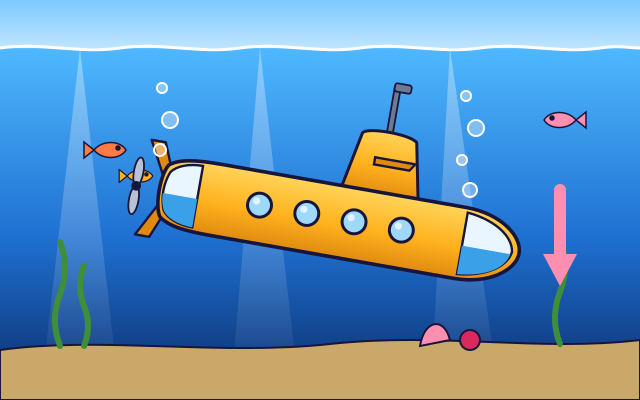
How do submarines dive and surface?
Look inside ballast tanks and follow the movement of water and air. Control a submarine's depth and balance during an underwater mission.
#6
Flight & transportation
How do submarines dive and surface?
Look inside ballast tanks and follow the movement of water and air. Control a submarine's depth and balance during an underwater mission.
 #7
Flight & transportation
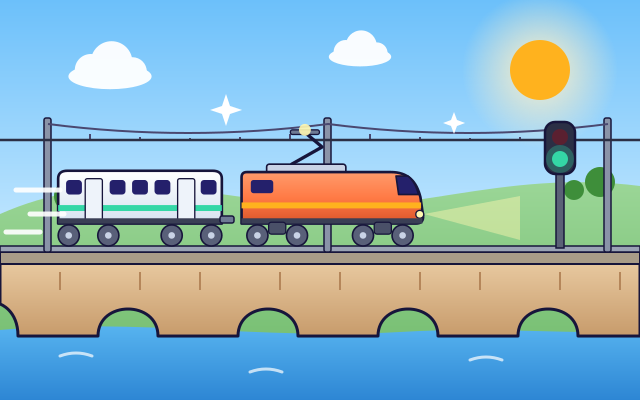
How do trains work?
Explore wheels, motors, brakes, and track switches. Build a small railway, move passengers or cargo, and guide trains through stations and junctions.
#7
Flight & transportation
How do trains work?
Explore wheels, motors, brakes, and track switches. Build a small railway, move passengers or cargo, and guide trains through stations and junctions.
 #8
Flight & transportation
How do bicycles work?
Follow motion from the pedals through the chain to the rear wheel. Change gears on hills and explore steering, balance, and brakes.
#8
Flight & transportation
How do bicycles work?
Follow motion from the pedals through the chain to the rear wheel. Change gears on hills and explore steering, balance, and brakes.
 #9
Flight & transportation
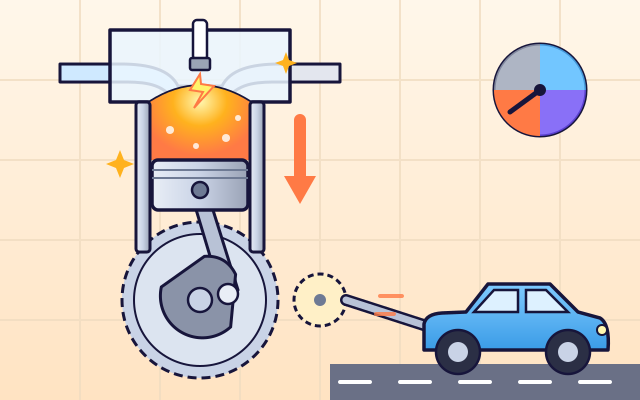
How does a car engine work?
Watch a transparent engine in slow motion. Follow air and fuel entering, compression, combustion, and exhaust, then trace the motion toward the wheels.
#9
Flight & transportation
How does a car engine work?
Watch a transparent engine in slow motion. Follow air and fuel entering, compression, combustion, and exhaust, then trace the motion toward the wheels.
Keep exploring
Games to play next
- Downriver Kayak SlalomFind the rhythm of the current, one paddle stroke at a time.
- Plane Flight SimulatorTake off from the runway and thread numbered sky hoops in order. Every clean flight is a new personal best.
- Machine RepairFix levers, pulleys, gears and ramps so every contraption works.
Draw it or make it
- Paper BoatOrigami
- How to draw a sailboat in a harborDrawing lesson
Guide for grown-ups
- How to start homeschooling: a step-by-step guide for familiesA guide for parents · 7 min read
Science games by grade
Science worksheets by grade
- Preschool Science Worksheets
- Pre-K Science Worksheets
- Kindergarten Science Worksheets
- 1st Grade Science Worksheets
- 2nd Grade Science Worksheets
- 3rd Grade Science Worksheets
- 4th Grade Science Worksheets
- 5th Grade Science Worksheets
- 6th Grade Science Worksheets
- 7th Grade Science Worksheets
- 8th Grade Science Worksheets