How does aquaponics connect fish and plants?
In aquaponics, one loop of water links a fish tank and a garden. Fish waste becomes plant food, and the plants give the fish clean water back.
The big idea: Fish waste is poison to fish but food for plants, once tiny bacteria have changed it. Pumping the water round lets each one help the other.
It's like a compost heap: something one living thing throws away is changed by tiny helpers into food for another.
The interactive parts didn't load. The explanations below still work; try reloading the page.
One loop of water
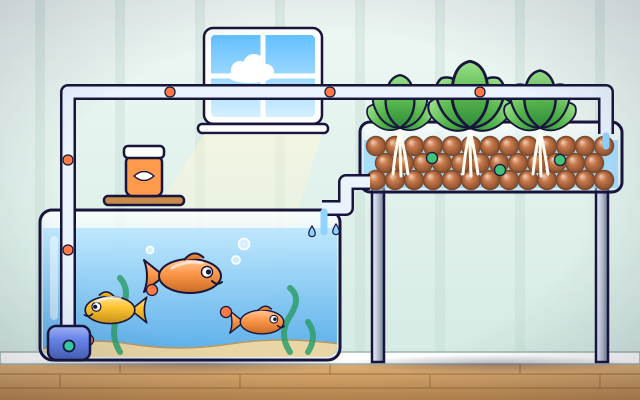
- This is an aquaponic system: a fish tank, and above it a bed of pebbles where plants grow without soil. The only thing we add is fish food.
- The fish eat and make waste. The waste puts a chemical called ammonia into the water. If it builds up, it harms the fish.
- A pump lifts the dirty water out of the fish tank and pours it into the bed of pebbles.
- Tiny bacteria live on every pebble. They change the ammonia into something else: nitrate, which plants use as food.
- The roots of the plants soak up the nitrate and use it to grow. Taking it out of the water is what cleans the water.
- The clean water drains back into the fish tank, and the loop starts again. Fish, bacteria and plants all need one another.
The parts of the loop
Tap each part and follow the water round the loop.
- Fish food. Fish food is the only thing that goes into the loop. Everything the plants get started as fish food.
- Fish. The fish eat the food and grow. Their waste puts ammonia into the water.
- Pump. The pump lifts water from the fish tank up to the grow bed. If it stops, the loop stops.
- Grow bed. The grow bed is a tray of clay pebbles. The pebbles hold the plants up and give the bacteria a home.
- Bacteria. Bacteria on the pebbles change harmful ammonia into nitrate, which plants can use. Without them the loop would not work.
- Roots. The roots reach down between the pebbles and soak up the nitrate. That is what cleans the water.
- Plants. Lettuce, herbs and other leafy plants grow well here. They get their minerals from the fish, by way of the bacteria.
- Drain. The cleaned water drains out of the bed and falls back into the tank. The splash also mixes air into the water for the fish.
Follow the water round the loop
Watch the orange waste dots travel round the loop and change. Then stop the pump, and try more fish or fewer plants.
Experiment: What happens in the fish tank if the pump stops?
- With the pump running, follow one orange dot all the way round.
- Tap the pump to stop it. Watch the tank and the plants.
- Start it again. Then try a lot of fish with only a few plants.
What we found: When the pump stops, the dirty water never reaches the bacteria or the roots. Waste builds up around the fish, and the plants go hungry. The loop only works when the water keeps moving. Too many fish make more waste than the helpers can change, and too few fish leave the plants hungry.
Turn on JavaScript to try it yourself.
Balance the loop
Choose how many fish and plants to keep, then run the loop for a month. Keep the fish healthy and the plants well fed.
How the water loop works
In a pond or a lake, fish, plants and tiny living things all share the same water, and each one cleans up after another. Aquaponics copies that idea in a small space: a fish tank joined to a garden by one loop of water.
It starts with fish food. The fish eat it and grow, and their bodies make waste. The waste puts a chemical called ammonia into the water. Ammonia harms fish, so in an ordinary fish tank the dirty water has to be changed often.
Here, a pump lifts the water to a bed of pebbles instead. Countless bacteria live on the pebbles. They change the ammonia into nitrate. Nitrate is far kinder to fish, and it is one of the main foods that plants need. The plants growing in the pebbles soak it up through their roots. With the nitrate taken out, the water is clean, and it drains back to the fish.
So the fish feed the plants, the plants clean the water, and the bacteria in the middle make it all possible. The farmer gets two harvests, fish and vegetables, and uses very little water. The compost picture is not perfect: a compost heap sits still, but this loop needs a pump running all the time. If the water stops moving, the waste builds up within hours.
Key words
- Aquaponics
- Raising fish and growing plants together, joined by one loop of water.
- Ammonia
- A chemical that fish waste puts into the water. Too much of it harms fish.
- Bacteria
- Living things too small to see. Some kinds, which live on the pebbles, change ammonia into nitrate.
- Nitrate
- What the bacteria make from ammonia. Plants use it as food.
- Nitrification
- The job the bacteria do: changing ammonia into nitrate.
- Cycling
- Running a new system for a few weeks so that enough bacteria can grow.
Check your thinking
-
How do the plants help the fish?
Show the answer
They take the nitrate out, which cleans the water. Roots soak up the nitrate that the bacteria made. With it gone, the water is clean again.
-
What changes the fish waste into plant food?
Show the answer
Bacteria living on the pebbles. Bacteria on the pebbles turn ammonia into nitrate. The pump only moves the water.
-
The pump breaks down for a day. What is the biggest danger?
Show the answer
Waste builds up in the tank and harms the fish. Without flow, the dirty water never reaches the helpers or the roots.
-
A farmer doubles the number of fish but keeps the same small grow bed. What will probably happen?
Show the answer
More waste than the bacteria can change, so the water turns bad. The helpers can only change so much waste each day. Extra waste stays in the water.
-
In a balanced, mature system, nitrate keeps creeping upward week after week. What is the best fix?
Show the answer
Add more plants to take up the nitrate. Rising nitrate means the bacteria are making it faster than the plants absorb it. More plants restore the balance.
-
What is the main thing a farmer adds to an aquaponic system?
Show the answer
Fish food. The fish food feeds the fish, and what the fish leave over ends up feeding the plants.
You're a Food & farming expert!
You watched, looked inside, tried it, solved the challenge and went deeper. Pick another question below, or switch the age at the top to see this topic another way.
More about food & farming
 #296
Food & farming
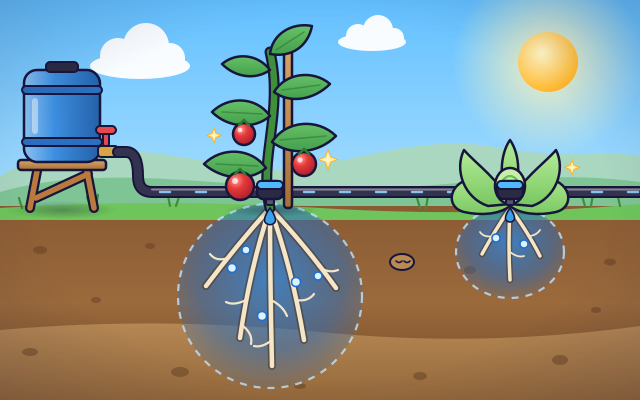
How does drip irrigation water crops?
Arrange pipes and emitters and compare water delivery to different root zones.
#296
Food & farming
How does drip irrigation water crops?
Arrange pipes and emitters and compare water delivery to different root zones.
 #297
Food & farming
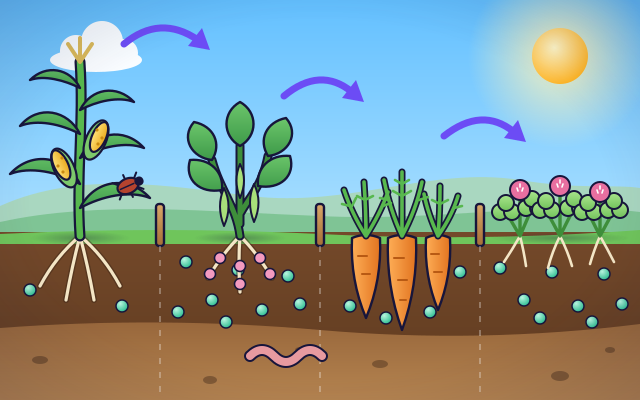
How does crop rotation help farms?
Plan several seasons and explore changing nutrient needs, pests, and soil cover.
#297
Food & farming
How does crop rotation help farms?
Plan several seasons and explore changing nutrient needs, pests, and soil cover.
 #298
Food & farming
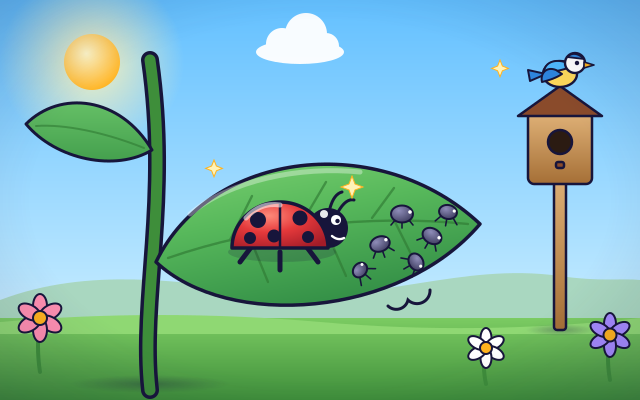
How do farmers use natural pest control?
Introduce beneficial organisms and observe effects on pests and crop damage.
#298
Food & farming
How do farmers use natural pest control?
Introduce beneficial organisms and observe effects on pests and crop damage.
 #299
Food & farming
How does a hen make an egg?
Assemble yolk, albumen, membranes, and shell along a simplified internal timeline.
#299
Food & farming
How does a hen make an egg?
Assemble yolk, albumen, membranes, and shell along a simplified internal timeline.
Keep exploring
Games to play next
- Garden AutomationProgram a garden robot with sensor rules — then watch a whole day play out.
- Label LabPut the right labels on beautiful science diagrams, from bean plants to heart chambers.
- Classification ExplorerSort living things by what you can see, then follow and build yes-or-no keys.
Guide for grown-ups
- How to start homeschooling: a step-by-step guide for familiesA guide for parents · 7 min read
Science games by grade
Science worksheets by grade
- Preschool Science Worksheets
- Pre-K Science Worksheets
- Kindergarten Science Worksheets
- 1st Grade Science Worksheets
- 2nd Grade Science Worksheets
- 3rd Grade Science Worksheets
- 4th Grade Science Worksheets
- 5th Grade Science Worksheets
- 6th Grade Science Worksheets
- 7th Grade Science Worksheets
- 8th Grade Science Worksheets