How does drip irrigation water crops?
A pipe with tiny drippers puts water right at each plant's roots, so almost none is wasted.
The big idea: Drip irrigation sends water through a pipe to small drippers called emitters. Each one lets out slow drops right above a plant's roots, so very little water is lost.
It's like pouring a drink into each person's own cup instead of splashing a bucket over the whole table.
The interactive parts didn't load. The explanations below still work; try reloading the page.
From spraying to dripping
- It is a hot, dry day and the plants are drooping. They need water at their roots. What is the best way to get it there?
- A sprinkler throws water everywhere. Some blows away, some dries up in the sun, and some lands between the plants, where it only helps the weeds.
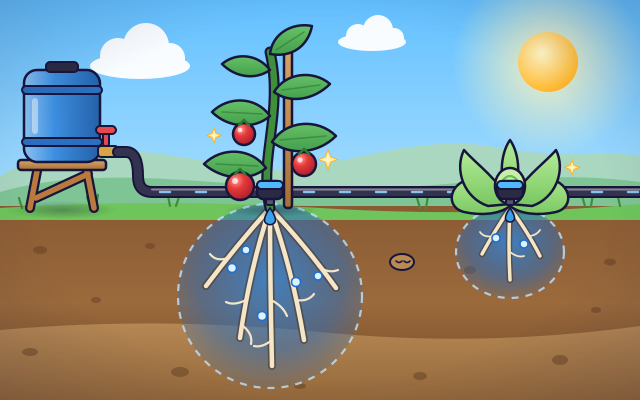
- Now lay a thin pipe, called a drip line, along the row. Water from the tank flows through it to a small dripper beside every plant.
- Look inside a dripper, called an emitter. The water must squeeze through a tiny zigzag path. That slows it down, so it comes out one drop at a time.
- Each drop soaks into the soil and spreads into a wet zone shaped like an onion. The roots grow right there, so they take up the water. The soil in between stays dry.
- Every plant gets just what it needs, right at its roots. The crops grow well, the weeds stay small, and the tank still holds plenty of water.
Look inside a drip system
Tap each part, from the tank to the roots. Watch what it does!
- Water tank. The tank stores the water. Because it sits on a stand, gravity pushes the water down into the pipes.
- Valve. The valve is the on and off switch. Open it and water flows into the pipes. Some valves are opened by a timer.
- Filter. The filter is a fine screen that catches sand and bits of dirt. Without it, the tiny holes in the emitters would soon clog.
- Main pipe. The main pipe is the wide one. It carries all the water from the tank to the rows of plants.
- Drip line. The drip line is a thin, bendy tube laid along each row of plants. The water stays inside it until it reaches an emitter.
- Emitter. The emitter is the dripper. Water squeezes through a tiny zigzag path inside it and comes out one slow drop at a time.
- Wet zone. Under each emitter the water spreads into a wet zone shaped like an onion. It is wide in sticky clay and narrow and deep in sand.
- Root zone. The roots take in the water. Lettuce roots stay near the top, tomato roots go deep and pumpkin roots spread wide.
Where should the emitters go?
Drag the emitters along the pipe, or tap a plant to send one there. Watch the wet zones and the roots. Then change the drip time.
Experiment: Where should an emitter sit so that the most water reaches a plant's roots?
- Look at the wet zones now. Are any roots inside them?
- Drag an emitter to a plant, or tap the plant.
- Watch the plant and the "Reaching roots" meter.
What we found: Water only helps a plant when it soaks in where the roots are. An emitter right beside the stem makes a wet zone around the roots, so the plant drinks nearly all of it. Water dripped in the gaps is wasted.
Turn on JavaScript to try it yourself.
Every plant, little waste
Place the emitters and set the drip time so every plant gets a good drink. Waste as little water as you can.
Why drip irrigation saves water
Plants drink through their roots, not their leaves. So the only water that helps a plant is water that ends up in the soil around its roots. A sprinkler wets everything: leaves, paths and bare soil. Some of that water dries up in the sun or blows away before any root can use it.
Drip irrigation is different. Water travels inside a closed pipe all the way to each plant. Beside the plant there is a small dripper called an emitter. Inside it is a tiny zigzag path. Squeezing through all those turns slows the water down, so it leaves as slow drops instead of a jet.
Slow drops have time to soak in. Under each emitter they spread into a wet zone shaped like an onion. In sandy soil the water sinks fast, so the wet zone is narrow and deep. In sticky clay it spreads sideways, so the wet zone is wide and shallow. Farmers choose where to put emitters and how long to run them so the wet zone fits the roots.
Because the soil between the plants stays dry, fewer weeds grow there. The leaves stay dry too, which helps keep some plant diseases away. Drip systems do need care, though: the tiny holes can clog, so the water must pass through a filter first.
Key words
- Irrigation
- Bringing water to crops when rain is not enough.
- Emitter
- A small dripper that lets water out of the pipe slowly, drop by drop.
- Root zone
- The part of the soil that a plant's roots reach and drink from.
- Wet zone
- The onion-shaped patch of wet soil under an emitter.
- Capillary action
- The way water creeps through very small spaces, even sideways or upward, because it clings to their walls.
- Evaporation
- Liquid water turning into water vapor and drifting away into the air.
Check your thinking
-
Which part of a plant takes in most of its water?
Show the answer
The roots. Roots soak up water from the soil, so that is where the water needs to go.
-
Why does water leave an emitter slowly?
Show the answer
It has to squeeze through a tiny zigzag path. The narrow, twisting path slows the water down until it can only drip.
-
An emitter is dripping halfway between two plants. What happens to most of that water?
Show the answer
It soaks in where there are no roots, so it is wasted. Water spreads only a short way in soil. If no roots are in the wet zone, no plant can drink it.
-
In sandy soil, what shape is the wet zone under an emitter?
Show the answer
Narrow and deep. Water sinks quickly between big sand grains, so it goes down more than sideways.
-
A lettuce has shallow roots. You run its emitter three times longer than needed. Where does most of the extra water go?
Show the answer
It sinks below the roots and is lost to the plant. Once the root zone is wet, extra water keeps moving down past the roots. This loss is called deep percolation.
-
Why do fewer weeds grow in a drip-watered field?
Show the answer
The soil between the plants stays dry. Weed seeds need water to sprout. Drip systems leave the gaps dry.
You're a Food & farming expert!
You watched, looked inside, tried it, solved the challenge and went deeper. Pick another question below, or switch the age at the top to see this topic another way.
More about food & farming
 #297
Food & farming
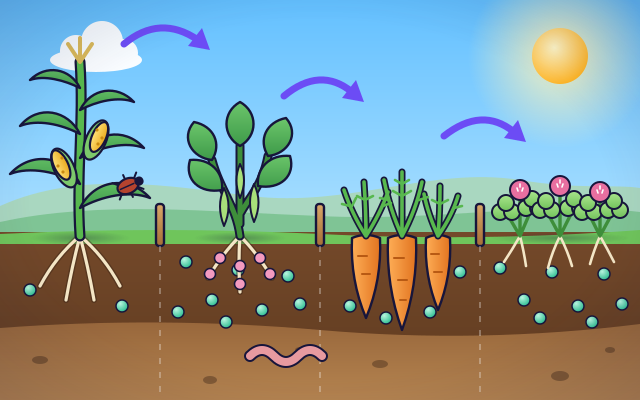
How does crop rotation help farms?
Plan several seasons and explore changing nutrient needs, pests, and soil cover.
#297
Food & farming
How does crop rotation help farms?
Plan several seasons and explore changing nutrient needs, pests, and soil cover.
 #298
Food & farming
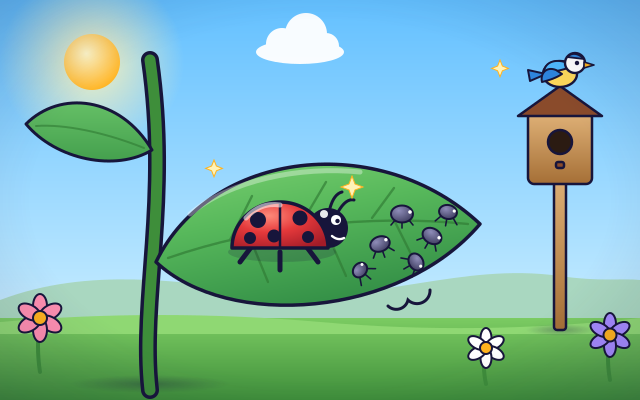
How do farmers use natural pest control?
Introduce beneficial organisms and observe effects on pests and crop damage.
#298
Food & farming
How do farmers use natural pest control?
Introduce beneficial organisms and observe effects on pests and crop damage.
 #299
Food & farming
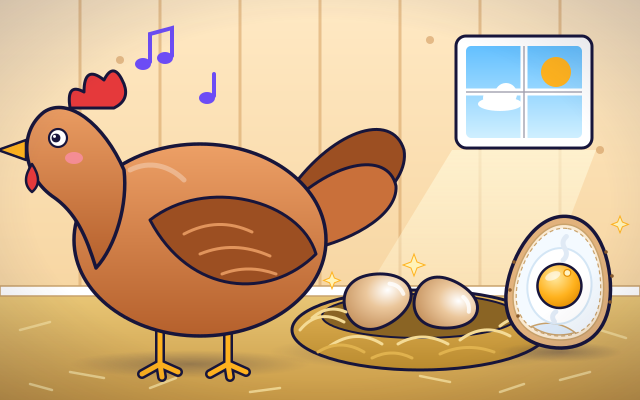
How does a hen make an egg?
Assemble yolk, albumen, membranes, and shell along a simplified internal timeline.
#299
Food & farming
How does a hen make an egg?
Assemble yolk, albumen, membranes, and shell along a simplified internal timeline.
 #300
Food & farming
How is sea salt produced?
Guide seawater through evaporation, crystallization, harvesting, cleaning, and packaging.
#300
Food & farming
How is sea salt produced?
Guide seawater through evaporation, crystallization, harvesting, cleaning, and packaging.
Keep exploring
Games to play next
- Garden AutomationProgram a garden robot with sensor rules — then watch a whole day play out.
- Ratio KitchenScale recipes, fill ratio tables and find the better buy.
- Label LabPut the right labels on beautiful science diagrams, from bean plants to heart chambers.
Guide for grown-ups
- How to start homeschooling: a step-by-step guide for familiesA guide for parents · 7 min read
Science games by grade
Science worksheets by grade
- Preschool Science Worksheets
- Pre-K Science Worksheets
- Kindergarten Science Worksheets
- 1st Grade Science Worksheets
- 2nd Grade Science Worksheets
- 3rd Grade Science Worksheets
- 4th Grade Science Worksheets
- 5th Grade Science Worksheets
- 6th Grade Science Worksheets
- 7th Grade Science Worksheets
- 8th Grade Science Worksheets