How do farmers use natural pest control?
Farmers invite helpful animals to eat the pests, so the crops stay healthy with less spray.
The big idea: Every pest has natural enemies that eat it. Farmers bring these helpers to the field and give them food and shelter, so the helpers keep the pests under control.
It's like keeping a cat in the barn instead of setting traps: the cat hunts mice every day, all by itself.
The interactive parts didn't load. The explanations below still work; try reloading the page.
Helpers that eat the pests
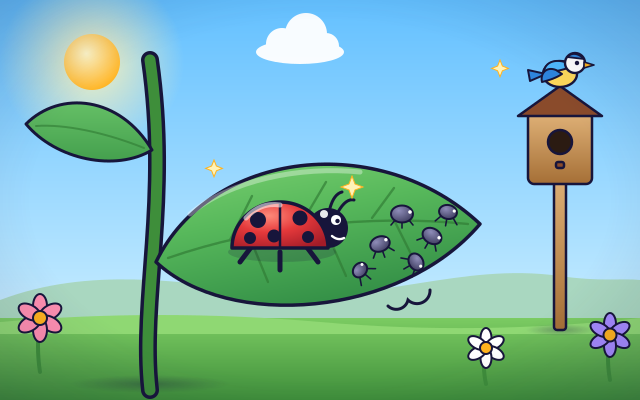
- These tiny dark bugs are aphids. They suck the sweet juice out of the plant. A few soon become hundreds, and the leaves start to droop and turn yellow.
- A farmer could use bug spray. It stops most aphids, but it also drives off bees and other helpful insects. Then the few aphids that are left multiply again, with nothing to stop them.
- Here is another way. The farmer lets ladybugs out near the plant. Ladybugs eat aphids, dozens every day. The aphids dwindle, and the plant recovers.
- Every pest has its own enemies. Birds carry caterpillars to their chicks. Toads gulp down slugs. At night an owl hunts mice. Each helper matches a different pest.
- Helpers need a home. So the farmer plants a strip of flowers and puts up nest boxes. With nectar to drink and places to hide, the helpers stay even when pests are few.
- A few aphids are still there, and that is fine. They feed the ladybugs, and the ladybugs keep them from taking over. The plant grows a good crop of beans.
Who eats whom in the garden?
Tap each animal to find out what it eats and why farmers like it, or do not!
- Aphids. Aphids are tiny pests. They poke the plant and drink its sugary sap, which makes the leaves curl and droop.
- Ladybug. Ladybugs are helpers. A ladybug walks along the leaves and eats aphids, dozens of them every day.
- Caterpillar. Caterpillars are pests on many crops. They chew big holes in leaves, so the plant can make less food.
- Songbirds. Small birds are helpers. A nest box invites them to move in, and then they catch caterpillars all day to feed their chicks.
- Barn owl. Owls are helpers too. They hunt at night and catch mice and voles that would eat seeds and gnaw roots.
- Toad. Toads are helpers. They come out in the evening and catch slugs and insects with a sticky tongue.
- Spider. Spiders are helpers. Their sticky webs catch flies, moths and other flying insects before they can lay eggs on the crop.
- Flower strip. A strip of flowers feeds the helpers. Hoverflies and tiny wasps drink the nectar, and their babies eat pests.
Bring in the helpers
Tap the jar to release ladybugs, tap the post to put up a bird box, and try the flower seeds. Watch the pests and the plant. You can also try the spray.
Experiment: You release ladybugs onto a plant covered in aphids. What happens next?
- Look at the plant now: how many aphids, and how healthy is it?
- Tap the jar once or twice to release ladybugs.
- Watch the aphid meter and the leaves. Then keep watching: do the ladybugs stay?
What we found: Ladybugs eat aphids, so the aphid numbers fall and the plant recovers. But when the food runs out, the ladybugs fly away, and the aphids can come back. Flowers give the helpers a reason to stay.
Turn on JavaScript to try it yourself.
Protect the crop all season
Keep the plant healthy for the whole season. You have 3 helper coins. Ladybugs, the bird box and flower seeds cost 1 coin each.
How natural pest control works
A pest is any living thing that harms a crop. Aphids suck the juice out of plants, caterpillars chew the leaves, slugs eat seedlings and mice steal grain. One aphid is no problem. But pests multiply fast, and thousands of them can ruin a whole field.
In nature, every pest has enemies that eat it. Ladybugs eat aphids. Small birds feed caterpillars to their chicks. Toads catch slugs, and owls hunt mice. Farmers who use natural pest control make these animals their helpers. Sometimes they buy helpers and release them. More often they invite the helpers that already live nearby.
To make helpers stay, a farm needs to feel like home. So farmers plant strips of flowers, where helpful insects can drink nectar. They leave hedges and patches of long grass to hide in, and they put up nest boxes for birds and owls. If a helper finds no food or shelter, it simply flies away.
Bug sprays can stop pests quickly, but strong ones also kill the helpers. Then the pests that survive can come back with nothing to stop them. That is why many farmers use sprays only as a last resort. They do not try to get rid of every single pest, either. A few pests keep the helpers fed and ready.
Key words
- Pest
- A living thing that damages crops, such as an aphid, a caterpillar or a slug.
- Natural enemy
- An animal that eats a pest, such as a ladybug that eats aphids.
- Predator
- An animal that hunts and eats other animals.
- Biological control
- Using a pest's natural enemies, instead of chemicals, to keep its numbers low.
- Habitat
- The place where an animal finds its food, water and shelter.
- Integrated pest management
- A way of farming that watches pest numbers and combines several gentle controls, using pesticides only when really needed.
Check your thinking
-
Which helper would you choose for a plant covered in aphids?
Show the answer
Ladybugs. Ladybugs eat aphids. Owls hunt mice, and toads eat slugs.
-
Why do farmers plant strips of flowers beside their crops?
Show the answer
To give helpful insects food and shelter, so they stay. Many helpers drink nectar and hide among the flowers, so they stay close to the crop.
-
Ladybugs have eaten nearly all the aphids. There are no flowers nearby. What happens next?
Show the answer
The hungry ladybugs fly away, and the aphids can come back. Ladybugs need aphids to eat. With no food they leave to look for more.
-
A strong bug spray kills the pests. What is the problem with it?
Show the answer
It kills the helpers too, so the pests can come back. With the helpers gone, nothing eats the pests that are left.
-
Why do farmers who use biological control not try to remove every single pest?
Show the answer
A small pest population keeps the natural enemies fed and present. Without any prey the predators would starve or leave, and the next pest outbreak would meet no resistance.
-
Caterpillars are chewing a farmer's cabbages. Which would help most?
Show the answer
Nest boxes for small birds. Small birds feed caterpillars to their chicks. Owls hunt mice, not caterpillars.
You're a Food & farming expert!
You watched, looked inside, tried it, solved the challenge and went deeper. Pick another question below, or switch the age at the top to see this topic another way.
More about food & farming
 #299
Food & farming
How does a hen make an egg?
Assemble yolk, albumen, membranes, and shell along a simplified internal timeline.
#299
Food & farming
How does a hen make an egg?
Assemble yolk, albumen, membranes, and shell along a simplified internal timeline.
 #300
Food & farming
How is sea salt produced?
Guide seawater through evaporation, crystallization, harvesting, cleaning, and packaging.
#300
Food & farming
How is sea salt produced?
Guide seawater through evaporation, crystallization, harvesting, cleaning, and packaging.
 #21
Food & farming
How is bread made, and why does dough rise?
Mix ingredients, zoom into dough as gas bubbles develop, and watch a loaf change during baking. Compare different rising times in a simulation.
#21
Food & farming
How is bread made, and why does dough rise?
Mix ingredients, zoom into dough as gas bubbles develop, and watch a loaf change during baking. Compare different rising times in a simulation.
 #22
Food & farming
How is ice cream made?
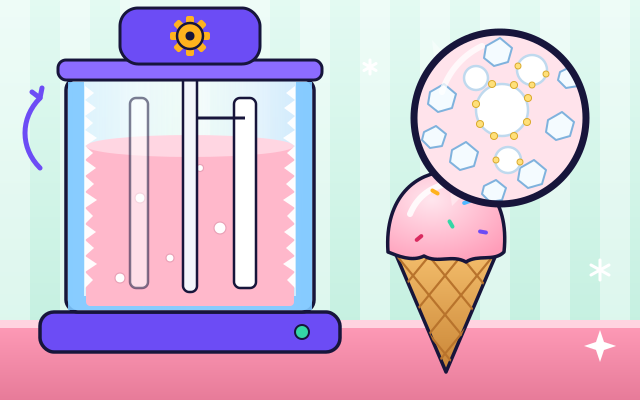
Follow mixing, chilling, and churning inside a transparent machine. Experiment with simulated churning conditions and explore how air and ice crystals affect texture.
#22
Food & farming
How is ice cream made?
Follow mixing, chilling, and churning inside a transparent machine. Experiment with simulated churning conditions and explore how air and ice crystals affect texture.
Keep exploring
Games to play next
- Ratio KitchenScale recipes, fill ratio tables and find the better buy.
- Garden AutomationProgram a garden robot with sensor rules — then watch a whole day play out.
- Label LabPut the right labels on beautiful science diagrams, from bean plants to heart chambers.
Draw it or make it
- How to draw a ladybugDrawing lesson
Guide for grown-ups
- How to start homeschooling: a step-by-step guide for familiesA guide for parents · 7 min read
Science games by grade
Science worksheets by grade
- Preschool Science Worksheets
- Pre-K Science Worksheets
- Kindergarten Science Worksheets
- 1st Grade Science Worksheets
- 2nd Grade Science Worksheets
- 3rd Grade Science Worksheets
- 4th Grade Science Worksheets
- 5th Grade Science Worksheets
- 6th Grade Science Worksheets
- 7th Grade Science Worksheets
- 8th Grade Science Worksheets