How is wooden furniture made?
From a drawing to a finished stool: measure and cut the pieces, lock them together with joints and glue, then protect the wood with a finish.
The big idea: Furniture is made from pieces cut to exact sizes. Joints lock the pieces into each other, glue holds them there, and a finish protects the wood.
It's like snapping toy bricks together: a bump on one piece fits a hole in the next. A furniture joint is the same idea, cut in wood and locked with glue.
The interactive parts didn't load. The explanations below still work; try reloading the page.
From a drawing to a stool
- Every piece of furniture starts as a drawing. The plan shows each part and exactly how long, wide and thick it has to be.
- Next, each piece is measured and marked on the board with a sharp pencil. Woodworkers say: measure twice, cut once. You can cut a board shorter, but never longer!
- The saw follows the pencil lines. Soon all the parts are ready: four legs the same length, the rails that join them, and a seat.
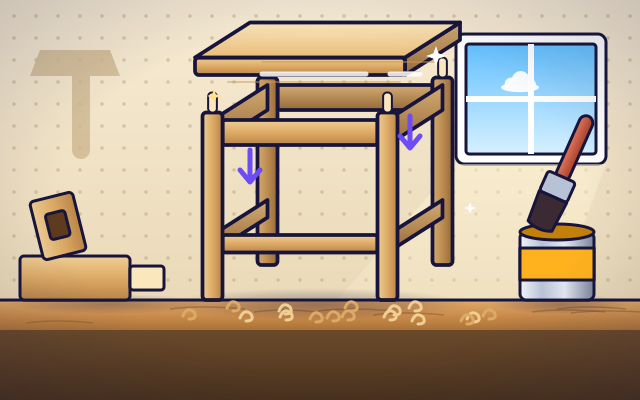
- The pieces lock together with joints. Here a tongue on the end of the rail, called a tenon, slides into a pocket in the leg, called a mortise. Glue goes in first.
- Now everything is fitted together. Clamps squeeze the joints tight while the glue sets. After a few hours the pieces act like one solid thing.
- Last, the stool is sanded smooth and given a finish, such as oil, wax, varnish or paint. The finish makes the wood look rich and keeps out water and dirt.
Look inside a stool
Tap each part of the stool and the close-up of its joint. Watch how they fit.
- Seat. The seat is a flat board that spreads your weight out to the four legs. Its edges are rounded so they feel comfortable.
- Legs. The four legs carry your weight down to the floor. They must be exactly the same length, or the stool will rock.
- Rails. Rails join each leg to the next one. They hold the legs square so the stool does not sway from side to side.
- Mortise and tenon. The end of the rail is cut into a tongue, the tenon. It fits a pocket in the leg, the mortise. Because the pieces lock into each other, the joint is very strong.
- Dowels. Dowels are short round pegs. Half of each peg is glued into one piece and half into the other, holding the seat on with no nails showing.
- Finish. The finish is a thin protective coat. It keeps water, dirt and sticky fingers out of the wood and makes the grain look beautiful.
Test the joints
Choose a joint and load it with weights until it breaks or holds them all. Test at least two joints. Which is strongest?
Experiment: Which joint will hold the most weight?
- Start with the butt joint. Press Load it up and count the weights it holds.
- Now choose the dowel joint, then the mortise and tenon, and test each one.
- Press Record after each test and compare.
What we found: The butt joint snaps off first, because only a thin line of glue on the end of the rail holds it. Dowels help. The mortise and tenon is strongest: the tongue is locked inside the leg and has lots of room for glue.
Turn on JavaScript to try it yourself.
Build the kitchen stool
Build a kitchen stool from the plan. Cut the leg and the rail to the right lengths, pick a joint and a finish, then press Build and test.
Why joints and finishes matter
A wooden stool looks like one solid thing, but it is made from many separate pieces: legs, rails and a seat. The furniture maker's job is to cut each piece to exactly the right size and then join them so well that they act like one.
It starts with a plan. The plan lists every piece and its measurements. Then each piece is measured, marked with a pencil and cut. Woodworkers have a saying: measure twice, cut once. A piece that is too long can be trimmed, but a piece that is too short is wasted. And if one leg is shorter than the others, the stool wobbles.
Next come the joints. You could just glue the flat end of a rail against a leg, but that joint, called a butt joint, snaps off easily. A much better way is to cut a tongue on the rail and a matching pocket in the leg. The tongue is called a tenon and the pocket is called a mortise. Now the wood itself holds the pieces together, and the glue has much more surface to grip. Clamps squeeze everything tight until the glue is hard.
Last comes the finish. Bare wood soaks up water, juice and dirt, and it swells when it gets damp. So the maker sands the stool smooth and adds a coat of oil, wax, varnish or paint. Our toy brick comparison is not perfect: bricks pull apart again, but a glued joint is meant to stay together for a hundred years.
Key words
- Joint
- The place where two pieces of wood are connected, and the way they are shaped to fit.
- Mortise and tenon
- A joint where a tongue on one piece (the tenon) fits a pocket in the other (the mortise).
- Dowel
- A short round wooden peg glued into matching holes in two pieces.
- Grain
- The lines in wood. They show which way the tree's fibers run.
- Finish
- A protective coat, such as oil, wax, varnish or paint, put on wood to protect it and make it look good.
- Kerf
- The narrow strip of wood that a saw blade turns into sawdust as it cuts.
Check your thinking
-
Why is a mortise and tenon stronger than a butt joint?
Show the answer
The tongue locks inside the leg and gives the glue more to hold on to. The pieces lock into each other, so the wood itself carries the load, and there is much more glued surface.
-
Why do woodworkers say "measure twice, cut once"?
Show the answer
Because a piece cut too short cannot be made longer. You can always trim a long piece, but a short piece is wasted. Checking first saves wood.
-
What does a finish such as varnish do for a wooden stool?
Show the answer
It keeps water and dirt out of the wood. A finish seals the surface, so spills wipe off instead of soaking in and staining.
-
What are clamps for when a stool is glued together?
Show the answer
They squeeze the joints tight while the glue dries. Glue needs the pieces pressed together and held still until it hardens.
-
A wide solid-wood table top is glued firmly to its frame all the way around. What is likely to happen over a year of damp summers and dry winters?
Show the answer
The top may crack, because it cannot shrink and swell across its grain. Wood swells and shrinks across the grain as humidity changes. If it is held rigidly, the stress can split it, so tops are fixed with fasteners that allow movement.
You're a Making everyday things expert!
You watched, looked inside, tried it, solved the challenge and went deeper. Pick another question below, or switch the age at the top to see this topic another way.
More about making everyday things
 #313
Making everyday things
How is rope made?
Twist fibers into yarns and strands and compare different arrangements.
#313
Making everyday things
How is rope made?
Twist fibers into yarns and strands and compare different arrangements.
 #314
Making everyday things
How are carpets made?
Watch yarn enter a backing and compare looped and cut-pile surfaces.
#314
Making everyday things
How are carpets made?
Watch yarn enter a backing and compare looped and cut-pile surfaces.
 #315
Making everyday things
How are metal objects cast?
Fill a virtual mold, allow cooling, and remove and finish the casting.
#315
Making everyday things
How are metal objects cast?
Fill a virtual mold, allow cooling, and remove and finish the casting.
 #316
Making everyday things
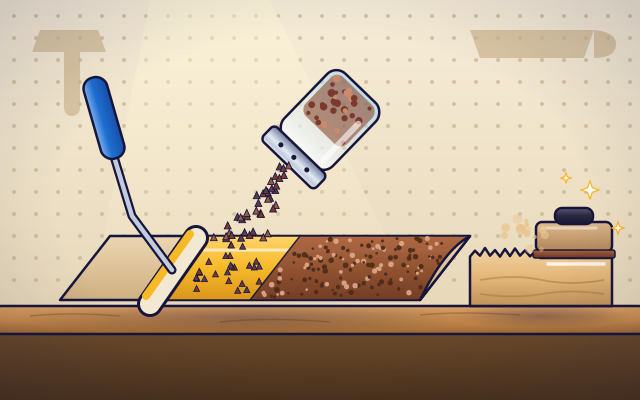
How is sandpaper made?
Coat backing with abrasive grains and compare the resulting surfaces on virtual wood.
#316
Making everyday things
How is sandpaper made?
Coat backing with abrasive grains and compare the resulting surfaces on virtual wood.
Keep exploring
Games to play next
- Geometry Architect 3DCount, build and fold solids like a real architect.
- Machine RepairFix levers, pulleys, gears and ramps so every contraption works.
- Sorting FactoryTurn a work order into if/else rules and watch the conveyor sort every item.
Guide for grown-ups
- How to start homeschooling: a step-by-step guide for familiesA guide for parents · 7 min read
Science games by grade
Science worksheets by grade
- Preschool Science Worksheets
- Pre-K Science Worksheets
- Kindergarten Science Worksheets
- 1st Grade Science Worksheets
- 2nd Grade Science Worksheets
- 3rd Grade Science Worksheets
- 4th Grade Science Worksheets
- 5th Grade Science Worksheets
- 6th Grade Science Worksheets
- 7th Grade Science Worksheets
- 8th Grade Science Worksheets