How is concrete made?
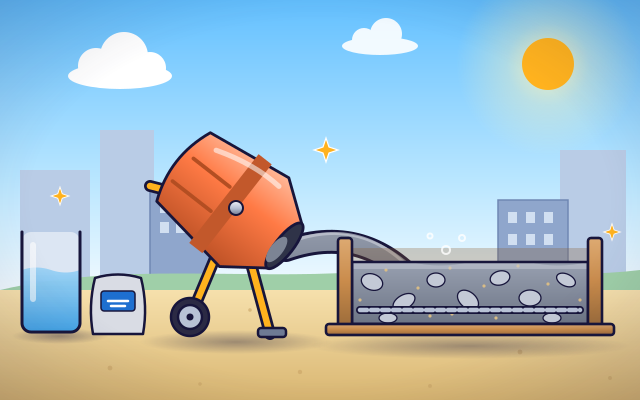
Cement, water, sand and gravel are mixed into a thick gray soup that is poured into a mold and hardens into stone.
The big idea: Cement and water react to make a glue. The glue grips the sand and gravel, and together they harden into one solid piece in the shape of the mold.
It's like a crispy rice treat: the sticky part is the glue, the pieces fill it up, and the mix sets in the shape of the pan.
The interactive parts didn't load. The explanations below still work; try reloading the page.
How concrete is made
- Sidewalks, bridges and tall buildings are made of concrete. It is as hard as rock, yet it started as a thick gray soup that could be poured into any shape.
- Concrete has four ingredients: cement, a fine gray powder; water; sand; and gravel. Most of it is sand and gravel. The cement is only a small part.
- The mixer tumbles everything together. Cement and water turn into a gray paste, and the paste coats every grain of sand and every stone.
- The wet concrete is poured into a mold, called a form, with steel bars inside. Shaking it lets trapped air bubbles rise out, so the concrete packs tightly around the steel.
- Concrete does not just dry out. The cement reacts with the water and grows tiny crystals. The crystals tangle together and grip the sand and gravel like glue.
- The concrete is kept damp so the reaction can keep going. After a day the mold can come off. After about four weeks it has nearly its full strength.
Look inside a concrete block
This block has been sliced open, still in its mold. Tap each thing you can see.
- Gravel. Gravel is small stones. They take up most of the space and are already hard and strong, so the block needs less cement.
- Sand. Sand grains fit into the gaps between the stones, so there are no big holes left for the paste to fill.
- Cement paste. Cement and water make the gray paste. It coats everything, then hardens and glues all the sand and stones into one piece.
- Steel bars. Steel bars are cast into the concrete. Concrete is hard to squash but cracks if it is bent or pulled. Steel is good at being pulled, so together they make a strong team.
- Air bubbles. Air gets trapped when concrete is poured. Each bubble is a weak spot, so builders shake the wet concrete to let the bubbles rise out.
- Mold (formwork). The mold, called formwork, holds the wet concrete in shape until it is hard enough to stand by itself. Then the boards are taken off.
How much water?
Drag the water level up or down, then tap the mixer. Watch how the mix pours, how the block turns out and what the load test does.
Experiment: What happens if you add lots of extra water to make the concrete easy to pour?
- Start with very little water and tap the mixer. Look at the block.
- Add water up to the middle and try again.
- Now add a lot of water. Watch the load test.
What we found: With too little water the mix is stiff and crumbly, and it leaves holes in the mold. With just enough it flows into every corner and sets strong. Extra water makes pouring easy, but that water leaves tiny holes behind, so the block is weak and cracks.
Turn on JavaScript to try it yourself.
Hold the big weight
Make a block that can hold the big weight. Choose the water, how many days to wait, and whether to keep it damp.
Why concrete turns to stone
Concrete is made from four things: cement, water, sand and gravel. Cement is a fine gray powder made by roasting limestone and clay in a very hot kiln. Sand and gravel are just small and larger bits of rock. Most of a concrete block is sand and gravel.
When water is added, the cement and water become a paste. The paste coats every grain and every stone. Then something surprising happens: the paste does not simply dry. The cement reacts with the water and grows tiny crystals that tangle together and hold everything tight.
That is why the amount of water matters so much. Too little, and the mix is too stiff to fill the mold. Too much, and the extra water leaves tiny holes that make the concrete weak. Builders also keep new concrete damp, because the crystals stop growing if it dries out too soon.
The crispy rice treat comparison is a good start: a little glue holds a lot of pieces together in the shape of the pan. But the sticky part of a treat sets as it cools. Concrete sets by a chemical change, and it keeps getting stronger for weeks.
Key words
- Cement
- A fine gray powder that reacts with water and hardens. It is the glue in concrete.
- Aggregate
- The sand and gravel in concrete.
- Curing
- Keeping new concrete damp while it gets hard and strong.
- Hydration
- The reaction between cement and water that makes concrete hard.
- Reinforced concrete
- Concrete with steel bars cast inside to take pulling forces.
Check your thinking
-
Which ingredient is the glue in concrete?
Show the answer
Cement mixed with water. Cement reacts with water and grips the sand and gravel.
-
Why is wet concrete shaken after it is poured?
Show the answer
To let trapped air bubbles rise out. Each air bubble would be a weak hole in the block.
-
A builder adds lots of extra water to make the concrete easier to pour. What happens?
Show the answer
The concrete ends up weaker. Extra water leaves tiny holes behind when it dries, and holes make concrete weak.
-
Why is new concrete kept damp for days?
Show the answer
The cement needs water to keep reacting and getting stronger. Concrete hardens by reacting with water. If it dries too soon, the reaction stops.
-
Why are steel bars put inside concrete?
Show the answer
Steel is good at being pulled, and concrete is not. Concrete is hard to squash but cracks when it is pulled or bent, so steel takes the pull.
You're a Making everyday things expert!
You watched, looked inside, tried it, solved the challenge and went deeper. Pick another question below, or switch the age at the top to see this topic another way.
More about making everyday things
 #310
Making everyday things
How is plywood made?
Alternate thin wood sheets' grain directions and press the glued layers together.
#310
Making everyday things
How is plywood made?
Alternate thin wood sheets' grain directions and press the glued layers together.
 #311
Making everyday things
How is lumber prepared for building?
Follow logs through sawing, drying, grading, and planing into construction boards.
#311
Making everyday things
How is lumber prepared for building?
Follow logs through sawing, drying, grading, and planing into construction boards.
 #312
Making everyday things
How is wooden furniture made?
Turn a design into measured pieces, assemble joints, and choose a finish.
#312
Making everyday things
How is wooden furniture made?
Turn a design into measured pieces, assemble joints, and choose a finish.
 #313
Making everyday things
How is rope made?
Twist fibers into yarns and strands and compare different arrangements.
#313
Making everyday things
How is rope made?
Twist fibers into yarns and strands and compare different arrangements.
Keep exploring
Games to play next
- Machine RepairFix levers, pulleys, gears and ramps so every contraption works.
- Geometry Architect 3DCount, build and fold solids like a real architect.
- Sorting FactoryTurn a work order into if/else rules and watch the conveyor sort every item.
Guide for grown-ups
- How to start homeschooling: a step-by-step guide for familiesA guide for parents · 7 min read
Science games by grade
Science worksheets by grade
- Preschool Science Worksheets
- Pre-K Science Worksheets
- Kindergarten Science Worksheets
- 1st Grade Science Worksheets
- 2nd Grade Science Worksheets
- 3rd Grade Science Worksheets
- 4th Grade Science Worksheets
- 5th Grade Science Worksheets
- 6th Grade Science Worksheets
- 7th Grade Science Worksheets
- 8th Grade Science Worksheets