How is breakfast cereal made?
Follow a grain through the factory: it is cooked soft, shaped into a flake, puff or loop, toasted crisp and sealed in a box.
The big idea: Cereal starts as hard grain. Cooking with steam makes it soft enough to shape. Toasting then dries out almost all the water, and that is what makes it crunchy.
It's like play dough and toast together: first the grain is made soft so it can be shaped, then it is toasted until it is dry and crunchy.
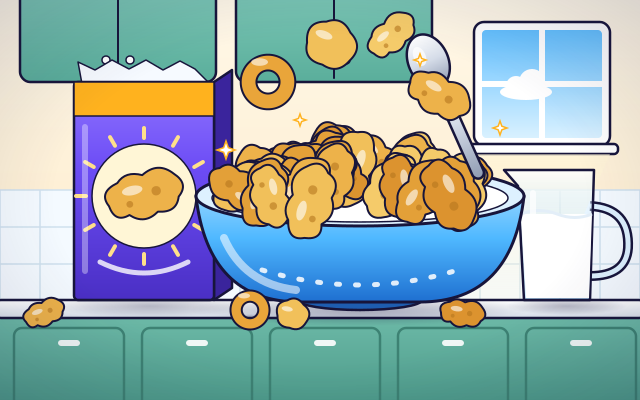
The interactive parts didn't load. The explanations below still work; try reloading the page.
How a flake is made
- Every flake in this bowl started as a hard bit of grain, such as corn, wheat, rice or oats. So how does it turn thin and crunchy?
- The grain tumbles in a big cooker full of hot steam. The steam soaks in, so each hard piece swells up and turns soft, like cooked rice.
- The soft pieces are dried a little so they are not sticky. Then they drop between two heavy rollers, which press each one into a thin flake.
- A very hot oven toasts the flakes. Water leaves as steam, so the flakes dry out and turn crisp. The heat also browns them and gives the toasty taste.
- The cool flakes pour into a bag inside a box, and the bag is sealed. It keeps out damp air, because flakes that soak up water go soft.
- So that is the recipe: cook the grain soft, shape it, toast it dry and seal it up. Pour on the milk and eat before the water soaks back in!
Look inside a cereal line
Tap each machine on the line. Each one moves when you find it.
- Steam cooker. The cooker is a big drum that slowly turns while steam is pumped in. The grain soaks up hot water and turns soft.
- Dryer. Warm air dries the cooked pieces a little. Then they rest. A piece that is too wet would stick to the rollers.
- Flaking rollers. Two heavy steel rollers spin toward each other. Each soft piece is pulled into the gap and pressed into a thin flake.
- Toasting oven. Flakes tumble through very hot air. Their water leaves as steam and they turn golden. Dry flakes are crunchy flakes.
- Vitamin sprayer. After toasting, a fine spray adds vitamins and minerals as the flakes tumble in a drum.
- Box filler. The filler weighs out the flakes, pours them into a bag inside the box and seals the bag so damp air stays out.
Cereal lab: shape and toast
Choose a cereal style and watch the grain change at each machine. Then change the toasting time. When is the cereal crunchy?
Experiment: What makes the cereal crunchy?
- Slide the toasting time all the way down. Look at the close-up piece: does it bend?
- Slide it up slowly and watch the water drops and the color.
- Slide it all the way up. What happens if you toast too long?
What we found: A piece with a short toast is still bendy, because it is full of water. Toast it longer and the water leaves as steam, so it turns crisp and golden. Toast it far too long and it goes dark and bitter. Crunch comes from being dry.
Turn on JavaScript to try it yourself.
Fill the order
The order card shows a cereal. Pick the right shape and toast it golden and crunchy, then make the batch.
From hard grain to crunchy flake
Breakfast cereal is made from grain: the seeds of plants such as corn, wheat, rice and oats. A raw grain is hard, because it is packed with a food store called starch. You could not squash a raw grain into a flake. It would just crack.
So the first step is cooking. Steam pushes hot water into the grain. The starch soaks it up and swells, and the grain turns soft, a bit like rice in a pot. Now it can be shaped. Rollers press it into flakes. A sudden pop of pressure blows it up into puffs. Or it is made into dough and squeezed through a small hole to make loops and other shapes.
Soft cereal would not keep for long, and it would not crunch. So the last big step is toasting. Hot air turns the water inside into steam, and the steam leaves. With almost no water left, the cereal is stiff and brittle, so it snaps when you bite it. The heat also browns the outside, which makes the toasty smell and taste.
Dry cereal loves to soak water back up. That is why the bag inside the box is sealed, and why you should fold it closed. It is also why cereal goes soggy in milk. The toast comparison only goes so far: bread is baked once and toasted at home, but cereal is cooked, shaped and toasted all in the factory.
Key words
- Grain
- The seed of a cereal plant such as corn, wheat, rice or oats.
- Starch
- The food a plant stores in its seeds. It is hard when dry and soft when cooked with water.
- Gelatinization
- What happens when starch is heated with water: it swells and turns soft.
- Extruder
- A machine with a turning screw that cooks dough and pushes it out through a shaped hole.
- Moisture
- How much water is in something. Crunchy cereal has very little.
- Maillard reaction
- Browning that happens when sugars and proteins are heated together. It makes toasted colors and flavors.
Check your thinking
-
Why is the grain cooked with steam before it is shaped?
Show the answer
So it turns soft enough to press into a shape. A raw grain would crack. A cooked grain is soft, so rollers can press it flat.
-
A flake comes out of the oven still bendy. What went wrong?
Show the answer
It was not toasted long enough, so it still holds water. Bendy means wet. More time in the hot air lets more water leave.
-
Why is the bag inside a cereal box sealed?
Show the answer
To keep damp air out so the cereal stays crisp. Dry cereal soaks up water from the air. Wet cereal is soft cereal.
-
How is a puffed cereal blown up big?
Show the answer
Water inside it turns to steam all at once. When the pressure is let go, the hot water inside turns to steam in a flash. Steam takes up far more room, so the grain puffs up.
-
The oven is made hotter and the toasting time is kept the same. What happens to a batch that was just right before?
Show the answer
It dries a bit more but browns a lot more, so it may scorch. Browning speeds up with temperature faster than drying does. A hotter oven needs a shorter time.
You're a Food & farming expert!
You watched, looked inside, tried it, solved the challenge and went deeper. Pick another question below, or switch the age at the top to see this topic another way.
More about food & farming
 #287
Food & farming
How does pasteurization work?
Follow controlled factory heating and cooling and visualize changes in microbial numbers.
#287
Food & farming
How does pasteurization work?
Follow controlled factory heating and cooling and visualize changes in microbial numbers.
 #288
Food & farming
How does fruit ripen?
Explore changes in color, firmness, aroma, and stored carbohydrates over time.
#288
Food & farming
How does fruit ripen?
Explore changes in color, firmness, aroma, and stored carbohydrates over time.
 #289
Food & farming
How does drying preserve food?
Remove water from virtual fruit and compare moisture, texture, and microbial growth conditions.
#289
Food & farming
How does drying preserve food?
Remove water from virtual fruit and compare moisture, texture, and microbial growth conditions.
 #290
Food & farming
How does freezing preserve food?
Follow ice formation and compare changes in microbial activity and food texture.
#290
Food & farming
How does freezing preserve food?
Follow ice formation and compare changes in microbial activity and food texture.
Keep exploring
Games to play next
- Ratio KitchenScale recipes, fill ratio tables and find the better buy.
- Garden AutomationProgram a garden robot with sensor rules — then watch a whole day play out.
- Label LabPut the right labels on beautiful science diagrams, from bean plants to heart chambers.
Guide for grown-ups
- How to start homeschooling: a step-by-step guide for familiesA guide for parents · 7 min read
Science games by grade
Science worksheets by grade
- Preschool Science Worksheets
- Pre-K Science Worksheets
- Kindergarten Science Worksheets
- 1st Grade Science Worksheets
- 2nd Grade Science Worksheets
- 3rd Grade Science Worksheets
- 4th Grade Science Worksheets
- 5th Grade Science Worksheets
- 6th Grade Science Worksheets
- 7th Grade Science Worksheets
- 8th Grade Science Worksheets