How does pasteurization work?
Follow milk through a factory: it is heated to just the right temperature, held there, then cooled fast, and see what happens to the microbes.
The big idea: Milk can carry tiny living things called microbes. Heating milk to about 72 degrees for 15 seconds destroys almost all of them. Cooling it quickly keeps the few that are left from growing.
It's like washing your hands for 20 seconds: a quick splash is not enough, but the right time gets rid of nearly all the germs.

The interactive parts didn't load. The explanations below still work; try reloading the page.
How milk is made safe
- Fresh milk from the farm looks clean. But look through a microscope and you find tiny living things called microbes. A few kinds could make you sick.
- At the dairy, milk flows between thin steel plates. Hot water runs on the other side of each plate and heats the milk to 72 degrees. That is hot, but not boiling.
- Next comes a long pipe called the holding tube. The milk takes 15 seconds to pass through it, staying hot the whole way. The heat breaks the microbes apart.
- A sensor checks the temperature at the end of the tube. If the milk is even a little too cool, a valve sends it back to be heated again.
- Then the milk is cooled quickly to 4 degrees. A very few microbes survive the heat, and cold keeps them from growing. The hot milk also warms the next cold milk coming in, which saves energy.
- Heat, hold, cool. Now the milk is safe to drink and stays fresh for about two weeks. But it must stay in the fridge, because the few microbes left can still grow slowly.
Look inside a pasteurizer
Tap each part of the pasteurizer. Follow the milk from the tank to the end.
- Raw milk tank. Milk from the farm waits here, kept cold. It has not been heated yet, so its microbes are still alive.
- Pump. The pump pushes milk through the pipes at a steady speed. The speed matters: it sets how long the milk stays hot.
- Heater plates. A stack of thin steel plates. Milk runs on one side of each plate and hot water on the other. Heat passes through the steel into the milk.
- Holding tube. A long zigzag pipe. The hot milk takes at least 15 seconds to travel through it, and that is when most microbes are destroyed.
- Safety valve. A sensor measures the milk here. If it is not hot enough, the valve swings over and sends the milk back to the tank.
- Cooler plates. More thin plates, but this time with icy water on the other side. The milk drops to 4 degrees in moments.
- Heat-saving loop. The hot milk that is finished warms the cold milk that is just coming in. The hot milk cools down and the cold milk warms up, so less energy is wasted.
How hot is hot enough?
Change the temperature of the heater. Compare the microbes before heating and after heating. How hot does the milk need to be?
Experiment: How hot must the milk get before almost all the microbes are destroyed?
- Set the heater to warm, about 40 degrees. What do the microbes do?
- Raise it to 60 degrees, then 72 degrees. Watch the window on the right.
- Is the milk allowed through to the bottle?
What we found: Warm milk is the worst: microbes grow fastest when it is cozy. They are only destroyed when the milk gets properly hot. At 72 degrees, held for 15 seconds, almost none are left, and the milk never has to boil.
Turn on JavaScript to try it yourself.
Run the dairy
Send safe milk to the bottle: hot enough to destroy the microbes, not so hot that it tastes cooked, and chilled afterward.
Heat, time and tiny living things
Microbes are living things too small to see without a microscope. They are everywhere: in soil, in the air, on your skin and in fresh milk. Most do no harm, and some are very useful. But a few kinds can make people ill, and others turn milk sour.
Microbes are built from delicate parts. When they get hot enough, those parts lose their shape and stop working, a bit like the way a clear egg white turns solid in a hot pan and cannot turn back. So heat can destroy microbes. The trick is to use enough heat to stop them, but not so much that the milk tastes cooked.
Dairies found the right recipe: heat the milk to about 72 degrees, keep it there for 15 seconds, then cool it quickly to 4 degrees. This is called pasteurization. Machines measure the temperature all the time. If the milk is even slightly too cool, a valve sends it back to be heated again.
Pasteurized milk is safe, but a very few tough microbes are still in it. In the cold of a fridge they grow very slowly, so the milk stays fresh for about two weeks. Left out in a warm room, they would grow fast and the milk would spoil in a day or so. The hand-washing comparison is not perfect: soap mostly washes germs away, while heat destroys them where they are.
Key words
- Microbe
- A living thing too small to see without a microscope, such as a bacterium.
- Pasteurization
- Heating a food to a set temperature for a set time to destroy harmful microbes, then cooling it quickly.
- Holding tube
- The pipe that keeps hot milk at full temperature for the required time.
- Heat exchanger
- A machine that moves heat from one liquid to another through thin metal plates, without mixing them.
- D-value
- The time at one temperature needed to destroy 90 percent of the microbes, which is one tenfold reduction.
- Sterile
- Free of all living microbes. Pasteurized milk is safe but not sterile.
Check your thinking
-
What destroys most of the microbes in milk at the dairy?
Show the answer
Heating it to about 72 degrees for 15 seconds. Enough heat for enough time breaks the microbes apart.
-
Why must pasteurized milk still be kept in the fridge?
Show the answer
A few microbes are left, and cold keeps them from growing. Pasteurizing leaves a very few tough microbes. In the cold they grow very slowly.
-
The milk reaches only 68 degrees. What does the safety valve do?
Show the answer
It sends the milk back to be heated again. Milk that is not hot enough is never allowed to reach the cartons.
-
Which milk has microbes growing fastest?
Show the answer
Warm milk at about 37 degrees. Cozy warmth is perfect for microbes. Cold slows them and real heat destroys them.
-
A dairy raises the temperature from 72 to 78 degrees. In the model, what happens to the holding time needed for the same kill?
Show the answer
It becomes about ten times shorter. Each rise of about 6 degrees makes the killing ten times faster.
You're a Food & farming expert!
You watched, looked inside, tried it, solved the challenge and went deeper. Pick another question below, or switch the age at the top to see this topic another way.
More about food & farming
 #288
Food & farming
How does fruit ripen?
Explore changes in color, firmness, aroma, and stored carbohydrates over time.
#288
Food & farming
How does fruit ripen?
Explore changes in color, firmness, aroma, and stored carbohydrates over time.
 #289
Food & farming
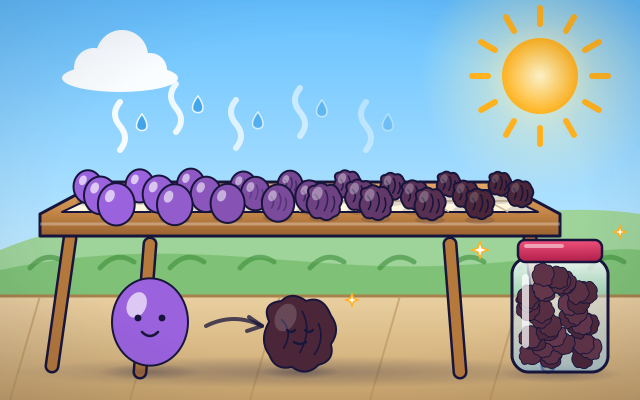
How does drying preserve food?
Remove water from virtual fruit and compare moisture, texture, and microbial growth conditions.
#289
Food & farming
How does drying preserve food?
Remove water from virtual fruit and compare moisture, texture, and microbial growth conditions.
 #290
Food & farming
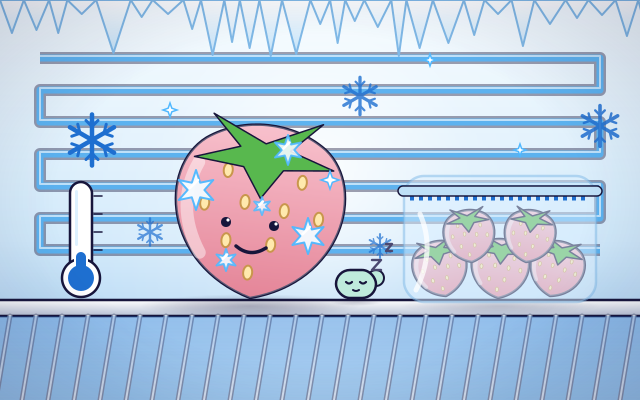
How does freezing preserve food?
Follow ice formation and compare changes in microbial activity and food texture.
#290
Food & farming
How does freezing preserve food?
Follow ice formation and compare changes in microbial activity and food texture.
 #291
Food & farming
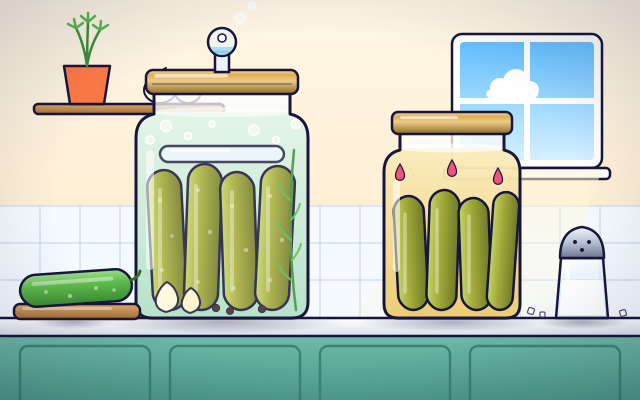
How are pickles made?
Compare vinegar pickling and fermentation while exploring salt, acidity, and preservation.
#291
Food & farming
How are pickles made?
Compare vinegar pickling and fermentation while exploring salt, acidity, and preservation.
Keep exploring
Games to play next
- Ratio KitchenScale recipes, fill ratio tables and find the better buy.
- Garden AutomationProgram a garden robot with sensor rules — then watch a whole day play out.
- Label LabPut the right labels on beautiful science diagrams, from bean plants to heart chambers.
Guide for grown-ups
- How to start homeschooling: a step-by-step guide for familiesA guide for parents · 7 min read
Science games by grade
Science worksheets by grade
- Preschool Science Worksheets
- Pre-K Science Worksheets
- Kindergarten Science Worksheets
- 1st Grade Science Worksheets
- 2nd Grade Science Worksheets
- 3rd Grade Science Worksheets
- 4th Grade Science Worksheets
- 5th Grade Science Worksheets
- 6th Grade Science Worksheets
- 7th Grade Science Worksheets
- 8th Grade Science Worksheets