How does fruit ripen?
A fruit ripens when a gas signal tells it to change its color, soften, smell good and turn its stored starch into sugar.
The big idea: As a fruit ripens, the green fades, the hard flesh softens, a good smell appears and starch turns into sugar. A gas the fruit makes, called ethylene, starts all of these changes.
It's like a school bell: one signal rings, and everybody in the building starts to change what they are doing at the same time.
The interactive parts didn't load. The explanations below still work; try reloading the page.
How a banana ripens
- A green banana is hard and not very sweet. Its seeds are not ready, so the fruit is not ready either. It is waiting for a signal.
- When the time comes, the fruit starts making a gas called ethylene. You cannot see or smell it. It tells every part of the fruit: start ripening now.
- The signal makes the green coloring in the peel break down. Yellow was hiding underneath the whole time, and now you can see it.
- Inside the banana, stored food called starch is cut into small pieces of sugar. Starch does not taste sweet, but sugar does. So the banana gets sweeter each day.
- The walls of the fruit's tiny cells are held together by a kind of glue. Ripening loosens the glue, so the fruit turns soft. The fruit also makes its smell, which floats into the air.
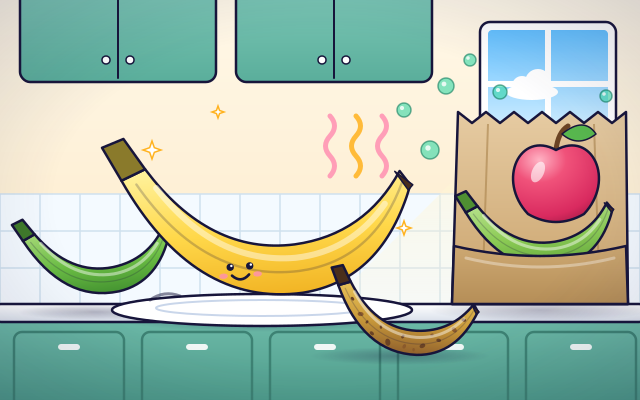
- A ripe fruit keeps giving off the gas, so a green fruit next to it ripens faster, especially in a paper bag that traps the gas. In the end brown spots appear: very sweet, very soft.
Look inside a ripening banana
Tap the banana and the close-up of one of its cells. Each thing you find shows how it changes.
- Peel color. The peel is green because of a green coloring, the same one that is in leaves. As it breaks down, the yellow underneath shows through.
- Ethylene gas. The fruit makes this gas when it is time to ripen. The gas is the signal that starts all the other changes.
- Starch grains. Starch is the food the plant packed into the fruit. It is made of sugar pieces joined in long chains, so it does not taste sweet.
- Sugars. When starch chains are cut up, the small pieces are sugars. They dissolve in the juice of the fruit and taste sweet.
- Cell walls. Every tiny cell has a wall around it, and a natural glue sticks the walls together. Ripening loosens the glue, so the fruit gets softer.
- Aroma. A ripe fruit makes smelly molecules that float into the air and into your nose. A green fruit hardly smells at all.
Counter or paper bag?
One banana sits on the counter. The other is in a paper bag with a ripe apple. Move through the days and compare color, firmness, smell and what is inside.
Experiment: Which banana will ripen first?
- Start at day 0. Both bananas are green and hard.
- Move forward a day or two at a time. Watch the color, the pressing finger and the round windows.
- Keep going to the end. What happens after a banana is ripe?
What we found: The banana in the bag ripens first. The ripe apple gives off ethylene gas and the bag traps it, so the banana gets a stronger signal. Both bananas go through the same changes in the same order: green fades, starch turns to sugar, the flesh softens and the smell grows. After ripe comes spotty and then brown.
Turn on JavaScript to try it yourself.
Ripe for the party
The party is marked on the calendar. Choose where to keep the green bananas so they are ripe on that day: not green, not spotty.
The signal that ripens fruit
A fruit has a job: to help the plant's seeds travel. Until the seeds are ready, the fruit stays green, hard and not very tasty, so animals leave it alone. When the seeds are ready, the fruit changes so that animals want to eat it and carry the seeds away. Those changes are called ripening.
Many fruits, such as bananas, apples, pears, tomatoes and avocados, start ripening with a signal. The signal is a gas called ethylene, which the fruit makes itself. Once a little is made, the fruit makes more and more, and all of its cells get the message.
The message starts four changes. The green coloring breaks down and other colors show. Starch, the stored food, is cut into sugars, so the fruit turns sweet. The glue between the tiny cells loosens, so the fruit turns soft. And the fruit makes smelly molecules that float through the air.
Because the signal is a gas, it can travel from one fruit to another. A ripe apple in a paper bag with a green banana speeds the banana up. Cold slows everything down, which is why fruit lasts longer in a cool place. The school bell comparison is not perfect: a bell rings once, but a ripening fruit keeps making more and more of its signal.
Key words
- Ripening
- The changes that make a fruit ready to eat: new color, softer flesh, more sugar and more smell.
- Ethylene
- A gas that fruits make. It is the signal that starts ripening.
- Starch
- Stored plant food made of sugar pieces joined in long chains. It does not taste sweet.
- Enzyme
- A natural helper molecule that speeds up one particular change, such as cutting starch into sugar.
- Pectin
- The natural glue that holds the walls of plant cells together.
- Chlorophyll
- The green coloring in leaves and in the peel of unripe fruit.
Check your thinking
-
What starts a banana ripening?
Show the answer
A gas signal called ethylene. The fruit makes ethylene gas, and the gas tells every cell to start ripening.
-
Why does a ripe banana taste sweeter than a green one?
Show the answer
Its starch has been cut up into sugar. The food was there all along as starch. Ripening cuts it into small, sweet sugars.
-
You want a green banana to ripen faster. What should you do?
Show the answer
Put it in a paper bag with a ripe apple, somewhere warm. The apple gives off the ripening gas, the bag traps it, and warmth speeds up the changes.
-
Why does a ripe fruit turn soft?
Show the answer
The glue between its tiny cells loosens. A natural glue holds the cells together. Ripening loosens it, so the cells can slide.
-
In the simplified model, warming a banana by 10 degrees doubles its ripening speed. A banana that takes 10 days at 20 °C takes about how long at 30 °C?
Show the answer
5 days. Twice the speed means half the time.
You're a Food & farming expert!
You watched, looked inside, tried it, solved the challenge and went deeper. Pick another question below, or switch the age at the top to see this topic another way.
More about food & farming
 #289
Food & farming
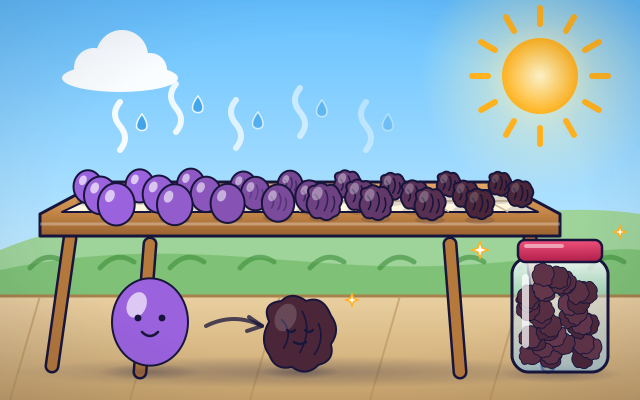
How does drying preserve food?
Remove water from virtual fruit and compare moisture, texture, and microbial growth conditions.
#289
Food & farming
How does drying preserve food?
Remove water from virtual fruit and compare moisture, texture, and microbial growth conditions.
 #290
Food & farming
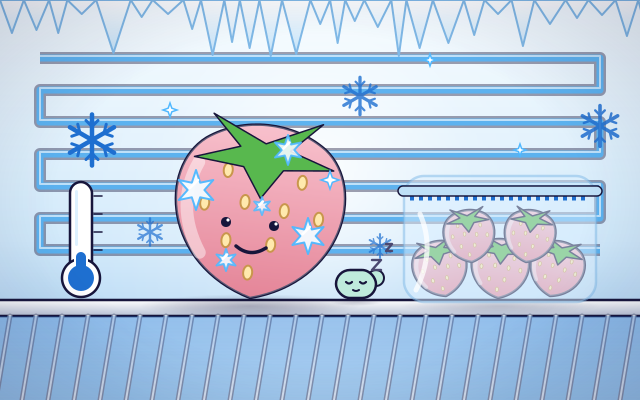
How does freezing preserve food?
Follow ice formation and compare changes in microbial activity and food texture.
#290
Food & farming
How does freezing preserve food?
Follow ice formation and compare changes in microbial activity and food texture.
 #291
Food & farming
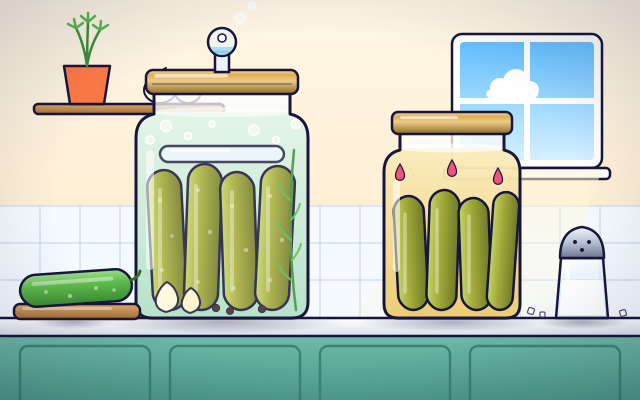
How are pickles made?
Compare vinegar pickling and fermentation while exploring salt, acidity, and preservation.
#291
Food & farming
How are pickles made?
Compare vinegar pickling and fermentation while exploring salt, acidity, and preservation.
 #292
Food & farming
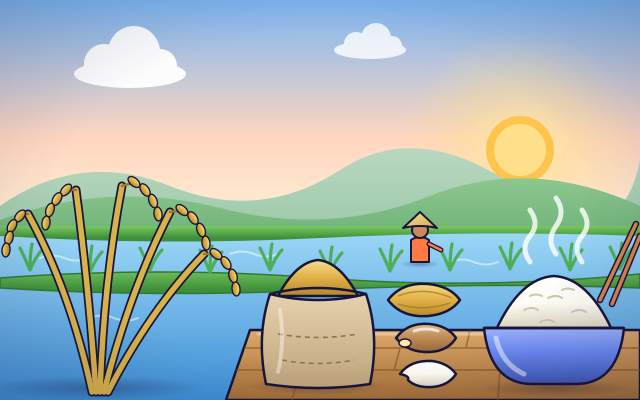
How does rice get from fields to our plates?
Follow harvesting, drying, husking, and optional polishing through a miniature processing line.
#292
Food & farming
How does rice get from fields to our plates?
Follow harvesting, drying, husking, and optional polishing through a miniature processing line.
Keep exploring
Games to play next
- Ratio KitchenScale recipes, fill ratio tables and find the better buy.
- Garden AutomationProgram a garden robot with sensor rules — then watch a whole day play out.
- Label LabPut the right labels on beautiful science diagrams, from bean plants to heart chambers.
Guide for grown-ups
- How to start homeschooling: a step-by-step guide for familiesA guide for parents · 7 min read
Science games by grade
Science worksheets by grade
- Preschool Science Worksheets
- Pre-K Science Worksheets
- Kindergarten Science Worksheets
- 1st Grade Science Worksheets
- 2nd Grade Science Worksheets
- 3rd Grade Science Worksheets
- 4th Grade Science Worksheets
- 5th Grade Science Worksheets
- 6th Grade Science Worksheets
- 7th Grade Science Worksheets
- 8th Grade Science Worksheets