How does freezing preserve food?
Freezing turns the water in food into ice. Microbes cannot grow in it, so food keeps for months. How fast it freezes decides how good it is when it thaws.
The big idea: In a freezer the water inside food turns into ice. The microbes that spoil food need liquid water and warmth, so they stop. They are paused, not gone, and they wake up when the food thaws.
It's like pressing pause on a video: everything stops exactly where it was, and it carries on when you press play.
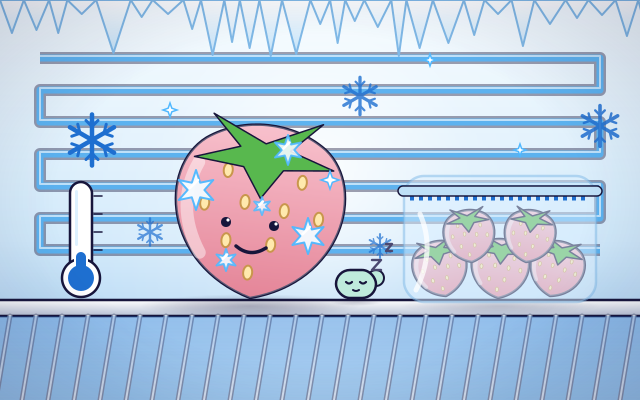
The interactive parts didn't load. The explanations below still work; try reloading the page.
How freezing keeps food
- Fresh strawberries are delicious, but in a few days they go soft and moldy. Tiny microbes are growing on them. How can we keep berries for months?
- Put the berries in the freezer. Heat flows out of the warm berries into the very cold air, and the freezer carries that heat away. The berries get colder and colder.
- Look inside the berry. It is made of tiny cells full of watery juice. Just below zero degrees, the water starts to lock into solid ice crystals. Soon the berry is hard.
- Microbes need liquid water and some warmth to grow. In frozen food they have neither, so they stop. Freezing does not kill most of them. It only pauses them.
- How fast food freezes matters. Slow freezing gives a few big crystals that poke through the cell walls. Fast freezing gives many tiny crystals, and the walls stay whole.
- When the berries thaw, the ice melts. The slowly frozen berry leaks juice and goes mushy. And the microbes wake up and start growing again, so thawed food should be eaten soon.
Look inside a freezer
Tap the parts of the freezer, then look at the close-up of a frozen strawberry.
- Cold coils. A very cold liquid flows through these pipes. It soaks up heat from the air inside the freezer and carries it to the outside.
- Fan. The fan pushes cold air over the food. Moving air takes heat away much faster than still air, so the food freezes sooner.
- Door seal. A soft rubber strip runs all around the door. It presses tight when the door shuts, keeping cold air in and warm, damp air out.
- Sealed bag. Freezer air is very dry and pulls water out of bare food, leaving pale, dry patches called freezer burn. A sealed bag with the air pressed out stops that.
- Ice crystals. The watery juice in each cell has turned into ice crystals. Small crystals fit inside the cells. Big ones poke through the walls.
- Sleeping microbes. Microbes on the berry cannot grow while it is frozen. Most are not killed. They wait, and they start growing again when the food thaws.
Freeze slowly or freeze fast?
Two strawberries: one is frozen slowly and one fast. Lower the temperature and watch the ice form in their cells. Then thaw them and compare.
Experiment: After thawing, which strawberry will be firmer?
- Lower the temperature to below zero. Compare the crystals in the two windows.
- Go all the way down to freezer cold. What do the microbes do?
- Now warm the berries back up. Which one leaks and goes mushy?
What we found: The berry frozen fast is firmer. Its ice crystals stayed tiny, so its cell walls are whole. In the slowly frozen berry, big crystals tore the walls, so juice leaks out when it thaws. In both, the microbes stopped while frozen and woke up again after thawing.
Turn on JavaScript to try it yourself.
Freeze the harvest
Freeze the strawberries so they stay firm, juicy and safe for months. Choose how to lay them out, how to wrap them and how cold to set the freezer.
Pressing pause on food
Food spoils for two main reasons. Tiny living things called microbes eat it, and the food's own chemistry slowly changes it. Both happen fastest when it is warm and wet. A fridge slows them down. A freezer nearly stops them.
A freezer is kept at about minus 18 degrees. At that temperature most of the water in food has turned to ice. Microbes need liquid water to live and grow, and they need some warmth. With neither, they stop. But they are not dead. When the food thaws, they wake up and carry on, which is why thawed food should be eaten soon and kept cold.
Freezing changes food too. Water gets a little bigger when it turns to ice. If food freezes slowly, the ice forms a few large crystals, and their sharp edges poke through the walls of the food's tiny cells. When the food thaws, the juice runs out and the food is soft and mushy. If food freezes quickly, the ice forms lots of tiny crystals instead, and the cells stay whole.
That is why frozen peas and berries from a factory are frozen in a blast of very cold air, in minutes. At home you can help by spreading food out in a thin layer and sealing it in a bag so the dry freezer air cannot dry it out. The pause-button comparison is nearly right, but not perfect: frozen food does still change very slowly, so it is best eaten within some months.
Key words
- Microbe
- A living thing too small to see without a microscope, such as a bacterium, a yeast or a mold.
- Ice crystal
- A solid piece of ice in which the water molecules are locked into a regular pattern.
- Dormant
- Alive but not active or growing, like a seed waiting in dry soil.
- Freezer burn
- Dry, pale patches on frozen food that was not wrapped well.
- Drip loss
- The juice that runs out of thawed food when its cells were damaged by ice.
- Blast freezing
- Freezing food very quickly in a stream of very cold, fast-moving air.
Check your thinking
-
What happens to microbes in frozen food?
Show the answer
They are paused, and they wake up when the food thaws. Freezing stops microbes from growing but does not kill most of them.
-
Why is a slowly frozen strawberry mushy after it thaws?
Show the answer
Big ice crystals tore its cell walls, so the juice leaks out. Slow freezing lets a few crystals grow big and sharp. They poke holes, and the juice runs out when the ice melts.
-
You have a big bag of fresh berries to freeze. What is the best way?
Show the answer
Spread them in a thin layer to freeze fast, then seal them in a bag. A thin layer freezes quickly, so the crystals stay small. The sealed bag keeps the dry freezer air from drying the berries.
-
Why wrap food tightly before freezing it?
Show the answer
So the dry freezer air cannot pull the water out of it. Bare food slowly loses its ice to the dry air, leaving pale, dry patches.
-
Frozen food is thawed and frozen again twice. In the model, what happens to its ice crystals?
Show the answer
They regrow larger each time, so more cells are damaged. Each cycle melts the smallest crystals and the water refreezes onto the larger ones.
You're a Food & farming expert!
You watched, looked inside, tried it, solved the challenge and went deeper. Pick another question below, or switch the age at the top to see this topic another way.
More about food & farming
 #291
Food & farming
How are pickles made?
Compare vinegar pickling and fermentation while exploring salt, acidity, and preservation.
#291
Food & farming
How are pickles made?
Compare vinegar pickling and fermentation while exploring salt, acidity, and preservation.
 #292
Food & farming
How does rice get from fields to our plates?
Follow harvesting, drying, husking, and optional polishing through a miniature processing line.
#292
Food & farming
How does rice get from fields to our plates?
Follow harvesting, drying, husking, and optional polishing through a miniature processing line.
 #293
Food & farming
How do potatoes grow underground?
Explore underground stems, developing tubers, and harvesting in a virtual potato bed.
#293
Food & farming
How do potatoes grow underground?
Explore underground stems, developing tubers, and harvesting in a virtual potato bed.
 #294
Food & farming
How does hydroponic farming work?
Grow plants with nutrient solution and compare ways to support roots without soil.
#294
Food & farming
How does hydroponic farming work?
Grow plants with nutrient solution and compare ways to support roots without soil.
Keep exploring
Games to play next
- Ratio KitchenScale recipes, fill ratio tables and find the better buy.
- Garden AutomationProgram a garden robot with sensor rules — then watch a whole day play out.
- Label LabPut the right labels on beautiful science diagrams, from bean plants to heart chambers.
Guide for grown-ups
- How to start homeschooling: a step-by-step guide for familiesA guide for parents · 7 min read
Science games by grade
Science worksheets by grade
- Preschool Science Worksheets
- Pre-K Science Worksheets
- Kindergarten Science Worksheets
- 1st Grade Science Worksheets
- 2nd Grade Science Worksheets
- 3rd Grade Science Worksheets
- 4th Grade Science Worksheets
- 5th Grade Science Worksheets
- 6th Grade Science Worksheets
- 7th Grade Science Worksheets
- 8th Grade Science Worksheets