How does drying preserve food?
Warm, moving air carries the water out of fruit. Without water, the microbes that spoil food cannot grow.
The big idea: The tiny living things that spoil food need water to grow. Drying takes most of the water out of food, so they cannot grow, and the food keeps for months.
It's like a pond drying up in summer: when the water goes into the air, the pond animals cannot live there until the water comes back.
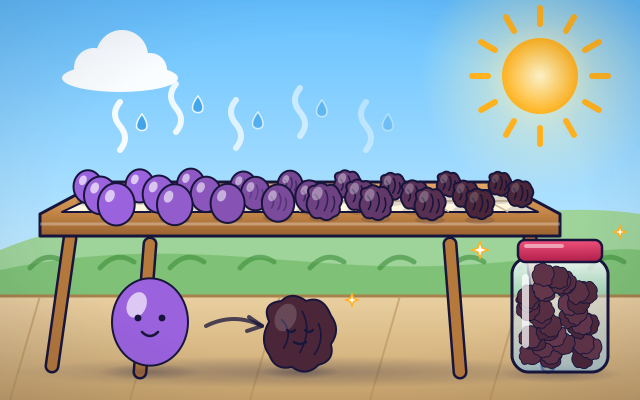
The interactive parts didn't load. The explanations below still work; try reloading the page.
How drying keeps food
- Fresh grapes are juicy and sweet. But leave them out for a week or two, and fuzzy mold starts to grow. Something has been eating them. What does it need?
- Look very closely at the grape's skin. Tiny microbes sit on it. A grape is mostly water, and microbes need water to live and grow, just as you do.
- A food dryer blows warm air across trays of fruit. Water at the surface of each grape turns into vapor, and the moving air carries it away. More water creeps out from the inside.
- Hour after hour the grape loses water. It shrinks and wrinkles into a raisin. The sugar stays behind, packed into a smaller space, so a raisin tastes even sweeter.
- A little water is still inside the raisin, but the sugar holds on to it tightly. The microbes cannot get it, so they stop growing. They are not gone. They are just waiting.
- Kept in a closed jar, the raisins stay good for months. The lid matters: if damp air gets in, the raisins soak up water and microbes can grow again.
Look inside a food dryer
Tap the parts of the dryer, then the close-up of a grape's skin. See how each one helps the water leave.
- Heater. The heater warms the air to about 55 degrees. Warm air can hold much more water vapor than cool air, so it dries the fruit faster.
- Fan. The fan pushes the warm air across every tray. Moving air sweeps away the damp air next to the fruit, so more water can leave.
- Mesh trays. The trays are made of mesh, full of holes. Air can reach the top and the bottom of every piece of fruit, spread out in a single layer.
- Vents. The air that has picked up water leaves through the vents. If it could not get out, the dryer would fill with damp air and the fruit would stop drying.
- Water in the fruit. A fresh grape is about four fifths water. As the surface dries, water from deeper inside moves outward to take its place.
- Skin. A grape's skin is waxy and keeps water in. That is good for the grape on the vine, but it slows drying. Cutting grapes in half lets water escape much faster.
Take the water out
Move the clock to dry the grapes for longer. Watch the water, the texture and the microbes on the skin. Then try it with the fan off.
Experiment: What happens to the microbes as the grape dries?
- Start at 0 hours. Look at the microbes in the round window.
- Move the clock forward a few hours at a time. Watch the water drops leave and the grape wrinkle.
- Go to the end. Then switch the fan off and compare.
What we found: As the water leaves, the microbes slow down and then stop growing. They need water, and a raisin has too little that they can use. With the fan off, the damp air stays around the grapes and drying takes far longer.
Turn on JavaScript to try it yourself.
Trail snack by tonight
You have 12 hours. Dry the grapes until they are safe to store, then put them in the jar. Jar them too early and mold can grow.
No water, no spoiling
Food spoils because tiny living things, called microbes, eat it. Molds, yeasts and bacteria are in the air, on your hands and on the skin of every fruit. On wet, sweet food they grow fast, and in a few days you can see fuzzy mold or smell that something is wrong.
Like all living things, microbes need water. They take in their food dissolved in water. Take the water away and they cannot eat or grow. That is the whole trick of drying: remove most of the water, and the microbes are stuck.
People have dried food in the sun and wind for thousands of years: grapes into raisins, plums into prunes, fish, meat, beans and grain. A food dryer does the same job faster with a heater and a fan. Warm air helps water turn into vapor, and moving air carries the vapor away. Thin pieces dry fastest, because the water does not have far to go.
A raisin is not completely dry. About one sixth of it is still water, but the sugar holds that water so tightly that microbes cannot use it. The microbes are not dead, only waiting. That is why dried food must be kept in a closed jar. The pond comparison only goes so far: a dried-up pond is empty, but a raisin still holds water that is simply out of reach.
Key words
- Microbe
- A living thing too small to see without a microscope, such as a bacterium, a yeast or a mold.
- Evaporation
- Liquid water turning into water vapor, a gas, and mixing into the air.
- Dehydrator
- A machine that dries food with gently heated, moving air.
- Moisture content
- How much of a food is water.
- Water activity
- A measure of how much of the water in a food microbes can actually use.
- Case hardening
- A hard, dry crust that forms when food is dried too hot, trapping water inside.
Check your thinking
-
Why does drying stop food from spoiling?
Show the answer
Microbes need water to grow, and dried food has too little they can use. Microbes take in food dissolved in water. With no water they can use, they stop growing.
-
Why does a food dryer have a fan?
Show the answer
Moving air carries the damp air away from the fruit. Water leaves the fruit into the air. If that damp air stays put, drying slows right down.
-
Why should dried fruit be kept in a closed jar?
Show the answer
So it cannot soak up water from damp air. Dried food pulls water out of damp air. With water back, the waiting microbes can grow again.
-
Which will dry fastest?
Show the answer
Grapes cut in half, in warm moving air. Cutting opens the skin, warmth helps water evaporate, and moving air carries it away.
-
On a very humid day, grapes in a dryer level off at 25 percent moisture and will not go lower. Why?
Show the answer
The fruit has reached equilibrium with the damp air. Food dries only until its moisture balances the humidity of the air around it. Damper air means a higher final moisture.
You're a Food & farming expert!
You watched, looked inside, tried it, solved the challenge and went deeper. Pick another question below, or switch the age at the top to see this topic another way.
More about food & farming
 #290
Food & farming
How does freezing preserve food?
Follow ice formation and compare changes in microbial activity and food texture.
#290
Food & farming
How does freezing preserve food?
Follow ice formation and compare changes in microbial activity and food texture.
 #291
Food & farming
How are pickles made?
Compare vinegar pickling and fermentation while exploring salt, acidity, and preservation.
#291
Food & farming
How are pickles made?
Compare vinegar pickling and fermentation while exploring salt, acidity, and preservation.
 #292
Food & farming
How does rice get from fields to our plates?
Follow harvesting, drying, husking, and optional polishing through a miniature processing line.
#292
Food & farming
How does rice get from fields to our plates?
Follow harvesting, drying, husking, and optional polishing through a miniature processing line.
 #293
Food & farming
How do potatoes grow underground?
Explore underground stems, developing tubers, and harvesting in a virtual potato bed.
#293
Food & farming
How do potatoes grow underground?
Explore underground stems, developing tubers, and harvesting in a virtual potato bed.
Keep exploring
Games to play next
- Ratio KitchenScale recipes, fill ratio tables and find the better buy.
- Garden AutomationProgram a garden robot with sensor rules — then watch a whole day play out.
- Label LabPut the right labels on beautiful science diagrams, from bean plants to heart chambers.
Guide for grown-ups
- How to start homeschooling: a step-by-step guide for familiesA guide for parents · 7 min read
Science games by grade
Science worksheets by grade
- Preschool Science Worksheets
- Pre-K Science Worksheets
- Kindergarten Science Worksheets
- 1st Grade Science Worksheets
- 2nd Grade Science Worksheets
- 3rd Grade Science Worksheets
- 4th Grade Science Worksheets
- 5th Grade Science Worksheets
- 6th Grade Science Worksheets
- 7th Grade Science Worksheets
- 8th Grade Science Worksheets