How is butter made?
Churning bashes the tiny fat balls in cream until they stick together as butter and leave thin buttermilk behind.
The big idea: Cream is watery liquid packed with tiny balls of fat, each wrapped in a thin skin. Churning breaks the skins, so the fat sticks together into butter and squeezes the liquid out.
It's like shaking tiny sticky clay balls in a jar of water: every bump makes more of them stick, until there is one big lump and the water is left over.
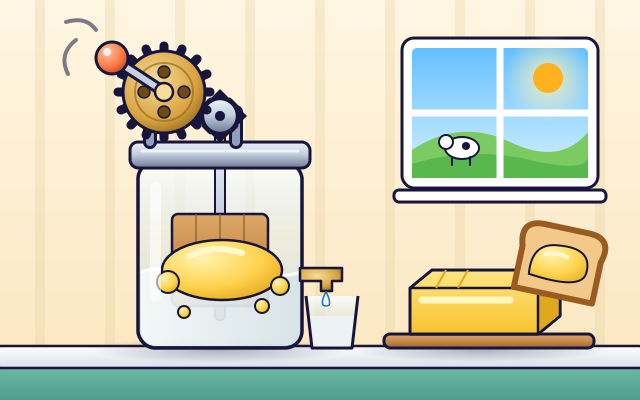
The interactive parts didn't load. The explanations below still work; try reloading the page.
From cream to butter
- Leave fresh milk to stand and a thick layer floats to the top. That is cream, the part of milk with the most fat. Butter is made from it.
- Zoom in and cream is full of tiny balls of fat floating in watery liquid. Each ball has a thin skin around it. The skins stop the balls from sticking together.
- To make butter, cream goes into a churn. Turning the crank spins paddles that beat the cream over and over, smashing the fat balls into each other.
- The beating tears the skins and stirs in air. The sticky fat balls gather around the air bubbles and hold them. That is whipped cream: thick and fluffy.
- Keep churning and the foam suddenly collapses. The fat balls clump into yellow grains of butter, and the watery liquid, called buttermilk, is squeezed out.
- The buttermilk is poured off and the butter is rinsed and pressed to squeeze out the last drops. Now it is a smooth block, ready to spread.
Look inside a butter churn
Tap the parts of the churn, then look in the magnifying glass at one tiny ball of fat.
- Crank handle. You turn the crank with your hand. Your pushing is what makes the whole churn work.
- Gears. A big gear on the crank turns a small gear on the paddle shaft. One turn of your hand gives the paddles more than two turns.
- Paddles. The wooden paddles spin through the cream. They shove it around and smash the tiny fat balls into each other.
- Butter grains. These yellow lumps are butter grains: millions of fat balls that have stuck together. They float because fat is lighter than water.
- Buttermilk. The thin liquid left behind is buttermilk. It is the watery part of the cream, with most of the fat taken out.
- Fat globule. This is one ball of milk fat, shown thousands of times bigger than real life. A drop of cream holds millions of them.
- Thin skin. A very thin skin wraps each fat ball. It stops the balls from sticking, so cream stays smooth. Churning tears it open.
Churn cream into butter
Drag the crank to churn the cream. Watch the jar and the magnifying glass. What happens first, and what happens if you keep going?
Experiment: The cream has turned into fluffy whipped cream. What happens if you keep churning?
- Drag the crank, or press Churn, until the cream is thick and fluffy.
- Keep churning. Watch the fat balls in the magnifying glass.
- Look at what is left in the jar at the end.
What we found: First the cream whips: sticky fat balls hold air bubbles. Keep going and the foam breaks. The fat sticks together as yellow butter, and thin buttermilk is left behind.
Turn on JavaScript to try it yourself.
Two orders
First make whipped cream for the cake: stop churning when it is fluffy. Then make butter for the bread and pour off the buttermilk.
How churning makes butter
Milk and cream look smooth, but they are mixtures. Most of milk is water. Floating in it are millions of tiny balls of fat, far too small to see. Fat is lighter than water, so if fresh milk stands still, the fat balls drift to the top and make a thick layer. That layer is cream.
Fat and water do not like to mix. So why does cream stay smooth? Each fat ball is wrapped in a very thin skin that gets along with water. The skins keep the balls apart, like slippery raincoats.
Churning means beating the cream hard for a long time. The fat balls crash together and their skins tear. Bare fat is sticky, so the balls start to cling. At first they cling around air bubbles and the cream turns thick and fluffy: whipped cream. Keep going and the clumps grow so big that the bubbles pop. Suddenly there are yellow grains of butter floating in thin liquid, the buttermilk.
Butter makers pour off the buttermilk, rinse the grains in cold water and press them into a block. The clay ball comparison is close, but not perfect: real fat balls are wrapped in skins that have to be broken first, which is why cream can sit in the fridge for days without turning into butter.
Key words
- Cream
- The part of milk with the most fat. It floats to the top of fresh milk.
- Churn
- To beat cream until it turns into butter, or the machine that does it.
- Fat globule
- A tiny ball of fat floating in milk or cream.
- Buttermilk
- The thin liquid left over when cream is churned into butter.
- Emulsion
- A smooth mix of two liquids that do not normally mix, like fat and water in cream.
- Membrane
- A very thin skin, like the one around each fat ball.
Check your thinking
-
Which part of milk is butter made from?
Show the answer
The cream, which is full of fat. Butter is the fat from cream, stuck together into a solid lump.
-
Why can cream sit in the fridge for days without turning into butter?
Show the answer
Each fat ball has a thin skin that stops it sticking to the others. The skins keep the fat balls apart. Only hard beating tears the skins so the fat can stick.
-
You are whipping cream for a cake and you keep beating for too long. What happens?
Show the answer
It breaks into lumps of butter and thin liquid. Whipped cream is a step on the way to butter. More beating makes the fat stick into lumps and lets the liquid out.
-
Why do butter grains float on the buttermilk?
Show the answer
Fat is lighter than water. Fat is less dense than water. That is also why cream rises to the top of milk.
-
Cream is fat droplets in water. What is butter?
Show the answer
Water droplets trapped in fat. Churning inverts the emulsion. In butter the fat is the continuous material and a small amount of water is trapped in it as tiny droplets.
-
Light cream has much less fat than heavy cream. What would you expect when you churn it?
Show the answer
It takes far longer, because the fat balls are far apart and rarely meet. With fewer fat balls, they bump into each other less often, so they seldom stick, and there is less fat to make butter from.
You're a Food & farming expert!
You watched, looked inside, tried it, solved the challenge and went deeper. Pick another question below, or switch the age at the top to see this topic another way.
More about food & farming
 #278
Food & farming
How is tofu made?
Follow soybeans through soaking, grinding, heating, coagulation, and pressing.
#278
Food & farming
How is tofu made?
Follow soybeans through soaking, grinding, heating, coagulation, and pressing.
 #279
Food & farming
How is fruit juice made?
Run fruit through sorting, washing, crushing, pressing, and packaging.
#279
Food & farming
How is fruit juice made?
Run fruit through sorting, washing, crushing, pressing, and packaging.
 #280
Food & farming
How is olive oil made?
Follow olives through cleaning, crushing, mixing, and separation into oil and other material.
#280
Food & farming
How is olive oil made?
Follow olives through cleaning, crushing, mixing, and separation into oil and other material.
 #281
Food & farming
How is sugar made from plants?
Extract juice from cane or beets and explore purification, concentration, and crystallization.
#281
Food & farming
How is sugar made from plants?
Extract juice from cane or beets and explore purification, concentration, and crystallization.
Keep exploring
Games to play next
- Ratio KitchenScale recipes, fill ratio tables and find the better buy.
- Garden AutomationProgram a garden robot with sensor rules — then watch a whole day play out.
- Label LabPut the right labels on beautiful science diagrams, from bean plants to heart chambers.
Guide for grown-ups
- How to start homeschooling: a step-by-step guide for familiesA guide for parents · 7 min read
Science games by grade
Science worksheets by grade
- Preschool Science Worksheets
- Pre-K Science Worksheets
- Kindergarten Science Worksheets
- 1st Grade Science Worksheets
- 2nd Grade Science Worksheets
- 3rd Grade Science Worksheets
- 4th Grade Science Worksheets
- 5th Grade Science Worksheets
- 6th Grade Science Worksheets
- 7th Grade Science Worksheets
- 8th Grade Science Worksheets