How is fruit juice made?
Fruit is sorted, washed, crushed and pressed to let its juice out, then the juice is sealed in bottles.
The big idea: A fruit is made of millions of tiny bags of juice. Crushing breaks the bags open, and pressing pushes the juice out, leaving the skins and seeds behind.
It's like wringing out a wet towel: the harder you squeeze, the more runs out. Chopped-up fruit lets go of its juice far more easily than whole fruit.
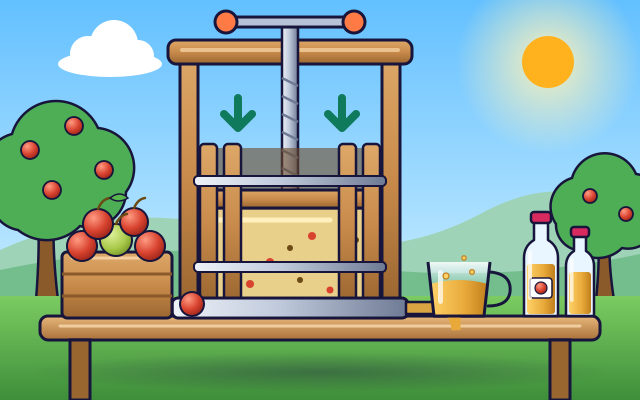
The interactive parts didn't load. The explanations below still work; try reloading the page.
From orchard to bottle
- Ripe apples are picked in the orchard. An apple feels solid, but most of it is water, hidden inside as juice.
- At the factory the fruit rides along a belt. Rotten fruit, leaves and twigs are taken out, so only good fruit goes on.
- Next the fruit is washed. Sprays of water and spinning brushes scrub away soil, dust and anything else stuck to the skin.
- A mill with spinning teeth crushes the clean apples into a wet mush called mash. Crushing breaks open the tiny bags that hold the juice.
- The mash is wrapped in cloth and squeezed in a press. Juice runs through the cloth. The skins, seeds and pulp stay behind as a dry cake.
- The juice is heated for a short time to stop germs from spoiling it. Then machines fill clean bottles and seal them tight.
Inside a juice factory
Follow the fruit from left to right. Tap each machine to see its job.
- Sorter. A camera looks at every fruit. When it spots a rotten one, a paddle flicks it off the belt into a bin.
- Washer. Jets of water and spinning brushes clean every fruit. The dirty water drains away underneath.
- Mill. Fruit drops into the hopper on top. Toothed rollers grab it and crush it into mash.
- Press. A heavy plate pushes down on mash wrapped in cloth. Juice flows out through the cloth and runs to a tank.
- Pasteurizer. The juice flows through hot pipes for a short time. The heat stops germs, so the juice stays fresh for longer.
- Filler. A nozzle fills each clean bottle with the same amount of juice. Then a cap is screwed on tight.
Whole or crushed?
Both presses hold the same apples. Crush the apples in the right-hand press, then pull the pump handle down. The same push squeezes both. Which jug fills?
Experiment: Which gives more juice: whole apples, or apples that are crushed first?
- Tap the apples in the right-hand press to crush them into mash.
- Drag the pump handle down, or move the pressure slider.
- Compare the two jugs and look at what is left in each basket.
What we found: The crushed apples gave far more juice. In a whole apple the juice is locked inside tiny cells, and squeezing mostly just dents it. Crushing breaks the cells open, so the press can push the juice out.
Turn on JavaScript to try it yourself.
Put the machines in order
Five machines, one right order. Tap them into place so muddy apples come out as bottles of juice, then run the line.
Where the juice hides
Bite an apple and juice runs down your chin. But before the bite, where was the juice? An apple is built from millions of tiny cells, a bit like very small water balloons packed tightly together. Each one has a thin wall with juice inside. That is why an apple can be mostly water and still feel firm.
To make juice, you have to break the cells open. That is the crusher's job. Its spinning teeth tear the fruit into mash, and juice spills out of every broken cell. If you put whole apples in a press, they would just get dented, and hardly any juice would come out.
Then the press squeezes the mash inside a strong cloth. The cloth works like a strainer. Juice goes through it. Skins, seeds and pulp cannot. Squeezing harder gets more juice, but only up to a point, because the last drops cling to the pulp.
Fresh juice does not keep for long. Tiny living things, too small to see, would soon spoil it. So the juice is heated for a short time, which stops them, and then sealed in clean bottles. Oranges are handled a little differently: machines cut them in half and squeeze each half, so the bitter peel stays out of the juice.
Key words
- Cell
- A tiny building block of living things. In fruit, each cell is like a little bag of juice.
- Mash
- Fruit that has been crushed into a wet mush, ready for pressing.
- Press
- A machine that squeezes mash so the juice runs out.
- Pomace
- The dry cake of skins, seeds and pulp left after pressing.
- Pasteurize
- To heat a drink for a short time so germs cannot spoil it.
- Yield
- How much juice you get from a given amount of fruit.
Check your thinking
-
Where is the juice before an apple is crushed?
Show the answer
Locked inside the apple's tiny cells. An apple is made of millions of cells, and each one holds a little juice.
-
Why is the fruit washed before it is crushed, not after?
Show the answer
After crushing, the dirt would already be mixed into the mash. The whole fruit, skin and all, goes into the crusher. Anything left on the skin would end up in the juice.
-
You press a basket of whole apples as hard as you can. What happens?
Show the answer
Hardly any juice comes out, because the cells are not broken. Whole apples keep their juice locked in. They need crushing first.
-
What is left in the press cloth after pressing?
Show the answer
A dry cake of skins, seeds and pulp. The cloth lets juice through and holds back the solid bits, called pomace.
-
Why is juice heated for a short time before it is bottled?
Show the answer
To stop germs from spoiling it. Heat stops the tiny living things that would make the juice go bad.
You're a Food & farming expert!
You watched, looked inside, tried it, solved the challenge and went deeper. Pick another question below, or switch the age at the top to see this topic another way.
More about food & farming
 #280
Food & farming
How is olive oil made?
Follow olives through cleaning, crushing, mixing, and separation into oil and other material.
#280
Food & farming
How is olive oil made?
Follow olives through cleaning, crushing, mixing, and separation into oil and other material.
 #281
Food & farming
How is sugar made from plants?
Extract juice from cane or beets and explore purification, concentration, and crystallization.
#281
Food & farming
How is sugar made from plants?
Extract juice from cane or beets and explore purification, concentration, and crystallization.
 #282
Food & farming
How is maple syrup made?
Collect virtual sap and follow filtering and evaporation as it becomes concentrated.
#282
Food & farming
How is maple syrup made?
Collect virtual sap and follow filtering and evaporation as it becomes concentrated.
 #283
Food & farming
How does fruit become jam?
Combine fruit, sugar, and pectin and observe thickening as the mixture cools.
#283
Food & farming
How does fruit become jam?
Combine fruit, sugar, and pectin and observe thickening as the mixture cools.
Keep exploring
Games to play next
- Ratio KitchenScale recipes, fill ratio tables and find the better buy.
- Garden AutomationProgram a garden robot with sensor rules — then watch a whole day play out.
- Label LabPut the right labels on beautiful science diagrams, from bean plants to heart chambers.
Guide for grown-ups
- How to start homeschooling: a step-by-step guide for familiesA guide for parents · 7 min read
Science games by grade
Science worksheets by grade
- Preschool Science Worksheets
- Pre-K Science Worksheets
- Kindergarten Science Worksheets
- 1st Grade Science Worksheets
- 2nd Grade Science Worksheets
- 3rd Grade Science Worksheets
- 4th Grade Science Worksheets
- 5th Grade Science Worksheets
- 6th Grade Science Worksheets
- 7th Grade Science Worksheets
- 8th Grade Science Worksheets