How does canned food stay fresh?
Follow corn through a cannery and discover why heat plus a tight seal keeps food good for years.
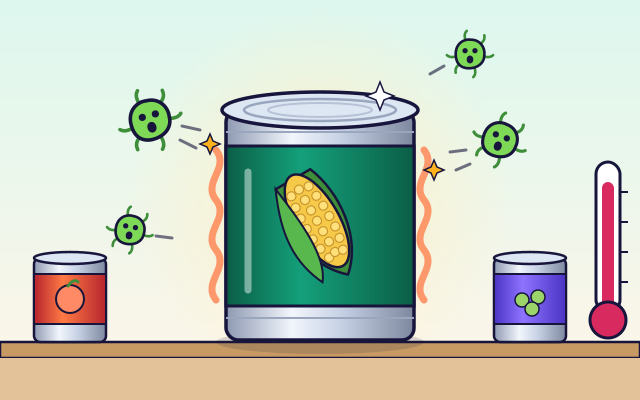
The big idea: Food spoils when microbes such as bacteria, yeasts and molds grow in it. Canning seals food in an airtight can, then heats it hot enough and long enough to destroy the microbes inside. Nothing new can get in, so the food stays good for years.
It's like
The interactive parts didn't load. The explanations below still work; try reloading the page.
Inside a cannery
- Microbes are living things too small to see. Bacteria, yeasts and molds float in the air and land on food. They eat it and multiply, and the food spoils.
- At a cannery, fresh corn is washed to remove dirt and many microbes. Machines cut the kernels off the cob, and a quick dip in hot water called blanching prepares them.
- The kernels are poured into cans and topped with hot, salty water. A small gap is left at the top, called headspace, because food swells when it is heated.
- A lid is placed on top, and rollers curl the edges of the lid and can together into a double seam. It is airtight: no air, water or microbes can get in.
- The sealed cans are heated in a giant pressure cooker called a retort. It gets hotter than boiling water, which destroys even the toughest microbes inside.
- The cans are cooled quickly. As the steam inside cools, it shrinks and pulls the lid in a little: a vacuum. Labeled and stacked, the food stays good for years.
Step through the canning line
Follow the corn along the factory line. Press Next to visit each station.
- 1. Wash. Sprays of water wash away dirt, leaves and many of the microbes on the corn.
- 2. Cut and blanch. Spinning blades cut the kernels off the cob. A quick dip in hot water, called blanching, stops the corn from changing color and taste.
- 3. Fill. Machines fill each can with the same amount of corn, very quickly.
- 4. Add brine. Hot, salty water fills the gaps between kernels. A little space, called headspace, is left at the top.
- 5. Seal. Rollers fold the edges of the lid and the can around each other into a double seam. It is airtight.
- 6. Heat in the retort. Sealed cans are heated in a retort, a giant pressure cooker, hotter than boiling water. This destroys the microbes inside, even the tough ones.
- 7. Cool and label. The cans are cooled with clean water, labeled and packed. The lid is pulled in a little by a vacuum inside.
Microbe lab: lid and heat
Choose a food, a heat level and whether the lid is on. Press Heat it, then Store for a year. Which combination keeps the food fresh?
Experiment: What keeps canned food fresh for a long time?
- Try heating with the lid off, then store it.
- Try the lid on with no heat, then store it.
- Now try both together. What happens?
What we found: You need both! Heat destroys the microbes already inside, and the sealed lid stops new ones getting in. With only one of them, microbes win and the food spoils.
Turn on JavaScript to try it yourself.
Run the cannery
Process three foods so they are safe and still tasty. Choose the cooker and the time for each one. Too little heat is unsafe; too much makes the food mushy.
Why heat and a seal beat microbes
Microbes are everywhere: in the air, in soil, on our hands. Most are harmless, and many are helpful, like the yeast in bread. But some make food spoil, and a few can make people sick. To grow, they need water, food and the right temperature, and food gives them all three.
People have long tried to stop microbes: drying food, salting it, smoking it, or keeping it cold. In 1810, a French cook named Nicolas Appert found that food sealed in glass bottles and boiled would keep for months. He didn't know about microbes yet; that came about fifty years later from Louis Pasteur.
Canning works in two steps. First the can is sealed so that no new microbes can get in. Then it is heated so that the microbes already inside are destroyed. If either step fails, microbes can grow, and the gas they make can push the lid out. That's why you should never eat food from a can that bulges, leaks or spurts when opened.
Some bacteria make spores: tiny, tough sleeping forms that survive boiling. They cannot grow in acidic foods like peaches or tomatoes, so those can be heated in boiling water. Foods that are not acidic, like corn, beans and soup, are heated in a pressure cooker that gets much hotter than boiling.
Key words
- Microbe
- A living thing too small to see without a microscope, such as a bacterium, yeast or mold.
- Spore
- A tough, sleeping form some bacteria make. It can survive boiling.
- Hermetic seal
- An airtight seal that keeps out air, water and microbes.
- Retort
- A giant pressure cooker used to heat sealed cans above 100 degrees Celsius.
- D-value
- How long it takes heat to wipe out 9 of every 10 microbes.
- Low-acid food
- A food with pH above 4.6, such as corn, beans, meat or soup, which must be pressure-processed.
Check your thinking
-
What does the sealed lid do?
Show the answer
Stops new microbes from getting in. Heat gets rid of the microbes inside; the seal keeps new ones out.
-
Why are cans heated after they are sealed?
Show the answer
To destroy the microbes inside. Heat destroys the microbes that were already in the food when it was sealed.
-
You find a can with a bulging lid. What should you do?
Show the answer
Don't eat it; tell a grown-up. A bulge can mean microbes are growing inside. Never eat it.
-
Why can peaches be canned in boiling water, but corn needs a pressure cooker?
Show the answer
Spores can't grow in acidic peaches. Peaches are acidic, and the tough spore-forming bacteria can't grow in acid.
-
What do microbes need to grow in food?
Show the answer
Water, food and warmth. With water, food and a comfortable temperature, microbes multiply fast.
You're a Food & farming expert!
You watched, looked inside, tried it, solved the challenge and went deeper. Pick another question below, or switch the age at the top to see this topic another way.
More about food & farming
 #29
Food & farming
How do greenhouses help plants grow?
Manage sunlight, ventilation, temperature, and water in a virtual greenhouse. Grow a crop while responding to changing outdoor conditions.
#29
Food & farming
How do greenhouses help plants grow?
Manage sunlight, ventilation, temperature, and water in a virtual greenhouse. Grow a crop while responding to changing outdoor conditions.
 #30
Food & farming
How does a combine harvester work?
Look inside the machine as it cuts a crop, separates grain, and stores it. Drive across a field and follow the material's journey.
#30
Food & farming
How does a combine harvester work?
Look inside the machine as it cuts a crop, separates grain, and stores it. Drive across a field and follow the material's journey.
 #276
Food & farming
How is yogurt made?
Follow helpful bacteria changing milk and compare simulated fermentation conditions.
#276
Food & farming
How is yogurt made?
Follow helpful bacteria changing milk and compare simulated fermentation conditions.
 #277
Food & farming
How is butter made?
Churn virtual cream and watch fat gather and separate from the remaining liquid.
#277
Food & farming
How is butter made?
Churn virtual cream and watch fat gather and separate from the remaining liquid.
Keep exploring
Games to play next
- Ratio KitchenScale recipes, fill ratio tables and find the better buy.
- Garden AutomationProgram a garden robot with sensor rules — then watch a whole day play out.
- Label LabPut the right labels on beautiful science diagrams, from bean plants to heart chambers.
Guide for grown-ups
- How to start homeschooling: a step-by-step guide for familiesA guide for parents · 7 min read
Science games by grade
Science worksheets by grade
- Preschool Science Worksheets
- Pre-K Science Worksheets
- Kindergarten Science Worksheets
- 1st Grade Science Worksheets
- 2nd Grade Science Worksheets
- 3rd Grade Science Worksheets
- 4th Grade Science Worksheets
- 5th Grade Science Worksheets
- 6th Grade Science Worksheets
- 7th Grade Science Worksheets
- 8th Grade Science Worksheets