How is yogurt made?
Helpful bacteria eat the sugar in warm milk and make an acid that turns the milk thick and tangy.
The big idea: Yogurt bacteria eat milk sugar and give off a sour acid. The acid makes milk proteins stick together into a soft net that holds the water, so runny milk turns thick.
It's like bread dough rising: tiny living helpers eat sugar and change the food. In bread they make bubbles. In yogurt they make a sour juice that thickens milk.
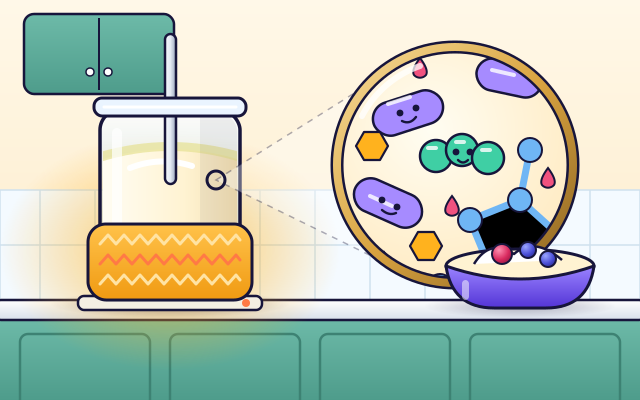
The interactive parts didn't load. The explanations below still work; try reloading the page.
From milk to yogurt
- Milk pours like water, but yogurt is thick enough to sit on a spoon. Yogurt is made from milk. So what changes it?
- First the milk is heated until it steams. That clears out unwanted germs and gets the milk proteins ready. Then it cools until it is cozy warm.
- Next, a spoonful of yogurt is stirred in. It is called the starter, because it carries millions of living yogurt bacteria, far too small to see.
- In the warm milk the bacteria eat milk sugar, called lactose. They give off a sour acid, and each one splits in two, again and again.
- The acid changes the milk proteins. They stop floating apart and stick together into a soft net. The net holds the water still, so the milk sets.
- After a few hours the yogurt is thick and tangy. Into the fridge it goes. The cold slows the bacteria, so it does not get too sour.
Zoom into a jar of yogurt
Tap the jar and the things inside the magnifying glass. Each one does something when you find it.
- Warm yogurt maker. A yogurt maker is just a gentle heater. It keeps the milk cozy warm for hours, which is how yogurt bacteria work fastest.
- Yogurt bacteria. These living things are yogurt bacteria. A single one is far too small to see, but a spoonful of yogurt holds millions of them.
- Milk sugar. Milk has its own sugar, called lactose. It makes milk taste a little sweet, and it is the bacteria's food.
- Lactic acid. When bacteria eat milk sugar they give off lactic acid. It is what makes yogurt taste tangy, and it is the signal that makes milk thicken.
- Milk proteins. Milk is full of tiny protein clusters. In fresh milk they push each other away and float freely, which is why milk is runny.
- Protein net. When enough acid has built up, the proteins stick together in long chains and make a soft net. The net holds the water in place, so the milk sets.
- Whey. The watery liquid that sometimes sits on top of yogurt is whey. It is water squeezed out of the protein net, and it is fine to stir back in.
Three jars, three temperatures
Each jar got the same milk and the same spoonful of starter. Only the temperature is different. Let time pass and compare the jars.
Experiment: Which jar of milk will turn into thick yogurt?
- Tap the clock, or drag the time slider, to let the hours pass.
- Look in the magnifying circles. What are the bacteria doing in each jar?
- Tap each jar to test it with the spoon.
What we found: Only the cozy warm jar turned thick. On ice the bacteria are alive but almost asleep, so nothing changes. In the very hot jar the heat stops the bacteria for good. Warm is just right.
Turn on JavaScript to try it yourself.
Yogurt for breakfast
Make thick yogurt. Choose how warm to keep the jar, start the clock, and chill it when it is thick but not too sour.
How bacteria thicken milk
Milk looks simple, but it is a busy mixture. Most of it is water. Floating in the water are tiny drops of fat, a sugar called lactose and billions of little clusters of protein. In fresh milk the protein clusters push away from each other, so everything slides around freely and the milk pours.
Yogurt makers add living helpers: yogurt bacteria. They are stirred into warm milk in a spoonful of old yogurt, called the starter. The bacteria eat the lactose. As they eat, they give off lactic acid, and they grow and split in two again and again. More bacteria make more acid.
The acid is the key. When enough of it builds up, the protein clusters stop pushing each other away. They stick together in chains, and the chains join into a soft net that fills the whole jar. The water is caught in the net and cannot flow. That is why yogurt is thick, and the acid is why it tastes tangy.
Temperature matters because the bacteria are alive. Cozy warm milk, about as warm as a bath, is where they work fastest. In the fridge they slow almost to a stop, which is how finished yogurt stays fresh. Very hot milk stops them for good. Our bread dough comparison is not perfect: yeast in dough makes gas bubbles, while yogurt bacteria make acid and no bubbles at all.
Key words
- Bacteria
- Tiny living things made of one cell. Many kinds are helpful.
- Fermentation
- When tiny living things change a food, as bacteria change milk into yogurt.
- Lactose
- The natural sugar in milk.
- Lactic acid
- The sour substance yogurt bacteria make. It gives yogurt its tang.
- Starter
- A little live yogurt, or a culture of the same bacteria, added to milk to begin a new batch.
- pH
- A number that tells how sour (acidic) something is. Lower means more sour.
- Gel
- A soft solid, like jelly or yogurt, where a net holds water still.
Check your thinking
-
What turns milk into yogurt?
Show the answer
Helpful bacteria eating milk sugar. Yogurt bacteria eat lactose and make lactic acid, and the acid thickens the milk.
-
A jar of milk with starter is left in the fridge overnight. What will you find in the morning?
Show the answer
Still runny milk, because cold bacteria work very slowly. In the cold the bacteria are alive but almost asleep, so they make hardly any acid and the milk stays runny.
-
Why does yogurt taste tangy?
Show the answer
The bacteria made lactic acid. Lactic acid, made by the bacteria as they eat milk sugar, is what tastes sour.
-
What does the acid do to the proteins in milk?
Show the answer
It makes them stick together into a net. With acid around them the proteins stop pushing apart and join into a net that holds the water still.
-
In a warm jar the milk seems to do nothing for hours and then sets quite quickly. Why?
Show the answer
The bacteria keep doubling, so acid builds up slowly at first and then fast. Each division doubles the number of cells making acid. A few cells make little acid; millions make a lot, and the pH then drops quickly through the point where the gel forms.
-
Why is finished yogurt kept in the fridge?
Show the answer
Cold slows the bacteria, so it does not get too sour. In the cold the bacteria almost stop making acid, so the yogurt keeps its taste for longer.
You're a Food & farming expert!
You watched, looked inside, tried it, solved the challenge and went deeper. Pick another question below, or switch the age at the top to see this topic another way.
More about food & farming
 #277
Food & farming
How is butter made?
Churn virtual cream and watch fat gather and separate from the remaining liquid.
#277
Food & farming
How is butter made?
Churn virtual cream and watch fat gather and separate from the remaining liquid.
 #278
Food & farming
How is tofu made?
Follow soybeans through soaking, grinding, heating, coagulation, and pressing.
#278
Food & farming
How is tofu made?
Follow soybeans through soaking, grinding, heating, coagulation, and pressing.
 #279
Food & farming
How is fruit juice made?
Run fruit through sorting, washing, crushing, pressing, and packaging.
#279
Food & farming
How is fruit juice made?
Run fruit through sorting, washing, crushing, pressing, and packaging.
 #280
Food & farming
How is olive oil made?
Follow olives through cleaning, crushing, mixing, and separation into oil and other material.
#280
Food & farming
How is olive oil made?
Follow olives through cleaning, crushing, mixing, and separation into oil and other material.
Keep exploring
Games to play next
- Ratio KitchenScale recipes, fill ratio tables and find the better buy.
- Garden AutomationProgram a garden robot with sensor rules — then watch a whole day play out.
- Label LabPut the right labels on beautiful science diagrams, from bean plants to heart chambers.
Guide for grown-ups
- How to start homeschooling: a step-by-step guide for familiesA guide for parents · 7 min read
Science games by grade
Science worksheets by grade
- Preschool Science Worksheets
- Pre-K Science Worksheets
- Kindergarten Science Worksheets
- 1st Grade Science Worksheets
- 2nd Grade Science Worksheets
- 3rd Grade Science Worksheets
- 4th Grade Science Worksheets
- 5th Grade Science Worksheets
- 6th Grade Science Worksheets
- 7th Grade Science Worksheets
- 8th Grade Science Worksheets