How does a combine harvester work?
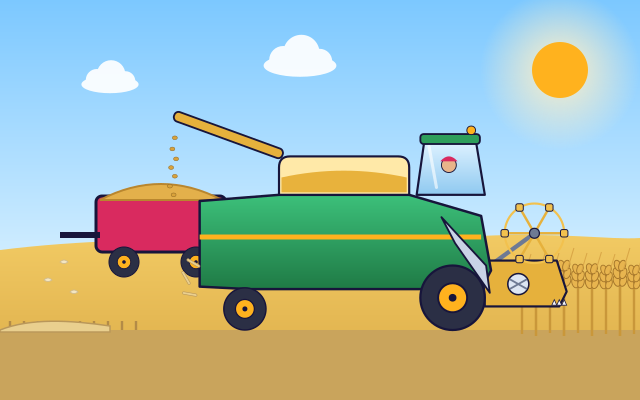
A combine harvester does three jobs at once: it cuts the crop, separates the grain and cleans it, then stores it in a tank.
The big idea: A combine combines several jobs. It cuts the wheat, knocks the grain loose from the heads, then uses shaking and a blowing fan to separate heavy grain from light straw and chaff. The clean grain goes up into a tank; the straw drops out the back.
It's like
The interactive parts didn't load. The explanations below still work; try reloading the page.
Inside a combine harvester
- When the wheat is ripe and dry, a combine harvester drives through the field. In one trip it does the jobs that once took many people days.
- At the front, the reel turns and gently pushes the stalks toward the cutter bar. Its knives slide back and forth like scissors and cut the stalks. An auger gathers them into the middle.
- A moving belt carries the crop up to the threshing drum. The drum spins fast and rubs the heads against a curved grate, knocking the grain loose. Grain falls through; straw moves on.
- The straw jiggles out the back on shaking walkers. The grain falls onto shaking sieves while a fan blows air through them. Light chaff flies away; heavy grain drops through.
- An auger and an elevator carry the clean grain up into the grain tank on top of the combine. The driver can see it filling up through a window.
- When the tank is full, a long pipe swings out and an auger pours the grain into a trailer, often while both keep driving. Behind, the straw lies in rows or is chopped and spread.
Cutaway of a combine harvester
This combine is cut open. Tap each part to see what it does. They move when you find them!
- Reel. The reel's bars turn round and gently push the stalks back toward the cutter bar, so they fall the right way.
- Cutter bar. A long row of triangle knives slides back and forth very fast, cutting the stalks like a huge pair of scissors.
- Feeder house. Chains with bars drag the cut crop up a slope and into the combine, toward the threshing drum.
- Threshing drum. The drum spins fast and rubs the wheat heads against a curved metal grate called the concave. The grain pops out and falls through the holes.
- Straw walkers. Long, bumpy shakers jiggle the straw toward the back. Any grain still hiding in the straw falls through.
- Sieves. Two shaking sieves sit one above the other. Grain falls through the holes; bigger bits slide off the back.
- Cleaning fan. A fan blows air up through the sieves. Light chaff is carried away out the back, but heavy grain falls down.
- Grain tank. An elevator lifts the clean grain into the big tank on top. It can hold several tonnes of wheat.
- Unloading auger. A long pipe with a screw inside swings out and pours the grain from the tank into a trailer.
- Straw spreader. At the back, the straw either drops in a neat row to be baled, or spinning blades chop it and spread it over the field.
Drive and adjust the fan
Drive across the field. Change your speed and the cleaning fan. Watch where grain, chaff and straw go, and how much grain is lost out the back.
Experiment: What happens if the cleaning fan blows too hard?
- Drive at a medium speed with a gentle fan. Look in the tank: is it dusty?
- Turn the fan up to medium. Is the grain cleaner now?
- Turn the fan up as high as it goes. Watch the back of the combine.
What we found: A gentle fan leaves dusty chaff in the grain. A medium fan blows the light chaff away while the heavy grain falls through: just right. Too strong, and the air blows grain out the back too!
Turn on JavaScript to try it yourself.
Beat the rain
Harvest the whole field before the rain arrives. Fix the fan, slow down in thick wheat, and unload when the tank is full. Fewer lost kernels earn more stars.
Why it's called a combine
Long ago, harvesting grain took many people and many days. First they cut the wheat with sickles or scythes and tied it in bundles. Later they threshed it, beating the heads to knock out the grain. Then they winnowed it, tossing it in the wind so the light chaff blew away and the heavy grain fell back down.
A combine harvester does all of these jobs in one machine, which is why it's called a combine. The reel and cutter bar do the cutting. The threshing drum does the beating. The walkers, sieves and fan do the separating and cleaning, just like winnowing in the wind.
Each part uses a simple difference between grain, straw and chaff. Grain is small and heavy. Straw is long. Chaff is light and papery. Shaking lets the small, heavy grain fall through the long straw. Moving air carries away the light chaff, but not the heavy grain.
Drivers have to get the settings right. If they drive too fast, the machine gets overloaded and grain is lost out the back. If the fan is too weak, the grain is dirty; too strong, and grain blows away. Modern combines have sensors and computers to help.
Key words
- Threshing
- Knocking the grain loose from the heads of the plant.
- Chaff
- The light, papery husks around grain kernels.
- Concave
- A curved grate under the threshing drum that grain falls through.
- Winnowing
- Using moving air to blow away chaff from heavier grain.
- Dockage
- Bits of chaff, straw or weed seeds mixed in with the grain.
- Terminal velocity
- How fast air must blow upward to hold something up.
Check your thinking
-
Where does the clean grain go?
Show the answer
Up into the grain tank. An elevator carries the clean grain up into the tank on top.
-
Why does the fan blow away chaff but not grain?
Show the answer
Chaff is light; grain is heavy. Air can carry light, papery chaff but not the heavier grain.
-
What happens if you drive the combine too fast?
Show the answer
It gets overloaded and grain is lost out the back. Too much crop at once means grain can't fall out of the straw in time.
-
Why is it called a combine?
Show the answer
It combines cutting, threshing and cleaning in one machine. It does several old harvesting jobs at once.
-
What happens to the straw?
Show the answer
It drops out the back in rows or is chopped and spread. Straw can be baled for animals or spread on the field.
You're a Food & farming expert!
You watched, looked inside, tried it, solved the challenge and went deeper. Pick another question below, or switch the age at the top to see this topic another way.
More about food & farming
 #276
Food & farming
How is yogurt made?
Follow helpful bacteria changing milk and compare simulated fermentation conditions.
#276
Food & farming
How is yogurt made?
Follow helpful bacteria changing milk and compare simulated fermentation conditions.
 #277
Food & farming
How is butter made?
Churn virtual cream and watch fat gather and separate from the remaining liquid.
#277
Food & farming
How is butter made?
Churn virtual cream and watch fat gather and separate from the remaining liquid.
 #278
Food & farming
How is tofu made?
Follow soybeans through soaking, grinding, heating, coagulation, and pressing.
#278
Food & farming
How is tofu made?
Follow soybeans through soaking, grinding, heating, coagulation, and pressing.
 #279
Food & farming
How is fruit juice made?
Run fruit through sorting, washing, crushing, pressing, and packaging.
#279
Food & farming
How is fruit juice made?
Run fruit through sorting, washing, crushing, pressing, and packaging.
Keep exploring
Games to play next
- Ratio KitchenScale recipes, fill ratio tables and find the better buy.
- Garden AutomationProgram a garden robot with sensor rules — then watch a whole day play out.
- Label LabPut the right labels on beautiful science diagrams, from bean plants to heart chambers.
Draw it or make it
- How to draw a tractorDrawing lesson
Guide for grown-ups
- How to start homeschooling: a step-by-step guide for familiesA guide for parents · 7 min read
Science games by grade
Science worksheets by grade
- Preschool Science Worksheets
- Pre-K Science Worksheets
- Kindergarten Science Worksheets
- 1st Grade Science Worksheets
- 2nd Grade Science Worksheets
- 3rd Grade Science Worksheets
- 4th Grade Science Worksheets
- 5th Grade Science Worksheets
- 6th Grade Science Worksheets
- 7th Grade Science Worksheets
- 8th Grade Science Worksheets