How do carnivorous plants catch insects?
A Venus flytrap snaps, a pitcher plant is a slippery pit and a sundew is sticky. See how each trap works and what the plant gets from its catch.
The big idea: Carnivorous plants grow where the soil has very little plant food. They trap insects and soak up the nutrients, but they still make their sugar from sunlight.
It's like three ways to catch a ball: a mitt that snaps shut, a deep bucket it falls into, and sticky tape it cannot roll off.
The interactive parts didn't load. The explanations below still work; try reloading the page.
Snap, slip and stick
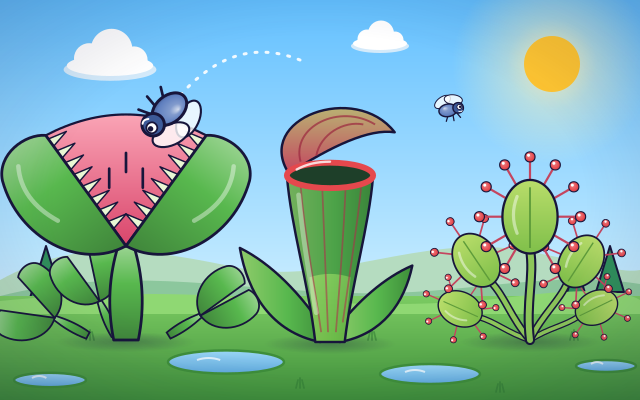
- This is a bog. The ground is wet and sunny, but it has almost none of the nutrients that plants need to grow. Some plants here get them in a surprising way.
- A Venus flytrap has tiny trigger hairs inside. One touch does nothing. A second touch soon after means something is walking there, and the trap snaps shut.
- A pitcher plant is a leaf rolled into a tall cup. Insects come for the sweet nectar on its rim, slip on the waxy edge and slide down into a pool inside.
- A sundew's leaves are covered in little stalks, each with a shiny drop of glue on its tip. A small insect that lands is stuck, and the stalks slowly curl around it.
- Then the trap makes juices that dissolve the soft parts of the insect. The leaf soaks up the nutrients, a bit like your stomach does with food.
- These plants are still green and still make their sugar from sunlight. The insects are extra nutrients, like vitamins, that help them grow new leaves and flowers.
Three traps up close
Tap each part. Find what makes the snap trap snap, the pitcher slippery and the sundew sticky.
- Trigger hairs. Three tiny hairs stand inside each half of the trap. Bending one starts a timer. Bending one again within about half a minute shuts the trap.
- Teeth. The spikes on the edges lock together like the fingers of two hands and make a cage. A tiny insect can still squeeze out between them.
- Hinge. The two halves are joined along the middle. Each half is curved outward. When the trap fires, they flip to curve inward, as fast as a blink.
- Lid. The hood over the opening works like an umbrella. It keeps rain from filling the pitcher and washing the juices away. Its colors also attract insects.
- Slippery rim. The rim has sweet nectar on it and a waxy, slippery surface. An insect that walks on it loses its grip and falls in.
- Pool of juice. At the bottom is a pool of liquid with digesting juices in it. The insect's soft parts dissolve, and the pitcher wall soaks up the nutrients.
- Glue drops. Each stalk on a sundew leaf ends in a drop of clear, stretchy glue. The drops sparkle in the sun, and a small insect that touches them cannot pull free.
- Tentacles. The stalks that carry the glue are called tentacles. When prey is caught, they slowly bend toward it and press it onto the leaf, where it is digested.
Compare the three traps
Send a bug to each plant by dragging it or tapping the plant. Try the tiny gnat and the big beetle. Then tickle the flytrap's trigger hairs yourself.
Experiment: A raindrop bends one trigger hair of a Venus flytrap, just once. What does the trap do?
- Tap the trigger hairs inside the flytrap once and wait. What happens?
- Tap them twice, quickly.
- Now send a gnat, a fly and a beetle to each of the three plants.
What we found: One touch does nothing: it could be rain or a falling leaf. Two touches close together mean a live insect, so the trap snaps. Each trap has its own strength: the sundew holds tiny insects, the flytrap takes middle-sized ones, and the pitcher can hold even a big beetle.
Turn on JavaScript to try it yourself.
The right trap for each bug
Bugs arrive one at a time. Send each to a trap that can hold it. Give every plant two catches before the bugs run out.
Why some plants eat insects
All green plants make their own food. They use sunlight to turn air and water into sugar. But to build new leaves, they also need small amounts of other things, such as nitrogen, which most plants take from the soil through their roots.
Some places, such as bogs, have soil with almost no nutrients. A few plants living there have a clever answer: they catch insects and take the nutrients from them. There are several hundred kinds of these carnivorous plants.
Their traps are special leaves, and they work in different ways. The Venus flytrap snaps shut when an insect touches its trigger hairs twice. The pitcher plant is a slippery cup with a pool at the bottom. The sundew is covered in drops of glue. In each trap, juices dissolve the soft parts of the insect and the leaf soaks up the nutrients.
Catching insects is hard work for a plant. A flytrap needs about a week to digest one meal, and each trap only works a few times. So these plants live only where it is worth it: sunny, wet places with poor soil. They are harmless to people. The vitamin idea is a good one, with one difference: the plant has to catch its own vitamins.
Key words
- Carnivorous plant
- A plant that traps small animals, mostly insects, and takes nutrients from them.
- Nutrients
- Substances, such as nitrogen, that living things need in order to grow.
- Trigger hair
- A touch-sensitive hair inside a Venus flytrap that starts the trap closing.
- Enzyme
- A substance in digesting juices that breaks food into tiny pieces.
- Mucilage
- The thick, stretchy glue on a sundew's tentacles.
- Bog
- Wet, spongy ground with acidic soil that is poor in nutrients.
Check your thinking
-
Where do carnivorous plants get their energy?
Show the answer
From sunlight, like other plants. They are green and make sugar from sunlight. Insects give them extra nutrients for growing.
-
A raindrop touches one trigger hair once. What does the flytrap do?
Show the answer
Nothing, it needs a second touch soon after. One touch could be rain or dirt. A second touch soon after means a live insect is moving around.
-
Why can a tiny gnat escape from a closed Venus flytrap?
Show the answer
It squeezes out between the teeth. The teeth lock like bars with gaps between them, and a very small insect fits through.
-
How does a pitcher plant catch an ant?
Show the answer
The ant slips on the rim and falls into the pool. The rim is slippery and the walls are waxy. The lid never moves. It is only a roof.
-
Which trap could hold a big, strong beetle best?
Show the answer
The pitcher plant. The beetle falls into the deep pitcher and cannot climb the slippery wall. It is too strong for glue and too big for the flytrap.
You're a Plants & ecosystems expert!
You watched, looked inside, tried it, solved the challenge and went deeper. Pick another question below, or switch the age at the top to see this topic another way.
More about plants & ecosystems
 #231
Plants & ecosystems
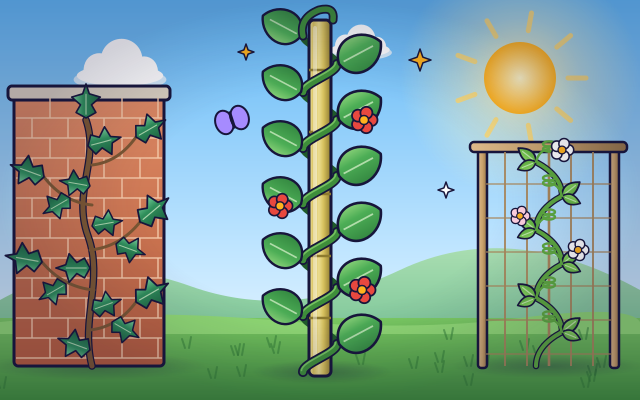
How do climbing plants hold on?
Guide tendrils, twining stems, and clinging roots around different supports.
#231
Plants & ecosystems
How do climbing plants hold on?
Guide tendrils, twining stems, and clinging roots around different supports.
 #232
Plants & ecosystems
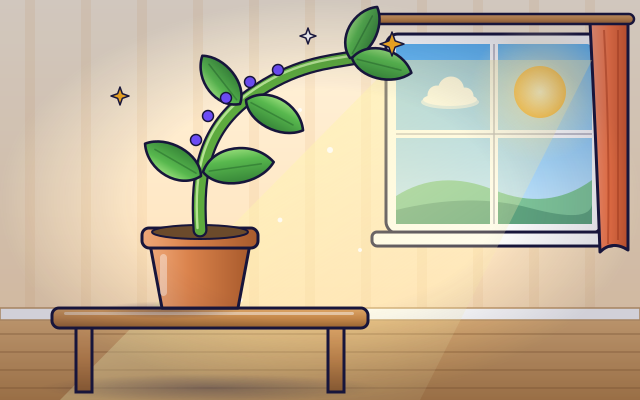
How do plants grow toward light?
Move a light source and use a time slider to observe directional growth.
#232
Plants & ecosystems
How do plants grow toward light?
Move a light source and use a time slider to observe directional growth.
 #233
Plants & ecosystems
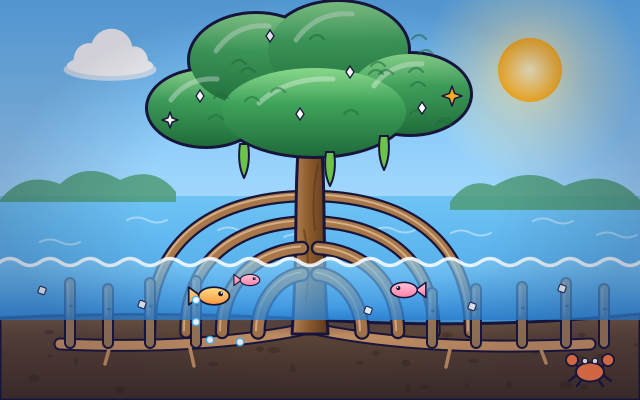
How do mangroves survive in salty, muddy places?
Explore specialized roots and adaptations for salt, unstable ground, and limited soil oxygen.
#233
Plants & ecosystems
How do mangroves survive in salty, muddy places?
Explore specialized roots and adaptations for salt, unstable ground, and limited soil oxygen.
 #234
Plants & ecosystems
How do tree rings record growth?
Build successive rings under changing conditions and inspect a trunk cross-section.
#234
Plants & ecosystems
How do tree rings record growth?
Build successive rings under changing conditions and inspect a trunk cross-section.
Keep exploring
Games to play next
- Classification ExplorerSort living things by what you can see, then follow and build yes-or-no keys.
- Label LabPut the right labels on beautiful science diagrams, from bean plants to heart chambers.
- Garden AutomationProgram a garden robot with sensor rules — then watch a whole day play out.
Guide for grown-ups
- How to start homeschooling: a step-by-step guide for familiesA guide for parents · 7 min read
Science games by grade
Science worksheets by grade
- Preschool Science Worksheets
- Pre-K Science Worksheets
- Kindergarten Science Worksheets
- 1st Grade Science Worksheets
- 2nd Grade Science Worksheets
- 3rd Grade Science Worksheets
- 4th Grade Science Worksheets
- 5th Grade Science Worksheets
- 6th Grade Science Worksheets
- 7th Grade Science Worksheets
- 8th Grade Science Worksheets