How do climbing plants hold on?
Vines have thin stems, so they borrow a support. Some wrap around it, some grab it with curly tendrils, and some stick on with tiny roots.
The big idea: A climbing plant saves energy by not building a thick trunk. Instead it holds on to a support, and each kind of climber has its own way to hold on.
It's like climbing a playground pole or a rope net: you wrap your arms and legs around the pole, or grab the thin ropes with your fingers.
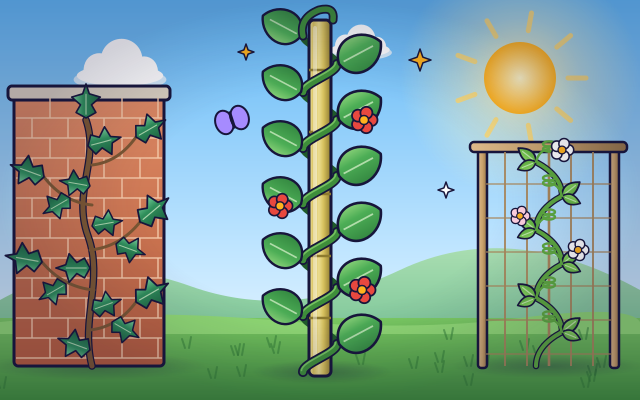
The interactive parts didn't load. The explanations below still work; try reloading the page.
How vines climb
- Plants need light to make food, but this seedling is in the shade. A tree spends years building a thick trunk to stand tall. A vine has a quicker trick.
- As the stem grows, its tip slowly swings in circles, like a hand feeling around in the dark. One turn can take an hour or two. It keeps circling until it bumps into something.
- The tip touches a pole, and the whole stem keeps circling, so it winds around the pole like a spring. Rough little hairs on the stem stop it from sliding down.
- A pea climbs a different way. It grows thin threads called tendrils. When a tendril feels a string, it curls around it in minutes. Then it twists into a spring that pulls the plant closer.
- A flat wall has nothing to wrap around. Ivy grows hundreds of tiny roots along its stem. They push into every little crack and make a natural glue, so the ivy sticks.
- Wrapping, grabbing and sticking: three ways to borrow a support. Each climber reaches the light quickly, without building a trunk of its own.
Look closely at three climbers
Tap each part of the pea, the bean and the ivy. Watch what it does when you find it.
- Circling tip. The growing tip swings slowly in circles. That way it sweeps a wide space and is likely to bump into a support.
- Twining stem. The bean's whole stem coils around the pole. Tiny stiff hairs grip the pole so the stem does not slide down.
- Tendril. A tendril is a thin thread that can feel touch. When it rubs against a string, it curls around it and holds tight.
- Spring coil. Once the tip has a hold, the rest of the tendril coils into a spring. It pulls the plant toward the support and stretches when the wind blows.
- Clinging roots. Ivy grows rows of tiny roots on the side of the stem that touches the wall. They squeeze into cracks and glue themselves on.
- Leaves in the light. Climbing is all about the leaves. High up, they catch more sunlight, and the plant can make more food.
Which climber fits which support?
Choose a climber, then tap a support (or drag the pot to it). Try each plant on strings, a pole, a tree trunk and a wall.
Experiment: Can the pea, with its curly tendrils, climb a flat brick wall?
- Choose the pea and tap the string net.
- Now tap the brick wall with the pea.
- Try the bean and the ivy on every support too.
What we found: The pea holds the thin strings but slips off the wall, because a tendril has to curl all the way around something thin. The bean needs a pole it can wind around. Only the ivy, with its sticky roots, can climb a flat wall or a fat trunk.
Turn on JavaScript to try it yourself.
Cover every support
Cover all four supports with climbers that can hold on. For 3 stars, do it without one plant slipping.
Why and how vines climb
Every green plant needs sunlight to make its food. In a forest or a crowded garden, the best light is high up. A tree gets there by building a thick, woody trunk, which takes many years and a lot of food. A climbing plant takes a shortcut. It grows a long, thin stem and holds on to something that is already tall.
Climbers hold on in different ways. Twiners, such as beans and morning glories, wind their whole stem around a pole. Tendril climbers, such as peas, cucumbers and grapes, grow thin threads that feel a touch and curl around it. Root climbers, such as ivy, grow tiny sticky roots along their stems. Some plants, such as roses and blackberries, just hook on with thorns and scramble over their neighbors.
Each way of holding on has a limit. A tendril is short, so it can only curl around thin things like twigs, wire and string. A twining stem can wind around a pole, but not around a fat tree trunk or a flat wall. Sticky roots are the opposite: they need a wide, rough surface, so they are no use on a thin wire or on smooth glass.
Gardeners use this every day. They give peas a net of thin strings, give beans tall poles, and let ivy cover a wall. The ladder comparison is not perfect, though: you choose to climb, but a plant does not decide anything. Its stem simply grows in a way that wraps, curls or sticks when it touches something.
Key words
- Climber
- A plant with a thin stem that grows upward by holding on to a support.
- Twining
- Climbing by winding the whole stem around a support.
- Tendril
- A thin, curly thread that feels touch and curls around thin things.
- Circumnutation
- The slow circling movement of a growing shoot tip.
- Thigmotropism
- Growth that bends toward or around something the plant touches.
- Adventitious roots
- Roots that grow from a stem instead of from the main root. Ivy uses them to stick to walls.
Check your thinking
-
Why do climbing plants climb?
Show the answer
To lift their leaves up to the light. Leaves need light to make food. High up there is more light.
-
A pea tendril touches a thin string. What happens next?
Show the answer
The tendril curls around the string. Tendrils feel touch. The touch makes them curl around the string and hold tight.
-
You plant a bean next to a very fat tree trunk. What will probably happen?
Show the answer
It cannot wind around something so wide, so it flops. A twining stem has to go all the way around its support. A fat trunk is too wide for that.
-
Which climber could cover a flat brick wall with no strings or poles?
Show the answer
Ivy, with its tiny sticky roots. A wall has nothing to wrap around. Only sticky roots can hold on to it.
-
After a tendril grips a support, why does it coil into a spring?
Show the answer
The spring pulls the plant closer and stretches in the wind instead of snapping. The coil shortens the tendril, drawing the stem toward the support, and its springiness absorbs sudden pulls from the wind.
-
How does a growing bean tip find a pole in the first place?
Show the answer
It swings in slow circles until it bumps into one. The tip sweeps round and round as it grows. When it touches something, the stem starts to wrap around it.
You're a Plants & ecosystems expert!
You watched, looked inside, tried it, solved the challenge and went deeper. Pick another question below, or switch the age at the top to see this topic another way.
More about plants & ecosystems
 #232
Plants & ecosystems
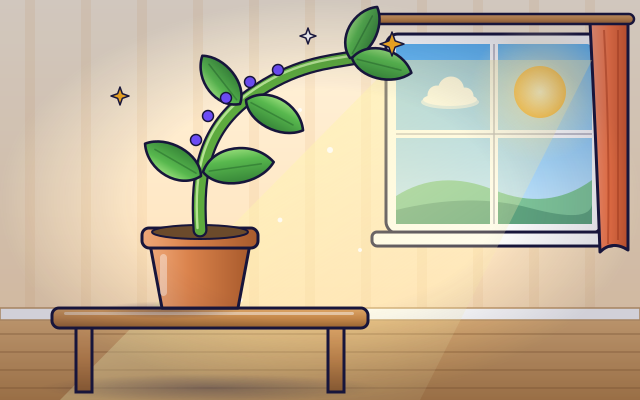
How do plants grow toward light?
Move a light source and use a time slider to observe directional growth.
#232
Plants & ecosystems
How do plants grow toward light?
Move a light source and use a time slider to observe directional growth.
 #233
Plants & ecosystems
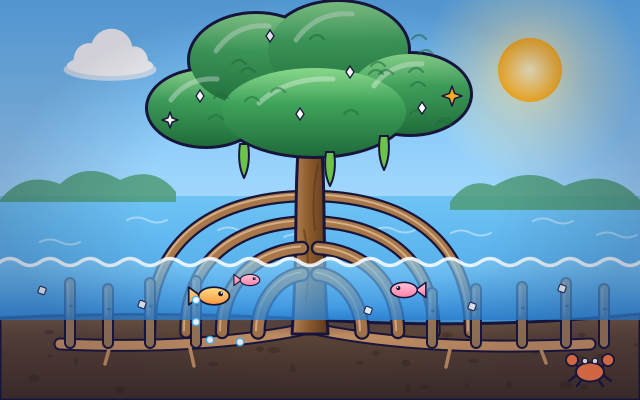
How do mangroves survive in salty, muddy places?
Explore specialized roots and adaptations for salt, unstable ground, and limited soil oxygen.
#233
Plants & ecosystems
How do mangroves survive in salty, muddy places?
Explore specialized roots and adaptations for salt, unstable ground, and limited soil oxygen.
 #234
Plants & ecosystems
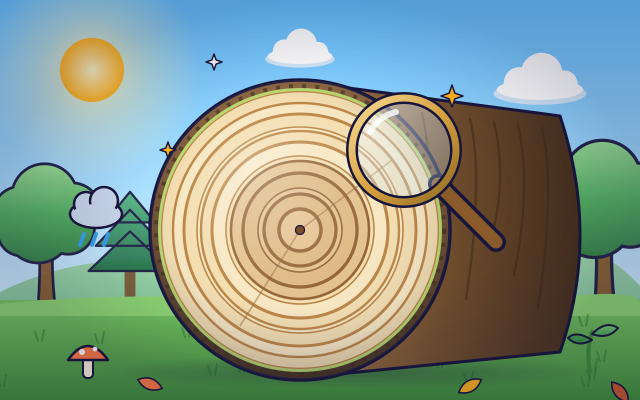
How do tree rings record growth?
Build successive rings under changing conditions and inspect a trunk cross-section.
#234
Plants & ecosystems
How do tree rings record growth?
Build successive rings under changing conditions and inspect a trunk cross-section.
 #235
Plants & ecosystems
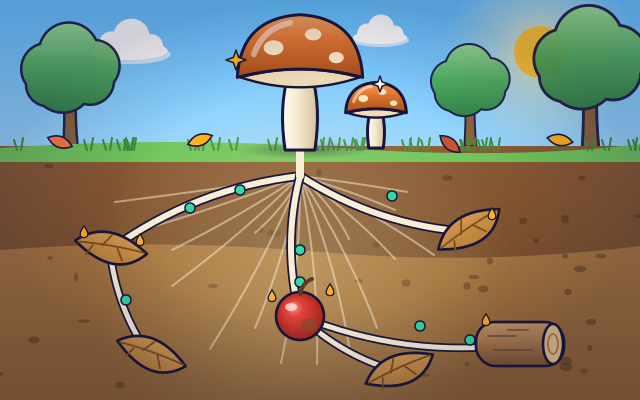
How do mushrooms and other fungi obtain food?
Follow fungal threads and visualize external digestion followed by nutrient absorption.
#235
Plants & ecosystems
How do mushrooms and other fungi obtain food?
Follow fungal threads and visualize external digestion followed by nutrient absorption.
Keep exploring
Games to play next
- Classification ExplorerSort living things by what you can see, then follow and build yes-or-no keys.
- Label LabPut the right labels on beautiful science diagrams, from bean plants to heart chambers.
- Garden AutomationProgram a garden robot with sensor rules — then watch a whole day play out.
Guide for grown-ups
- How to start homeschooling: a step-by-step guide for familiesA guide for parents · 7 min read
Science games by grade
Science worksheets by grade
- Preschool Science Worksheets
- Pre-K Science Worksheets
- Kindergarten Science Worksheets
- 1st Grade Science Worksheets
- 2nd Grade Science Worksheets
- 3rd Grade Science Worksheets
- 4th Grade Science Worksheets
- 5th Grade Science Worksheets
- 6th Grade Science Worksheets
- 7th Grade Science Worksheets
- 8th Grade Science Worksheets