How do clutches connect and disconnect moving parts?
A clutch presses two plates together so friction joins a spinning motor to a machine, and pulls them apart to set it free.
The big idea: A clutch joins two turning parts with friction. Pressed together, the plates grip and turn as one. Pulled apart, the motor keeps spinning while the machine stops.
It's like two paper plates: spin one and press it on the other, and rubbing makes the second one turn too. Lift it away and the second plate is free.
The interactive parts didn't load. The explanations below still work; try reloading the page.
How a clutch joins and lets go
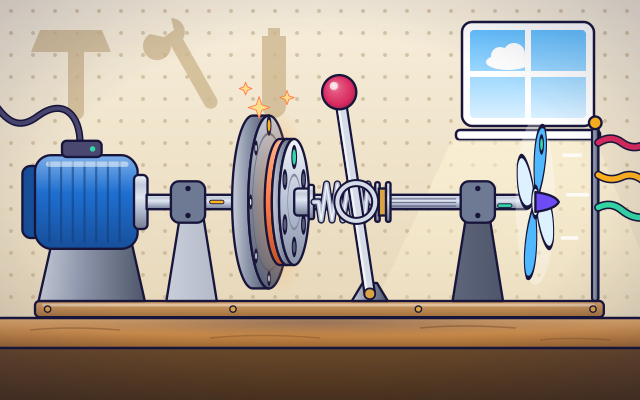
- This motor is spinning all the time. The fan on the right is still. How can we join the fan to the motor without stopping the motor first?
- Look closer. One plate is fixed to the motor's shaft, so it always spins. The other plate belongs to the fan's shaft. There is a small gap between them, so nothing passes across.
- Push the lever and a spring presses the plates together. They rub. That rubbing, called friction, drags the still plate around. At first it slips and the plates get warm.
- Press harder and the friction gets stronger. Soon both plates turn at the same speed. They are locked together, and the motor's spin goes straight to the fan.
- Pull the lever back and the plates separate. No touching means no friction. The fan slows to a stop, but the motor never stops spinning.
- A car with a gear stick has a clutch between its engine and its gears. The driver presses a pedal to pull the plates apart, changes gear, then lets the pedal up gently to join them again.
Look inside a model clutch
Tap each part of the model clutch. Each one moves to show its job.
- Motor. The motor makes the turning. It keeps spinning the whole time, whether the fan is joined to it or not.
- Drive plate. The drive plate is fixed to the motor's shaft, so it always spins with the motor. Its flat face is what the other plate presses against.
- Friction lining. A ring of rough, tough material covers the plate's face. It grips well and can take the heat of rubbing, a bit like a brake pad.
- Driven plate. The driven plate belongs to the fan's side. It only turns when it is pressed against the spinning drive plate.
- Spring. The spring does the squeezing. The more it is squashed, the harder it presses the plates together and the stronger the grip.
- Lever. The lever moves the sliding parts. Push it one way to press the plates together, and pull it back to open the gap.
- Grooved shaft. Long grooves run along this shaft. The driven plate can slide along them, but it cannot spin without turning the shaft too.
- Fan. The fan is the machine being driven. It could be anything that needs turning: wheels, a saw blade or a pump.
Press the plates and watch the grip
Drag the red lever a little, then a lot. Watch the two plates, the fan and the ribbons. When do the plates slip, and when do they lock?
Experiment: The big fan is hard to turn. What happens if you press the plates together only lightly?
- Choose the big fan and start with the lever all the way back.
- Drag the lever until the plates just touch, then a bit more. Watch the ribbons.
- Now push the lever all the way. What changes?
What we found: A light press makes only a little friction. The plates slip past each other, so the fan turns slowly and the rubbing makes heat. Press hard and friction is strong enough to lock the plates, so the fan turns as fast as the motor.
Turn on JavaScript to try it yourself.
A smooth start
Get the heavy fan up to full speed. Do not stall the motor, and do not let the plates get too hot.
Why friction can join two spinning things
Motors and engines like to keep spinning. Stopping and starting them wastes time and energy. But the machines they drive, such as wheels, fans and saws, often need to stop and start. A clutch is the part in between that can join them and separate them while the motor runs.
A friction clutch uses two plates. One spins with the motor. The other is joined to the machine. A spring presses them together, and the rubbing between them, called friction, makes the second plate turn too. The harder the press, the stronger the grip.
When the plates first touch, they turn at different speeds, so they slip. Slipping is useful because it lets the machine speed up smoothly instead of with a jerk. But slipping also makes heat, so a clutch should not slip for long. Once both plates turn at the same speed they lock together, and the heating stops.
Our hand-rubbing comparison is not perfect. Your hands always slip a little, but a clutch is built to lock completely. You can find clutches in cars with a gear stick, motorbikes, lawn mowers and cordless drills. A drill's clutch slips on purpose when a screw is tight enough, and that makes the clicking sound you hear.
Key words
- Clutch
- A part that can join a spinning shaft to another one, and separate them again.
- Friction
- The grip you get when two surfaces rub or press against each other.
- Torque
- A turning push, like the twist you give a jar lid.
- Slip
- When the two plates rub while turning at different speeds.
- Spline
- Grooves along a shaft that let a part slide along it but force the part to turn with it.
Check your thinking
-
What makes the driven plate start to turn?
Show the answer
Friction between the plates when they are pressed together. Pressed together, the plates grip each other by friction, so the spinning one drags the other around.
-
The plates are pulled apart. What happens to the motor and the fan?
Show the answer
The motor keeps spinning and the fan slows to a stop. With a gap there is no friction, so nothing drives the fan. The motor is free and keeps turning.
-
Why do the plates get warm when they slip?
Show the answer
Rubbing turns some of the motion into heat. Friction between surfaces that slide past each other makes heat, just like rubbing your hands on a cold day.
-
A little oil gets on the lining. What will happen?
Show the answer
The plates slip more easily. Oil makes surfaces slippery, so there is less friction to carry the spin across.
-
Why does a driver let the clutch pedal up gently when the car starts moving?
Show the answer
So the plates slip a little and the car speeds up smoothly. A gentle release lets the still wheels catch up with the spinning engine a bit at a time, without a jerk.
You're a Forces & mechanisms expert!
You watched, looked inside, tried it, solved the challenge and went deeper. Pick another question below, or switch the age at the top to see this topic another way.
More about forces & mechanisms
 #117
Forces & mechanisms
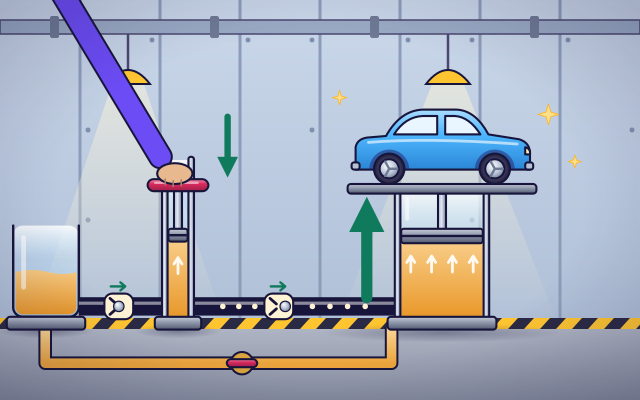
How do hydraulic systems multiply force?
Connect different-sized pistons with liquid and compare force with distance traveled.
#117
Forces & mechanisms
How do hydraulic systems multiply force?
Connect different-sized pistons with liquid and compare force with distance traveled.
 #118
Forces & mechanisms
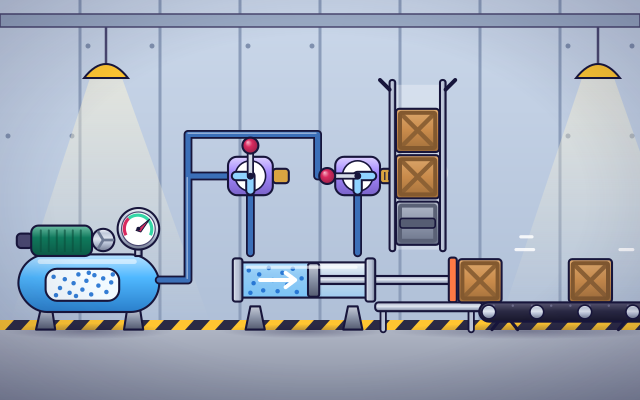
How do pneumatic machines use compressed air?
Route air through valves to extend and retract a model machine's piston.
#118
Forces & mechanisms
How do pneumatic machines use compressed air?
Route air through valves to extend and retract a model machine's piston.
 #119
Forces & mechanisms
How do gyroscopes help maintain orientation?
Spin a virtual rotor and investigate its response when its orientation changes.
#119
Forces & mechanisms
How do gyroscopes help maintain orientation?
Spin a virtual rotor and investigate its response when its orientation changes.
 #120
Forces & mechanisms
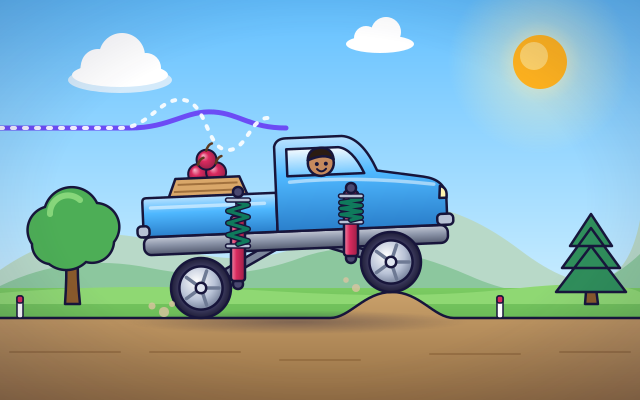
How do shock absorbers reduce bouncing?
Drive over model bumps and adjust damping to control repeated bouncing.
#120
Forces & mechanisms
How do shock absorbers reduce bouncing?
Drive over model bumps and adjust damping to control repeated bouncing.
Keep exploring
Games to play next
- Machine RepairFix levers, pulleys, gears and ramps so every contraption works.
- Marble MountainLay straights, curves, drops and splitters to roll marbles down the mountain.
- Bridge LabBuild a bridge from beams, brace it with triangles, and stay on budget.
Guide for grown-ups
- How to start homeschooling: a step-by-step guide for familiesA guide for parents · 7 min read
Science games by grade
Science worksheets by grade
- Preschool Science Worksheets
- Pre-K Science Worksheets
- Kindergarten Science Worksheets
- 1st Grade Science Worksheets
- 2nd Grade Science Worksheets
- 3rd Grade Science Worksheets
- 4th Grade Science Worksheets
- 5th Grade Science Worksheets
- 6th Grade Science Worksheets
- 7th Grade Science Worksheets
- 8th Grade Science Worksheets