How does cotton become clothing?
Follow cotton from a fluffy plant to a shirt: spinning, weaving or knitting, dyeing, cutting and sewing.
The big idea: Cotton fibers are twisted into yarn. Yarn is woven, crossing over and under, or knitted into loops, to make fabric. The fabric is dyed, cut into pieces and sewn into clothes.
It's like
The interactive parts didn't load. The explanations below still work; try reloading the page.
The journey of a T-shirt
- Cotton grows on a bushy plant. After each flower fades, a pod called a boll grows. When it splits open, it is packed with fluffy fibers around the seeds.
- After harvest, a machine called a cotton gin pulls the fibers off the seeds. The clean fiber is pressed into huge bales and sent to the mill.
- At the mill, wire brushes comb the fibers so they lie side by side. Then spinning machines pull them thin and twist them into yarn. Twist makes the short fibers grip each other.
- Weaving crosses threads over and under each other at right angles. Knitting makes rows of loops linked together. T-shirts are usually knitted, so they stretch.
- Next the fabric is dyed. It soaks in warm water with dye. Special dyes for cotton stick tightly to the fibers, so the color doesn't wash out.
- Pattern pieces are laid out so little fabric is wasted, and cut. Then sewing machines join the front, back and sleeves with seams. A new T-shirt!
Zoom into a T-shirt
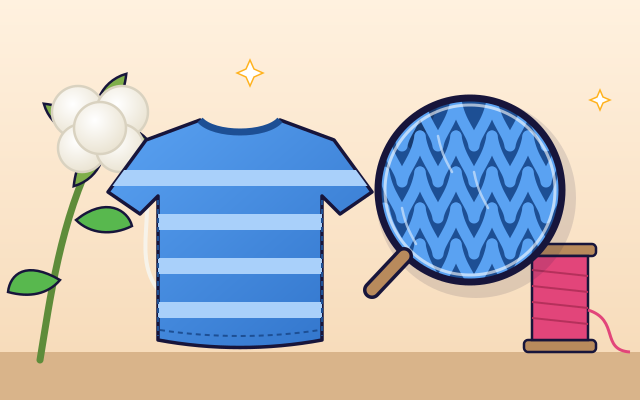
Tap each part of the T-shirt. The magnifying glass zooms in to show what it's made of.
- Cotton fiber. A cotton fiber is a tiny, twisted ribbon about 2 to 4 centimeters long. It is made of cellulose, the same stuff that makes plants strong.
- Yarn. Yarn is made of many fibers twisted together. The twist squeezes them so they grip and don't slide apart.
- Knit loops. T-shirt fabric is knitted: rows of little loops hooked into the row below. When you pull, the loops change shape, so the fabric stretches.
- Rib collar. The neckband is a rib knit, with loops that face front and back in turn. It stretches a lot and springs back, so the shirt goes over your head and stays neat.
- Side seam. A seam joins two pieces of fabric. On T-shirts, an overlock machine wraps thread loops around the edge, so the seam can stretch without the thread snapping.
- Hem. The bottom edge is folded over and stitched. Otherwise the cut edge could curl or the loops could start to come undone.
- Dye. The color comes from dye molecules that attach tightly to the cotton fibers, so washing doesn't rinse the color away.
- Care label. The care label says how to wash the shirt. Washing cotton in very hot water and tumble drying can make it shrink.
Fabric microscope: weave or knit?
Choose woven or knitted fabric and pull it. The magnifier shows what the threads do. Which fabric stretches most?
Experiment: If you pull woven fabric and knitted fabric with the same force, which stretches more?
- Choose Plain weave and pull hard.
- Choose Knit and pull just as hard.
- Compare the stretch, and watch the loops and threads in the magnifier.
What we found: Woven threads run straight across each other, so when you pull, they just straighten a little. Knitted fabric is made of loops, and loops can stretch long and thin, so knits stretch a lot. That's why T-shirts are knitted!
Turn on JavaScript to try it yourself.
Design and make a T-shirt
Design a T-shirt for Pip. Then make the yarn, the fabric and the seams so it slips over his head without tearing.
From cotton plant to clothes
Cotton grows on plants in warm places. Each fluffy fiber is a tiny ribbon that grew out of a seed. After the harvest, a cotton gin pulls the fibers off the seeds, and the fiber is pressed into big bales.
A single cotton fiber is only a few centimeters long, so how can a thread be kilometers long? The trick is twist. Machines comb the fibers so they line up, pull them into a thin strand, and twist it. The twist squeezes the fibers together so they grip each other.
Yarn becomes fabric in two main ways. Weaving crosses threads over and under at right angles, which makes strong, steady cloth for jeans and shirts with buttons. Knitting makes rows of loops linked together. Loops can stretch, so knitted fabric is perfect for T-shirts and socks.
Finally the fabric is dyed, cut into pieces using a pattern, and sewn. Factories arrange the pattern pieces carefully to waste as little fabric as possible. Stretchy fabrics need stretchy stitches, or the threads would snap when you pull the shirt over your head.
Key words
- Fiber
- A single fine hair, such as one strand of cotton.
- Yarn
- Fibers twisted together into a long, strong thread.
- Warp and weft
- In weaving, the lengthwise threads (warp) and the crosswise threads (weft).
- Knit
- Fabric made of rows of interlocking loops, which makes it stretchy.
- Bias
- The diagonal direction across a woven fabric, where it stretches most.
- Cellulose
- The natural material that cotton and plant walls are made of.
- Seam
- A line of stitches that joins two pieces of fabric.
Check your thinking
-
Where do cotton fibers grow?
Show the answer
On the seeds inside the boll. The fibers grow out of the seeds' coats, packed inside the boll.
-
Why are T-shirts usually knitted instead of woven?
Show the answer
Knitted fabric doesn't need yarn. Knit loops change shape when pulled, so the fabric stretches and springs back.
-
Why are cotton fibers twisted to make yarn?
Show the answer
Twisting squeezes the fibers so they grip and don't slide apart. Twist presses the fibers together, so friction holds them, even though each fiber is short.
-
In weaving, what are the lengthwise threads called?
Show the answer
The warp. Warp threads run lengthwise on the loom; weft threads go over and under across them.
-
Why must the seams of a T-shirt use a stretchy stitch?
Show the answer
So the thread doesn't snap when the knit fabric stretches. Knit fabric stretches a lot. A plain straight stitch can't stretch with it, so its thread would break.
You're a Making everyday things expert!
You watched, looked inside, tried it, solved the challenge and went deeper. Pick another question below, or switch the age at the top to see this topic another way.
More about making everyday things
 #17
Making everyday things
How are plastic toys made?
Design a simple toy, explore an injection mold, and watch the material fill its shape. Cool, assemble, and decorate the finished pieces.
#17
Making everyday things
How are plastic toys made?
Design a simple toy, explore an injection mold, and watch the material fill its shape. Cool, assemble, and decorate the finished pieces.
 #18
Making everyday things
How are bricks made?
Prepare virtual clay, shape bricks, dry them, and fire them in a kiln. Compare brick shapes and arrange them into different wall patterns.
#18
Making everyday things
How are bricks made?
Prepare virtual clay, shape bricks, dry them, and fire them in a kiln. Compare brick shapes and arrange them into different wall patterns.
 #19
Making everyday things
How is pottery made?
Shape clay on a virtual pottery wheel. Explore drying, kiln firing, and glazing, and see how each stage changes the object.
#19
Making everyday things
How is pottery made?
Shape clay on a virtual pottery wheel. Explore drying, kiln firing, and glazing, and see how each stage changes the object.
 #20
Making everyday things
How does a 3D printer make an object?
Turn a simple digital design into layers. Watch a filament printer build it layer by layer and explore why some shapes need temporary supports.
#20
Making everyday things
How does a 3D printer make an object?
Turn a simple digital design into layers. Watch a filament printer build it layer by layer and explore why some shapes need temporary supports.
Keep exploring
Games to play next
- Machine RepairFix levers, pulleys, gears and ramps so every contraption works.
- Geometry Architect 3DCount, build and fold solids like a real architect.
- Sorting FactoryTurn a work order into if/else rules and watch the conveyor sort every item.
Guide for grown-ups
- How to start homeschooling: a step-by-step guide for familiesA guide for parents · 7 min read
Science games by grade
Science worksheets by grade
- Preschool Science Worksheets
- Pre-K Science Worksheets
- Kindergarten Science Worksheets
- 1st Grade Science Worksheets
- 2nd Grade Science Worksheets
- 3rd Grade Science Worksheets
- 4th Grade Science Worksheets
- 5th Grade Science Worksheets
- 6th Grade Science Worksheets
- 7th Grade Science Worksheets
- 8th Grade Science Worksheets