How is pottery made?
A spinning wheel, a slow dry and a very hot kiln turn soft clay into hard, shiny pottery.
The big idea: Clay is made of tiny flat grains. Water lets them slide so you can shape it; drying removes the water, and the kiln's heat fuses the grains into hard pottery.
It's like
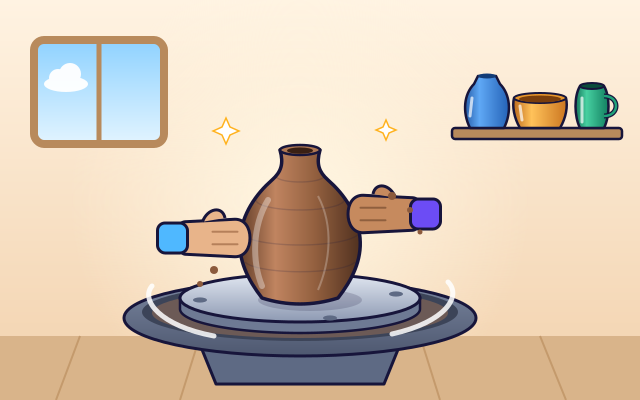
The interactive parts didn't load. The explanations below still work; try reloading the page.
The journey of a pot
- Clay is dug from the ground, often near rivers. Under a microscope it is made of tiny flat grains. Water lets them slide past each other.
- First the potter kneads the clay. This is called wedging. It makes the clay smooth and pushes out air bubbles that could crack the pot later.
- On the spinning wheel the potter centers the clay, opens a hole and pulls the walls up. Because the clay spins, one hand shapes the whole pot evenly all the way around.
- The pot dries slowly for days. Water leaves the clay, the grains move closer together and the pot shrinks a little. Dry clay is pale and very fragile.
- A kiln is a super hot oven. At about 1,000 degrees Celsius the clay changes forever: the grains stick together and the pot becomes hard. It can never turn back into mud.
- Glaze is a powdery liquid made of glassy minerals. It looks dull at first. In a second firing it melts into a smooth, shiny layer of glass that keeps water in.
Zoom into the clay at every stage
Step through the life of a pot. The magnifying glass shows what the tiny clay grains are doing.
- Wet, soft clay. The clay grains are flat, like tiny plates. Water sits between them, so they can slide past each other. That makes wet clay soft enough to shape.
- Wedging. Kneading the clay, called wedging, pushes out air bubbles and spreads the water evenly. Bubbles are weak spots that can crack in the kiln.
- Leather-hard. After a day or so, much of the water has gone. The grains move closer and the pot shrinks. It is firm like leather, perfect for adding a handle.
- Bone-dry. Now the grains touch, with tiny air gaps between them. The pot is pale, light and very fragile. If you put it in water it would turn back into mud.
- Bisque firing. In the kiln, at about 1,000 degrees Celsius, the grains start to stick together where they touch. The pot becomes hard and can never turn back into mud.
- Glaze firing. Glaze melts into a thin, smooth layer of glass that covers the tiny holes. Now the pot is shiny, easy to clean and holds water.
The pottery wheel
Drag the clay wall in, out or up while the wheel spins. Watch what happens to the walls as your pot gets taller.
Experiment: What happens to the walls of your pot as you pull the clay up taller and taller?
- Keep the wheel spinning.
- Press Pull up, or drag the wall upward, a few times.
- Watch the Walls readout and the rim. Then press Push out on a tall pot.
What we found: The same lump of clay has to stretch over a taller wall, so the walls get thinner. Thin, soft walls can't hold up their own weight, especially when they lean outward, so the pot flops. Potters stop at just the right thickness.
Turn on JavaScript to try it yourself.
Make a flower vase
Shape a vase that matches the dotted outline. Then dry it, fire it in the kiln and glaze it without cracking it.
How clay becomes pottery
Clay forms when rocks break down very slowly over thousands of years. Its grains are tiny, flat plates. When clay is wet, water sits between the plates and lets them slide, so you can push the clay into any shape and it stays that way.
On a pottery wheel, the clay spins while the potter's hands stay still. That way one hand touches the whole pot as it turns, and the pot comes out round. Pulling the walls up spreads the same clay over a taller wall, so the walls get thinner. Walls that are too thin and wet can't hold themselves up and flop.
A new pot must dry slowly. As water leaves, the grains move closer and the pot shrinks. If one part dries faster than another, it shrinks sooner and the pot can crack. Dry clay is still fragile: put it in water and it turns back into mud.
The kiln changes everything. At about 1,000 degrees Celsius, the grains stick together where they touch. This change can't be undone, so the pot is now hard ceramic. A second firing melts the glaze into a thin layer of glass that makes the pot shiny and waterproof.
Key words
- Plastic
- Soft enough to shape, and it stays in its new shape.
- Wedging
- Kneading clay to remove air bubbles and even out the water.
- Leather-hard
- Partly dry clay that is firm but can still be carved and joined.
- Kiln
- A very hot oven for firing pottery.
- Bisque
- Pottery after its first firing: hard, but not shiny or waterproof yet.
- Glaze
- A coating that melts into a shiny layer of glass in the kiln.
- Sintering
- Particles fusing together where they touch when heated, without fully melting.
Check your thinking
-
Why can you shape wet clay so easily?
Show the answer
Water lets the tiny flat grains slide past each other. The grains are flat plates, and water between them lets them slide.
-
What does the kiln do to a clay pot?
Show the answer
Its heat makes the grains stick together, so the pot becomes hard. At about 1,000 degrees Celsius the grains fuse where they touch. That change can't be undone.
-
Why must a new pot dry slowly?
Show the answer
So all of it shrinks at the same time and it doesn't crack. Clay shrinks as it dries. If the rim dries first, it shrinks before the rest and pulls apart.
-
On the wheel, you pull a pot taller without adding clay. What happens to its walls?
Show the answer
They get thinner. The same amount of clay is spread over a taller wall, so it must get thinner.
-
What is a glaze after it has been fired?
Show the answer
A thin layer of glass. Glaze melts in the kiln and cools into glass, which is shiny and waterproof.
-
Bone-dry clay is put in a bucket of water. What happens?
Show the answer
It slowly turns back into mud. Until it is fired, nothing has bonded the particles, so water separates them again. Only firing makes the change permanent.
You're a Making everyday things expert!
You watched, looked inside, tried it, solved the challenge and went deeper. Pick another question below, or switch the age at the top to see this topic another way.
More about making everyday things
 #20
Making everyday things
How does a 3D printer make an object?
Turn a simple digital design into layers. Watch a filament printer build it layer by layer and explore why some shapes need temporary supports.
#20
Making everyday things
How does a 3D printer make an object?
Turn a simple digital design into layers. Watch a filament printer build it layer by layer and explore why some shapes need temporary supports.
 #301
Making everyday things
How is steel made?
Follow iron through a simplified steelworks and shape finished steel into useful products.
#301
Making everyday things
How is steel made?
Follow iron through a simplified steelworks and shape finished steel into useful products.
 #302
Making everyday things
How are aluminum drink cans made?
Form a metal disc into a can, then trim, coat, decorate, and attach a lid.
#302
Making everyday things
How are aluminum drink cans made?
Form a metal disc into a can, then trim, coat, decorate, and attach a lid.
 #303
Making everyday things
How are rubber tires made?
Assemble rubber layers, reinforcement, and tread before shaping and curing in a mold.
#303
Making everyday things
How are rubber tires made?
Assemble rubber layers, reinforcement, and tread before shaping and curing in a mold.
Keep exploring
Games to play next
- Machine RepairFix levers, pulleys, gears and ramps so every contraption works.
- Geometry Architect 3DCount, build and fold solids like a real architect.
- Sorting FactoryTurn a work order into if/else rules and watch the conveyor sort every item.
Guide for grown-ups
- How to start homeschooling: a step-by-step guide for familiesA guide for parents · 7 min read
Science games by grade
Science worksheets by grade
- Preschool Science Worksheets
- Pre-K Science Worksheets
- Kindergarten Science Worksheets
- 1st Grade Science Worksheets
- 2nd Grade Science Worksheets
- 3rd Grade Science Worksheets
- 4th Grade Science Worksheets
- 5th Grade Science Worksheets
- 6th Grade Science Worksheets
- 7th Grade Science Worksheets
- 8th Grade Science Worksheets