How do disc brakes stop a vehicle?
Press the pedal and two pads squeeze a spinning metal disc. The rubbing slows the wheel and turns its motion into heat.
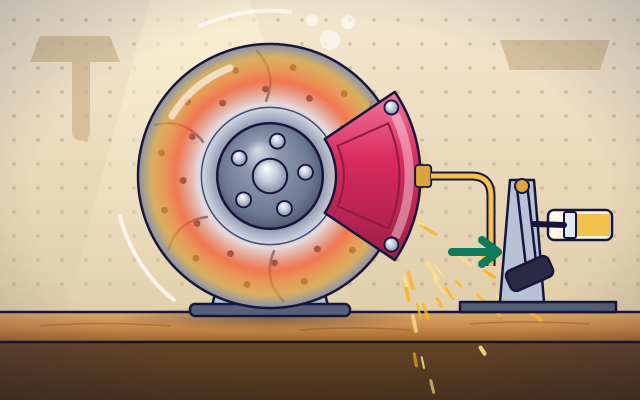
The big idea: A disc spins with each wheel. When the driver presses the pedal, pads squeeze the disc. The rubbing, called friction, slows the wheel and makes the disc hot. Then the tires must grip the road to stop the car.
It's like the hand brakes on a bicycle: rubber blocks squeeze the wheel rim to slow it. A disc brake squeezes a metal disc on the wheel instead.
The interactive parts didn't load. The explanations below still work; try reloading the page.
From pedal to pads
- A car is rolling down the street when the driver sees a family of ducks waiting to cross. She presses the brake pedal. What happens inside the wheels?
- The pedal pushes a piston into a tube filled with brake fluid. Liquid cannot be squashed, so the push travels along the tube to every wheel at once.
- A metal disc spins with the wheel. A clamp called the caliper sits over it. The fluid pushes pistons in the caliper, and they press a brake pad against each side of the disc.
- The pads rub hard on the spinning disc. This rubbing is friction. It slows the disc, and the wheel with it, and it turns the car's motion into heat. The disc can get hotter than an oven.
- Slowing the wheels is only half the job. The tires must grip the road. On a wet road they grip less, so the car needs more room to stop. On ice it needs much, much more.
- The car stops in good time, and the ducks waddle across. Pedal, fluid, pads, disc, tires: every part did its job, and the motion ended up as a little heat.
Look inside a disc brake
Tap each part. Use the round window to see inside the caliper.
- Brake pedal. The brake pedal is a lever. It makes the push from the driver's foot stronger and passes it on to the brake fluid.
- Brake fluid and line. Brake fluid fills thin tubes that run to every wheel. Because a liquid cannot be squashed, a push at one end comes out at the other end right away.
- Caliper. The caliper is a strong metal clamp that sits over the edge of the disc. It holds the pads and the pistons that push them.
- Piston. A piston is a round plunger inside the caliper. Brake fluid pushes on its back, and it pushes the pad against the disc.
- Brake pads. Brake pads are blocks of tough, grippy material on steel plates. One pad presses on each side of the disc. They slowly wear away and are replaced.
- Disc. The disc, also called a rotor, is a flat metal ring bolted to the wheel. When the pads slow the disc, they slow the wheel.
- Wheel hub. The hub is the middle part that turns on the axle. The disc and the wheel are both bolted to it, so they always spin together.
Brake test bench
Spin the disc up, then push the pedal down. Compare a gentle squeeze with a hard one, and a dry disc with a wet one. Watch the speed and the heat.
Experiment: What happens to the disc when the pads squeeze it to a stop?
- Press Spin it up, then push the pedal about halfway.
- Watch the speed dial and the heat dial until the disc stops.
- Spin it up again and squeeze harder. Then try a wet disc.
What we found: The disc gets hot every time. The pads rub the spinning disc, and that rubbing turns the motion into heat. A harder squeeze stops it sooner. A wet disc is slippery at first, so it takes longer.
Turn on JavaScript to try it yourself.
Where should braking start?
Drag the Brake here sign to the spot where the driver should start braking, then press Go. Stop the car in the box before the line: first on a dry road, then on a wet one.
Where does the motion go?
Anything that is moving has energy of motion. A heavy car going fast has a great deal of it. To stop, the car has to get rid of that energy, and the brakes do this by rubbing.
When the driver presses the pedal, brake fluid pushes pistons inside a clamp called a caliper. The pistons squeeze two pads against a metal disc that spins with the wheel. The rubbing between pad and disc is called friction. Friction slows the disc and makes heat, just as your hands get warm when you rub them together.
So the motion does not vanish. It turns into heat in the discs, and the air flowing past cools them down again. After a long, steep hill the brakes can be very hot. Never touch a car's wheels or brakes after a drive.
The brakes only slow the wheels. It is the tires gripping the road that slow the car. On a dry road the grip is strong. On a wet road it is weaker, and on ice it is very weak, so the car slides much farther. That is why drivers slow down and leave more room in rain and snow.
Key words
- Friction
- The rubbing force between two things that touch. It slows them and makes heat.
- Caliper
- The clamp over the disc that holds the pistons and the brake pads.
- Brake fluid
- The liquid that carries the push from the pedal to the pistons at each wheel.
- Kinetic energy
- The energy something has because it is moving.
- Grip
- How well the tires hold on to the road.
- Stopping distance
- How far a vehicle travels from the moment the brakes go on until it stands still.
Check your thinking
-
What do the brake pads do when the driver presses the pedal?
Show the answer
They squeeze the spinning disc from both sides. The pads press on both faces of the disc, and the rubbing slows the wheel.
-
A car brakes to a stop. Where has its energy of motion gone?
Show the answer
It has turned into heat in the brakes. Friction turns the motion into heat. Energy never just disappears.
-
Why does a car need more room to stop on a wet road?
Show the answer
The tires grip the wet road less, so they cannot slow the car as quickly. The brakes slow the wheels, but only tire grip slows the car. Less grip means a longer slide.
-
Why can a push on the pedal reach all four wheels at once?
Show the answer
Brake fluid cannot be squashed, so it passes the push along the tubes. A liquid keeps its volume, so pushing one end of a full tube pushes the other end right away.
-
A car doubles its speed from 50 to 100 kilometers per hour. About how does its braking distance change?
Show the answer
It becomes four times as long. Kinetic energy and braking distance both go with the square of speed: 2 squared is 4.
-
What does the disc spin together with?
Show the answer
The wheel. The disc and the wheel are bolted to the same hub, so slowing the disc slows the wheel.
You're a Flight & transportation expert!
You watched, looked inside, tried it, solved the challenge and went deeper. Pick another question below, or switch the age at the top to see this topic another way.
More about flight & transportation
 #130
Flight & transportation
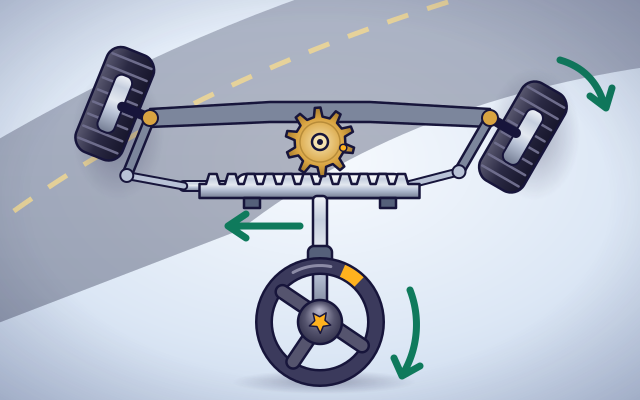
How does a car's steering system work?
Trace steering-wheel movement through a rack, linkages, and the front wheels.
#130
Flight & transportation
How does a car's steering system work?
Trace steering-wheel movement through a rack, linkages, and the front wheels.
 #131
Flight & transportation
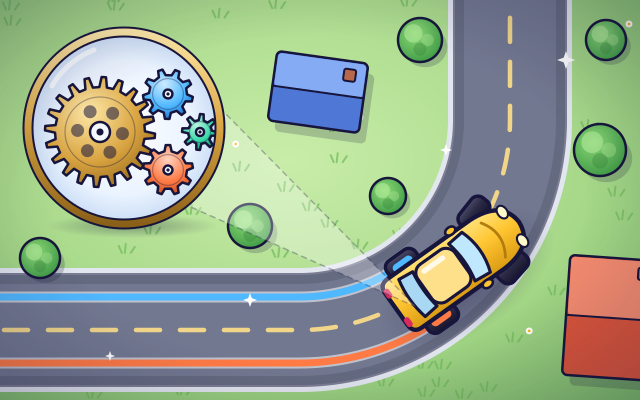
How does a differential help a car turn?
Drive around corners and compare the speeds of the inner and outer wheels.
#131
Flight & transportation
How does a differential help a car turn?
Drive around corners and compare the speeds of the inner and outer wheels.
 #132
Flight & transportation
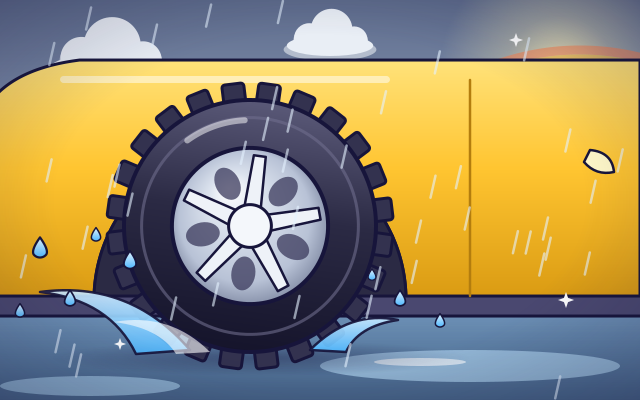
How do tires grip the road?
Compare tread, road conditions, and tire pressure in a driving and braking simulation.
#132
Flight & transportation
How do tires grip the road?
Compare tread, road conditions, and tire pressure in a driving and braking simulation.
 #133
Flight & transportation
How do seat belts protect passengers?
Stop a model vehicle and observe how a belt restrains a passenger's continued motion.
#133
Flight & transportation
How do seat belts protect passengers?
Stop a model vehicle and observe how a belt restrains a passenger's continued motion.
Keep exploring
Games to play next
- City Driving AdventureExplore the city behind the wheel, park safely and collect roadside deliveries.
- Plane Flight SimulatorTake off from the runway and thread numbered sky hoops in order. Every clean flight is a new personal best.
- Machine RepairFix levers, pulleys, gears and ramps so every contraption works.
Guide for grown-ups
- How to start homeschooling: a step-by-step guide for familiesA guide for parents · 7 min read
Science games by grade
Science worksheets by grade
- Preschool Science Worksheets
- Pre-K Science Worksheets
- Kindergarten Science Worksheets
- 1st Grade Science Worksheets
- 2nd Grade Science Worksheets
- 3rd Grade Science Worksheets
- 4th Grade Science Worksheets
- 5th Grade Science Worksheets
- 6th Grade Science Worksheets
- 7th Grade Science Worksheets
- 8th Grade Science Worksheets